
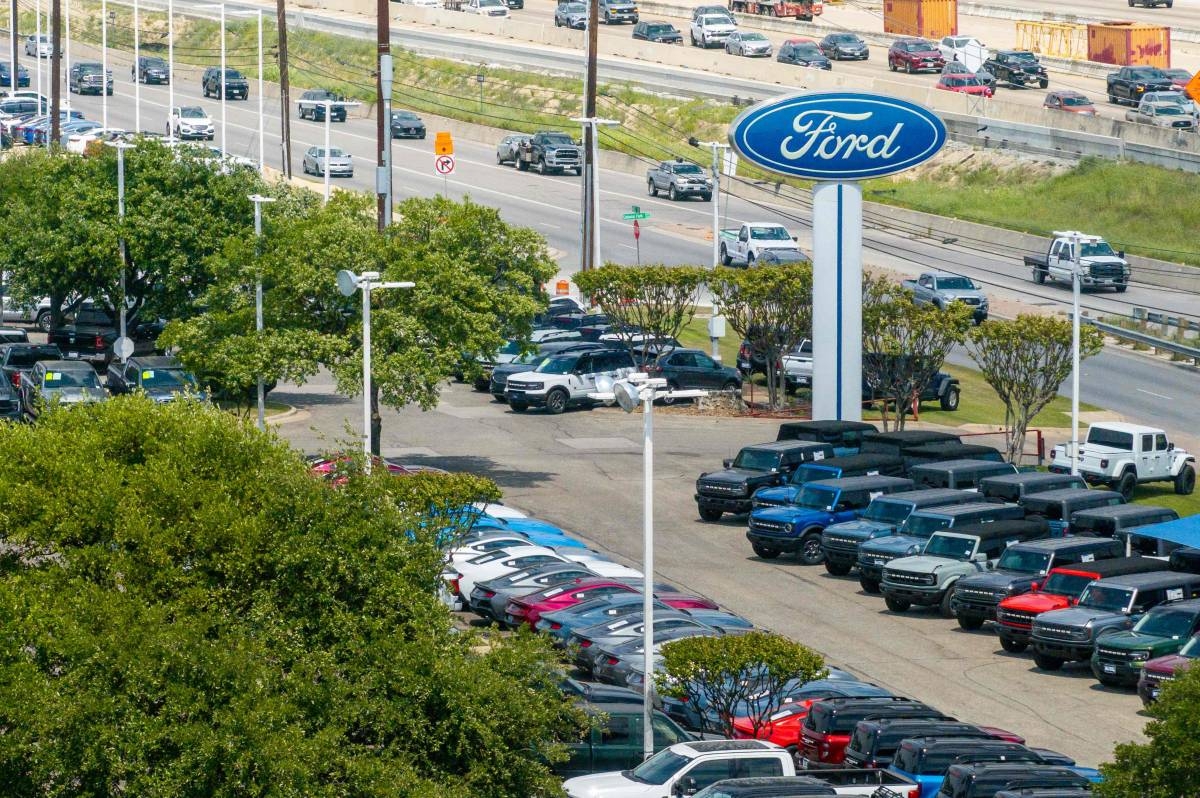
Ford Pauses Shipment to China amidst Rising Tariffs
In the face of an increasing trade dispute between the United States and China, major automobile manufacturer Ford (F) has temporary stopped the transportation of its vehicles to the latter. This decision comes in the wake of rising import taxes propelled by the Trump administration, which, in turn, has led to a surge in vehicle export tariffs, reaching a potential high of 150%. Ford strategically opts to hold off the conveyance of its luxurious sports cars, SUVs, and trucks into China to evade these heightened tariffs.
Among the list of paused shipments are Ford’s sought-after F-150 Raptors, grand Mustangs and the Michigan-manufactured Bronco SUVs. This temporary cessation also extends to the Lincoln Navigators that are constructed in Kentucky. Although constituting a smaller scale of operations, Ford’s exports to China nevertheless yield substantial profitability.
The company publicly acknowledged the situation, stating that it had altered U.S. exports headed to China, given the persisting tariff situation. This manoeuvre, however, demonstrates an operational response rather than a fundamental shift in business approach. Altering, rather than shutting down, highlights Ford’s adaptability in the modern global market, as well as its sincere commitment to its customer base within China.
An insightful aspect to observe is that despite the delay in vehicular exports, Ford anticipates maintaining the export of US-produced transmissions and engines to China. These key components to vehicle infrastructure underline the nuanced approach taken by Ford. The automobile giant articulates that not all operations are affected equally, paving a way forward through diplomatic strategies.
Moreover, Ford also plans to continue exporting the Lincoln Nautilus to China. Interestingly, the Lincoln Nautilus models are imported from China itself, and now face considerable tariffs. This decision portrays a complex international business strategy, where products of identical brand names can be caught in varied tariff nets due to manufacturing location.
Over the years, Ford employed its Chinese plants as export hubs, forwarding its manufactured cars from China to numerous destinations in Southeast Asia and South America. This move promotes economic efficiency in the realm of global distribution while allowing Ford to effectively exploit regional manufacturing advantages.
Apart from the soaring tariffs, Ford’s activities in China are subjected to further stress by stiff rivalry from other global car manufacturers. This intense competitive landscape has put pressure on the growth and expansion of Ford’s Chinese business operations and overall profitability.
However, compared against other car manufacturers, Ford finds itself secure, primarily due its extensive domestic production. In numbers, nearly 80% of the vehicles Ford sells in the U.S. are manufactured within the country. Therefore, the company manages to maintain a robust stance against increased tariffs.
Nevertheless, overarching macroeconomic factors, multiplying trading disputes and a growing swarm of competitors have cast a shadow on investors’ outlook towards Ford and the global automotive industry. These industry-wide challenges have triggered widespread investor caution, going beyond the particulars of tariff-related impacts.
The aggregate sentiment downturn on Wall Street has not spared Ford’s shares. Over the span of the last year, Ford’s stock has marked a fall of 20%, which underlines the tangible influence of trade wars and macroeconomic factors on large automotive companies’ financial performance.