
Government Shutdown Threatens Federal Employees’ Job Security
As the week progresses, apprehension builds among federal employees about the stability of their jobs. The rising intensity of security threats targetting immigrants adds to the growing unease. Parallelly, a generation of children endures the collateral damage brought on by the opioid epidemic. The potential consequences of a possible government shutdown, such as job loss, loom on the horizon.
Historically, federal employees have received wages post temporary layoffs during times when disagreements over funding led to a stalemate in Congress. However, with the prospect of a partial shutdown in the offing at the beginning of October and the resolution still elusive, the Office of Management and Budget has prompted federal agencies to strategize for potential layoffs en masse.
The bone of contention regarding government funding represents yet another development in the ongoing standoff between President Donald Trump and Congressional Democrats, and the stakes couldn’t be higher. The Republicans in the House got the green light for a motion on September 19th to maintain the status quo of funding until November 21st. However, Senate Democrats struck down the bill, demanding a revocation of imminent cuts to the Medicaid program and the phasing out of subsidies under Obamacare.
In the absence of a resolution, the possible layoffs next week could add to an estimated 300,000 federal employees who have parted ways with their jobs so far this year. Certain services such as air traffic control and benefits under programs like Medicare, Medicaid and Social Security would remain unaffected by a shutdown.
James Comey, the former director of the FBI, was recently indicted by a federal grand jury on charges including perjury and obstructing justice. These allegations follow years of contentious interactions with President Trump, including his firing resulting from an investigation into links between Trump’s 2016 campaign and Russia. Despite such consequences, Comey remained resolute in his opposition to Trump.
Republican sentiment regarding the U.S.’s present condition is transforming, according to a recent poll by Gallup. Meanwhile, gun law advocates are not only pushing for more stringent regulation but are also offering practical firearms training. In the wake of a year since Hurricane Helene, several Florida residents feel their plight has been neglected. On the economic front, a new wave of tariffs has been introduced affecting items like heavy trucks, pharmaceuticals, and household kitchen goods.
Nationwide, the increased frequency of protests at Immigration and Customs Enforcement centers, the employment of strong-arm tactics by undercover officers in the field, and the polarizing political discourse have created a hazardous environment. Following an incident where a sniper targeted an ICE field office, the Department of Homeland Security has declared their intention to tighten security across ICE facilities.
A series of violent assaults on the country’s immigration infrastructure has heightened the sense of danger not just for ICE agents but also for immigration attorneys, judges, and the immigrants they handle. In light of the rising security threats, the defensive measures enforced at ICE premises seem prudent.
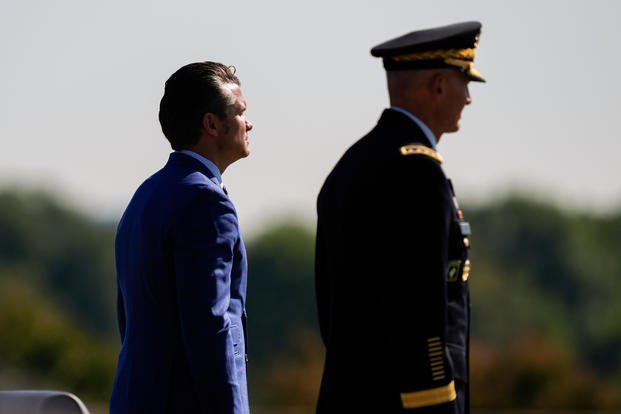
In an unusual turn of events, Defense Secretary Pete Hegseth recently summoned roughly 800 top-tier military commanders positioned globally to a sudden meeting in Northern Virginia scheduled for September 30. The meeting was held at Quantico, a Marine Corps base located about 30 miles south of the Pentagon.
The Pentagon chose not to disclose the purpose of the meeting. Ultimately, the sudden order interrupted the tightly organized itineraries of high commander officials, some of whom direct legions of troops. An assembly involving such high-ranking officials is typically planned out months in advance, making the lack of notice highly irregular.
From the fallout of the opioid crisis emerged the Overdose Loss Camp, spearheaded by Comfort Zone Camps in 2022. This organization, the first of its kind, created a space to support those grieving from losses due to drug overdoses after identifying a pressing need at their other grief support camps.
The attendees arrive at the camp bringing personal narratives about loved ones lost to drug overdoses. For some, the one lost had considerable importance in their lives, while others had a more distant connection. The tracks of their lives have been drastically alterted by their family member’s addiction, with some even being placed into foster care.