
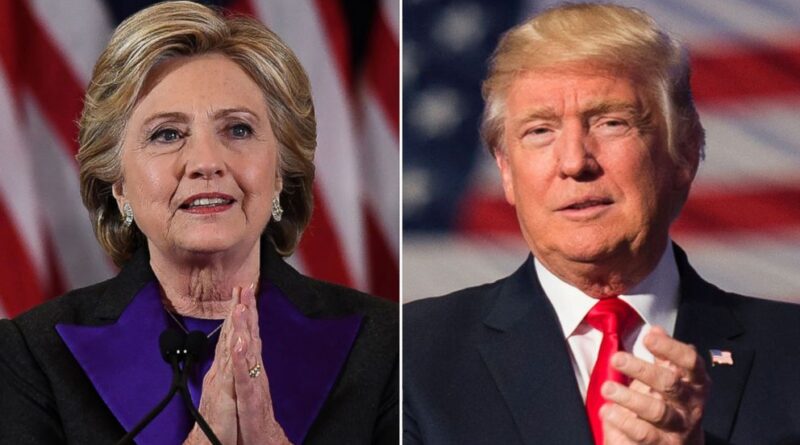
Harris Aims for Another White House Run: History Predicts Failure
William Henry Harrison, despite being the first head of state from the Whig Party and the last U.S. president to be born British, experienced a rather unfortunate presidency. His tenure was marked by the longest inaugural address in American history, spanning nearly two hours, and the briefest term in office, halted abruptly by his untimely demise just barely over a month since his inauguration.
Interestingly, Harrison retains the unique distinction of being the final politician to lose his initial presidential race, only to claim victory in the succeeding one. This pattern has not been replicated since, with Richard Nixon falling short before ultimately clinching the presidency later. Only Grover Cleveland and Donald Trump have managed the rather daunting feat of winning, losing, and then emerging victorious once more.
The tale of the recurrent failures of would-be presidents such as Democrat Adlai Stevenson and Republican Thomas Dewey, who lost consecutive races, and Henry Clay and William Jennings Bryan, who experienced thrice successive defeats, is a stark warning for those aspiring to re-run after a loss. Voters, as history has proven, have little patience for those who could not secure the win in the first place.
This failure-prone narrative doesn’t bode well for Kamala Harris, erstwhile contender for the coveted presidency. Strikingly, her recent decision not to run for governor in California seems to signal her concealed ambitions for another attempt at the White House, regardless of the discouraging historic pattern.
It’s a challenging time for the Democratic Party, with its popularity taking a massive hit. Pundits rank the party’s net favorability at a dire mark of negative thirty points, outflanking the GOP’s negative eleven by almost threefold. Public sentiment towards the Democratic Party has reached a thirty-five-year low, presenting a stark contrast from its erstwhile popularity.
Amidst this turmoil, to blame Kamala Harris solely for the party’s plight would be short-sighted. Still, it’s hard to ignore that she stands as a symbol of the Party’s internal discord and dissatisfaction. Notably, the core of this discontent is not homogenous, with progressives asserting that the Democrats haven’t put up a sufficient fight, while centrists argue that they are battling for misguided causes.
These internal divisions are however bound by an overarching, deep-seated eagerness for victory. This same fervor led to Harris possibly being seen as the nominee in the 2024 race, primarily because she was chosen to represent diversity. Yet, it’s clear that the core issue is not her race or gender, but rather her inability to extend the Democratic coalition’s reach.
A victor for the Democratic Party would need to sway Trump voters. This is where Harris has notably faltered, not as a result of lacking Democratic presence, but due to her ineffectual appeal to a dynamic electorate. Her speech seemed scripted for a liberal arts college dean rather than an aspiring president.
Furthermore, her stance on several subjects aside from reproductive rights seems dictated more by focus groups than personal conviction, particularly during a time when constituents yearn for sincerity in their representatives. This lack of authenticity, combined with her submission to align with Biden’s ideology, has only damaged her standing further.
Selecting ‘The Late Show’ with Stephen Colbert for her initial interview post resignation was, arguably, a poor decision. Her appearance, while appealing to Colbert’s ideologically defined viewers, represented a missed opportunity to connect with the broadened audience critical for Democrats to secure victory.
A recurring nomination for Harris may likely lead her down the path to becoming merely a historical trivia. Armed with the knowledge of the Democratic Party’s crisis of favorability and the requirement to sway Trump voters, there is a dire need for a charismatic candidate who can engender excitement across diverse demographics. Harris, with her entrenched stances, lackluster appeal, and over reliance on Biden’s politically safe ground, unfortunately, does not meet this bar.
The Democratic Party is in a clear state of discomfort, with dissatisfaction compounded by both the sting of losing to Trump as well as the inability to form a substantial resistance to his reign. Sadly, instead of remedying the party’s wounds, their lingering disappointment is often projected onto figures like Harris, whose image carries the imprint of their unfulfilled expectations.
Although her inability to expand the Democrat’s appeal beyond traditional demographics might have contributed to the party’s plummeting popularity, it would be unfair to lay the blame at her doorstep. Her symbolism of Democratic disenchantment, compounded with a fiercely divisive internal struggle, is more an emblem of a beleaguered party in need of resounding leadership than a personal indictment.
American voters, as observations suggest, have a discernible distaste for Beacon Hill’s ‘losers.’ Harris, despite her ambitions for holier political grounds, needs to prove herself above this moniker if she hopes to win favor in the eyes of the nation. Regrettably, her lack of dynamism and safe playing of the political field doesn’t inspire hopes of a departure from this precedent.
In the grand scheme of things, the prospect of Harris aiming for another go at the White House raises questions about the Democrats’ strategy overall. As history has demonstrated repeatedly, the goal should be to find a candidate who can genuinely attract the changing electorate and pivot to new political realities. Until Democrats recognize this fact, they run the risk of being stuck in a cycle of defeat, with their brightest stars becoming nothing more than anecdotal footnotes in history.