
Historical Heights Too High for Kamala Harris
Though hailed as the first chief executive from the Whig Party and uniquely remembered as the oldest leader still born as a British subject, William Henry Harrison’s stint as America’s ninth president was as ephemeral as a shooting star. His history-making long-winded inauguration address, stretching close to a couple of hours, did little to foreshadow the brevity of his stay in office. Marking history unceremoniously, Harrison’s term was abruptly truncated to 31 days as he became the first seated president to pass away while in office.
Harrison’s electoral feat mapped a unique pattern. After initially facing defeat, he bounced back to win his second presidential run, an achievement he shared with only two others before him – Thomas Jefferson and Andrew Jackson. Richard Nixon also tasted defeat but the sweep of victory came much later in his political career. The electoral journeys of Grover Cleveland and Donald Trump added another twist, as they logged a win, followed by a loss, and then another win, an exception to the pattern.
Contrary to these cases, most politicians post Harrison, tasted defeat twice in a row when attempting a second run post an initial loss. From Adlai Stevenson on the Democratic side to the Republican candidate Thomas Dewey, history repeatedly saw such losses. So too, for stalwarts like Henry Clay and William Jennings Bryan, a victory remained elusive even after three consecutive runs, reaffirming the conclusion that the electorate usually shows little mercy to those previously defeated.
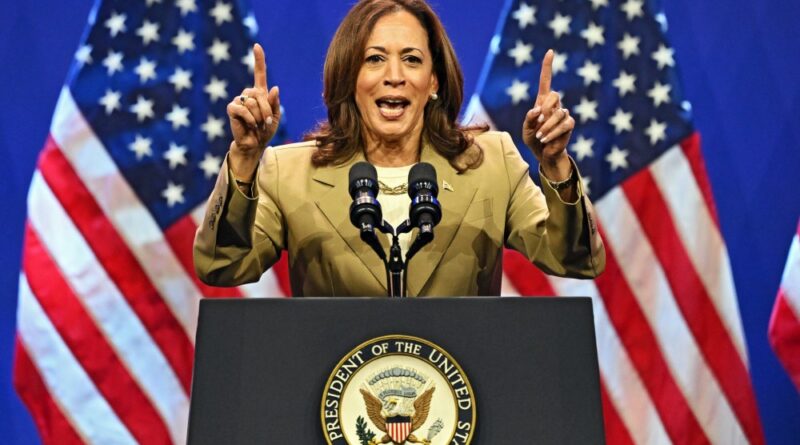
For Kamala Harris, the future looks increasingly murky, as speculation runs rampant in light of her recent decision to forego a run for California governorship. The implication of her choice induces conjecture – a possible renewed ambition for the White House, perhaps. However, her path is littered with obstacles, mainly derived from the Democratic Party’s wildly plummeted popularity.
Tainted by a net unfavorability rating at a staggering negative 30 points, which triples the GOP’s minus 11 points, the present stature of the Democratic Party is at its nadir in over three decades. This unpopularity ignites discontent within Democrats themselves, since they blame the party for both gifting a win to Trump and being ineffectual barricades against him while he was in power.
However naive it might seem to pin the party’s woes on Harris solely, she has become, perhaps unfairly, a figurative representation of this inter-party dissatisfaction. This widespread restlessness though is not unified in nature. The more progressive members perceive the Democrats to be lax in their combative stance, while the centrists are disillusioned by the party’s perceived misguided emphasis on cultural and identity politics that seemingly skew too far left.
Bridging the divide between these two factions is a common thirst for triumph. Unfortunately for Harris, her expected positioning as the 2024 nominee was based not on merits, but was perceived as a mere diversity fill. It was clear from the beginning when Biden declared his intent to choose a female, and later, specifically an African American running mate.
The chink in Harris’ armor isn’t her gender or her race, but sadly her failure to attract and convince voters to broaden the Democratic base. The key to a Democratic victory hangs on finding a candidate capable of swaying Trump supporters. Harris’ defeat can be ascribed not to a low Democratic turnout, but to her inability to captivate a dynamically altering voting group.
Her speech projected the vibe of a college dean at an obscure liberal arts university. Omitting her stance on reproductive rights, the rest of her convictions emitted an aura of being boardroom-decided public opinions, creating a yawning gap in an era where voters sought out raw authenticity.
Instead of seizing the opportunity to differentiate herself from Biden, Harris surprisingly bowed to his demands and chose to remain firmly in his shadow. Her first move post her exit was an appearance on the ‘The Late Show’ hosted by Stephen Colbert. Meant to strike a chord with Colbert’s ideologically-charged regular viewers, this might not exactly tick all the boxes for the diverse audience the Democrats need on their side.
Should Democrats choose to place their bets on Harris once again, the possibility of an unfortunate foreshadowing looms large. History might remember her as the answer to a trivial pursuit question. It almost certainly won’t be, ‘Who was the 48th president?’ It’s clear that scaling such a steep hill requires an exceptional climb, and Harris’ current political narrative, unfortunately, falls woefully short.