
Houthi Rebels Strike Oil Tanker Near Saudi Coast
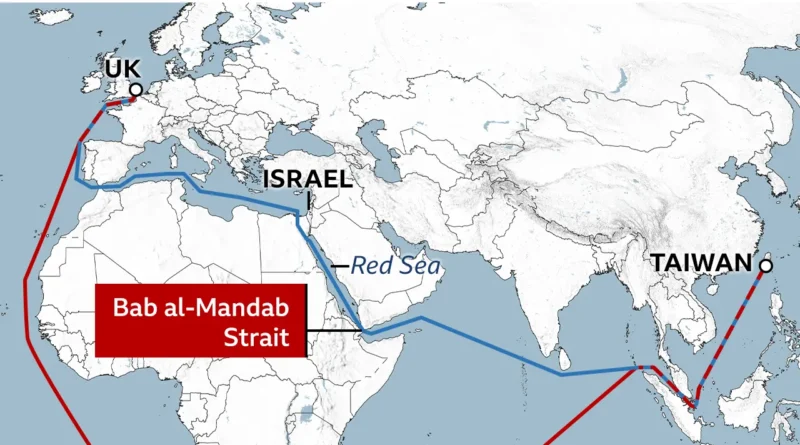
The Houthi rebels in Yemen have announced that they launched a missile at an oil tanker near the Saudi Arabian coast in the Red Sea. This could signify the resurgence of their attacks targeted at shipping lines in this pivotal maritime route. This announcement was made by the Houthi military spokesperson, Brig. Gen. Yahya Saree, through a prerecorded broadcast on the Houthi-controlled satellite news channel, al-Masirah. He pronounced that the targeted vessel, known as the Scarlet Ray, which is registered in Liberia, is connected to Israel.
The vessel is owned by Eastern Pacific Shipping, based in Singapore, and the company was not available for immediate response. According to a reputable maritime security firm, Ambrey, the vessel matches the Houthis’ “target profile,” as it is publicly known to be owned by Israelis. The larger corporate entity controlling Eastern Pacific Shipping is under the control of the Israeli billionaire, Idan Ofer. Eastern Pacific Shipping has, in the past, been a victim of alleged attacks orchestrated by Iran.
The United Kingdom Maritime Trade Operations center, a division of the British military that routinely monitors shipping in the Middle East, previously reported a ship experiencing a splash and a noise near its side close to Yanbu, Saudi Arabia. Throughout the period from November 2023 to December 2024, more than a hundred vessels became targets of the Houthi rebels, who deployed both missiles and drones. This followed the conflict between Israel and Hamas in the Gaza Strip.
The Houthi’s attacks have been considerably effective, with four vessels sinking and at least eight seafarers losing their lives as a direct consequence. The Iran-aligned Houthi rebels had briefly ceased their attacks following a short-lived ceasefire in the ongoing conflict. However, they subsequently became the subject of an intense campaign of airstrikes implemented by former U.S. President Donald Trump over several weeks, before he announced that a ceasefire agreement had been reached with the rebels.
In July, the Houthis claimed responsibility for sinking two more vessels, resulting in the death of at least four crew members, while others are presumed to be detained by the rebels. Amid the resurgence of the Houthi attacks, a potential ceasefire related to the conflict between Israel and Hamas hangs in the balance. As this situation unfolds, the future of the dialogues between Iran and the U.S. concerning Tehran’s distressed nuclear program also remains uncertain.
These precarious talks have been further complicated by Israel’s initiation of a 12-day war against Iran, in which the Americans targeted three Iranian nuclear sites. This offensive was carried out in response to the Houthis, who are supported by Iran, increasing their attacks. As a result, a number of the Houthi’s top leaders including their prime minister and some Cabinet members, lost their lives in a series of air strikes carried out by Israel last week.
The Houthis’ recent attack on the vessel in the Red Sea seems to be a part of their retaliation. This also surfaced in their raid on the offices of the United Nations’ departments catering to food, health, and children’s issues situated in Yemen’s capital. This alarming incident led to the detention of at least 11 U.N. employees.