
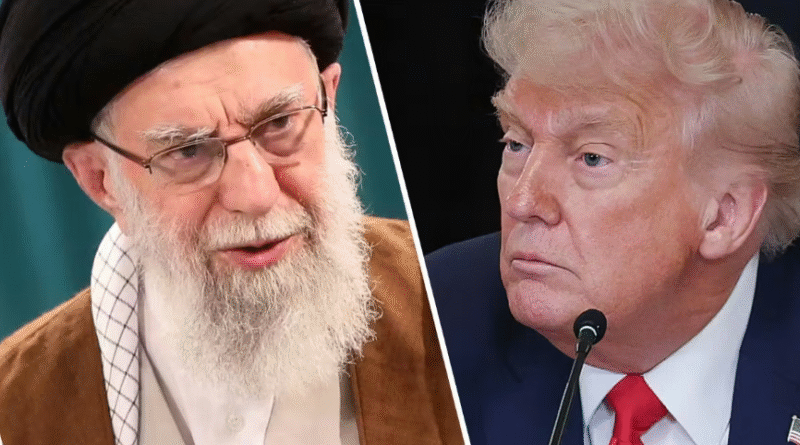
Iran Calls Nuclear Talks ‘Constructive’ As Trump Ramps Up Military Pressure In The Gulf
Iran’s foreign minister described the latest round of nuclear negotiations with the United States as “serious” and “constructive,” even as both countries escalate their military posture in the Middle East.
After talks concluded in Geneva, Iranian Foreign Minister Abbas Araghchi told reporters that “the path for a deal has started,” signaling cautious optimism from Tehran. The U.S. delegation was led by Special Envoy Steve Witkoff and Jared Kushner, who departed Switzerland immediately after the talks for a trilateral meeting involving Russia and Ukraine. Washington has not yet released an official readout of the negotiations.
The diplomatic movement comes against a backdrop of heightened military tension. The USS Abraham Lincoln carrier strike group is reportedly positioned roughly 700 kilometers from Iran, while the USS Gerald R. Ford, the world’s largest aircraft carrier, is en route to the region from the Caribbean. Together with accompanying destroyers and support vessels, the buildup signals a clear show of force.
Iran’s Supreme Leader Ayatollah Ali Khamenei responded defiantly, stating that while American aircraft carriers are “dangerous machines,” Iran possesses “the weapon that can sink the aircraft carrier to the bottom of the sea.” His remarks underscored the regime’s effort to project strength amid mounting U.S. pressure.
The Islamic Revolutionary Guard Corps has also conducted military exercises in the Strait of Hormuz, briefly closing parts of the critical waterway under what it called “security precautions.” The strait is one of the world’s most important oil transit routes. Tehran is also preparing for joint naval drills with Russia and China under the “Maritime Security Belt 2026” framework, continuing a trilateral partnership that began in 2019.
Satellite imagery reviewed by international outlets indicates there are at least 12 U.S. warships in the broader Middle East region. In addition to the Abraham Lincoln strike group, several Arleigh Burke-class destroyers and littoral combat ships are deployed across the Gulf, eastern Mediterranean, and Red Sea. Fighter aircraft, refueling planes, and support assets have also increased at bases in Jordan.
President Donald Trump addressed the situation aboard Air Force One on Monday, warning that Iran would face consequences if negotiations collapse. “I don’t think they want the consequences of not making a deal,” Trump said, describing Iranian negotiators as “tough” while confirming his involvement in shaping the diplomatic track.
Hardline rhetoric has also emerged from senior IRGC officials. General Mohammad Reza Naghdi claimed last week that the United States is “incapable of doing a damn thing even if it deploys 12 aircraft carriers.” The contrast between such statements and Araghchi’s measured tone highlights the internal balancing act within Iran’s leadership.
Oman’s foreign minister, who facilitated the Geneva talks, described the session as producing “good progress towards identifying common goals and relevant technical issues.” Still, major sticking points remain. Israel continues to press Washington to address Iran’s ballistic missile program, and Trump has reportedly told Israeli Prime Minister Benjamin Netanyahu that he would back military action if diplomacy ultimately fails.
For now, both diplomacy and deterrence are advancing in parallel, with negotiations moving forward under the shadow of significant military force on both sides.