
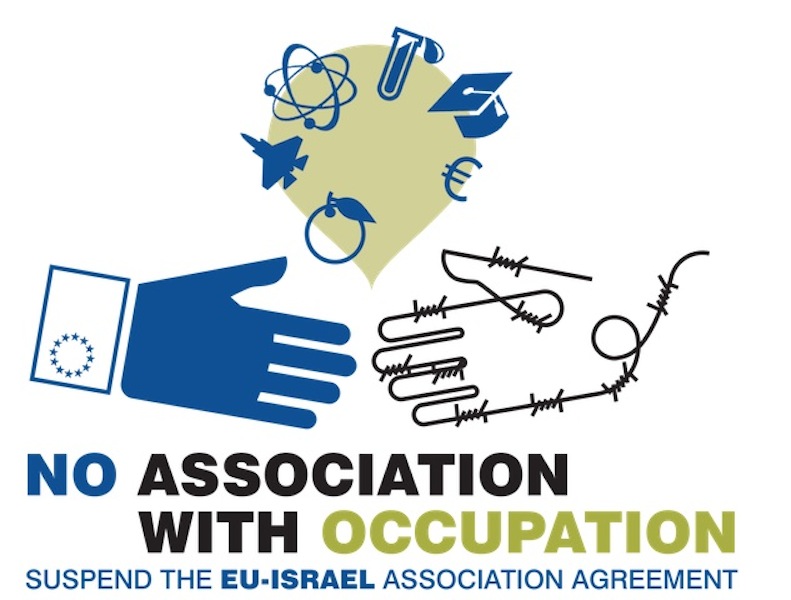
Israel-EU Trade Scrutinized Amid War Tactics in Gaza
An audit to determine if Israel is not honoring its trade agreement with the European Union due to its war tactics in Gaza has been shrouded in mystery and bedeviled by poor timing. On Friday afternoon, national capitals received the review quite late, just before foreign ministers were slated to thoroughly analyze it in a Brussels meeting on Monday. A wave of dissatisfaction swept among diplomats who lamented the inadequate time given to digest the content of the review. The tight schedule threatens to trigger contentious discussions during the Monday meeting.
The report only saw the light of day shortly before an EU ambassadors’ convention scheduled to dissect it at 6:30 pm Brussels time last night. The audit was initiated after a majority of EU foreign ministers supported a proposition from the Netherlands last month. This proposition called for a probe to ascertain if Israel was violating the human rights and international humanitarian laws it promised to uphold in Article 2 of the EU-Israel Association Agreement.
Collation of pre-existing reports issued by numerous United Nations bodies was primarily what constituted the investigation. It dwelled on the total blockade Israel imposed on the entry of food, medicine, and fuel into Gaza for 11 weeks starting March 2, before Israel finally allowed a highly militarized food provision service to commence. The latter, however, was tainted by reports of deadly shootings of Palestinians.
The intensification of discrimination, suppression, and violence against Palestinians in the West Bank has been observed since the October 7 attacks by Hamas. Mirroring this was a noteworthy uptick in Palestinian fatalities and attacks from Israeli settlers, all in the context of continued settlement expansion.
Countries like Austria, the Czech Republic, and notably Germany were providing unwavering backing for Israel, meaning consensus for an investigation like this was initially out of reach. However, the landscape changed following the breakdown of the Israel-Hamas ceasefire in March and the commencement of a much more aggressive assault on Gaza by the Israeli Defense Forces. This assault included an extended humanitarian blockade.
The political inclination within the EU began to shift. Seventeen member states, including Ireland, voiced their support for an inquiry of Article 2 compliance. Two countries later added their names to the list. Nevertheless, disagreements persist. Last night’s report points towards a drawn-out stint of diplomatic negotiation taking place one step at a time.
Maintaining unity will prove a formidable challenge in the days ahead, with diplomats now connecting unity to the striving for uniformity. The Israel-Gaza situation is such a delicate matter that any immediate punitive measures against Israel will have to be suspended to deflect possible backlash.
EU ambassadors had already signaled the impending divisions during their preliminary meeting on the scheduled review last Wednesday. As it stands, the EU has abstained from punishing any trade partner for breaching a trade agreement. The long overdue hard-hitting review of Israel’s actions, an initiative originally pushed by Ireland and Spain, has eventually become a reality. This is seen as a substantial stride considering the EU’s strained policy on Gaza.
Justifiable doubts are now being raised about the EU’s moral compass, given the efforts they have taken to hold Israel accountable for their actions. The killings in Gaza have now left more than 56,000 people dead according to Palestinian authorities, further shining a light on the EU’s potentially feckless stance.
The EU’s foreign policy mandate allows for every member state to exercise vetoes. While this respects national sovereignty, it offers little comfort to critics who argue that Europe should have acted more decisively and swiftly. An increasing number of diplomats are growing exasperated due to the EU’s muted response to monumental contemporary crises like the invasion of Ukraine by Russia and Israel’s reaction to the Hamas October 7 attacks.
The consensus on what steps to take next is still far from clear if proposed responses are presented to foreign ministers. Historically speaking, the EU has refrained from taking punitive measures against any trade partner guilty of trade agreement transgressions. A complete suspension of the Association Agreement would need unanimous support, a scenario that seems highly unlikely considering the inevitable veto.
There’s been conjecture suggesting that a suspension of certain aspects of EU-Israel trade might only require a Qualified Majority Vote (QMV). If we consider the nineteen countries that supported the review, such a majority is achievable. However, there is skepticism about this, with doubts expressed about the feasibility of this action.
Any punitive action would necessitate a proposition from the European Commission. However, this issue is again clouded by the reality of national divisions. It is clear, though, that even among traditional allies, attitudes towards Israel are hardening.
However, whether the pressure, which is likely to intensify with the release of the review, would lead to any change in Israel’s course of action remains a burning question to answer. The anticipated impact of the forthcoming publication will be watched closely by onlookers around the globe.