
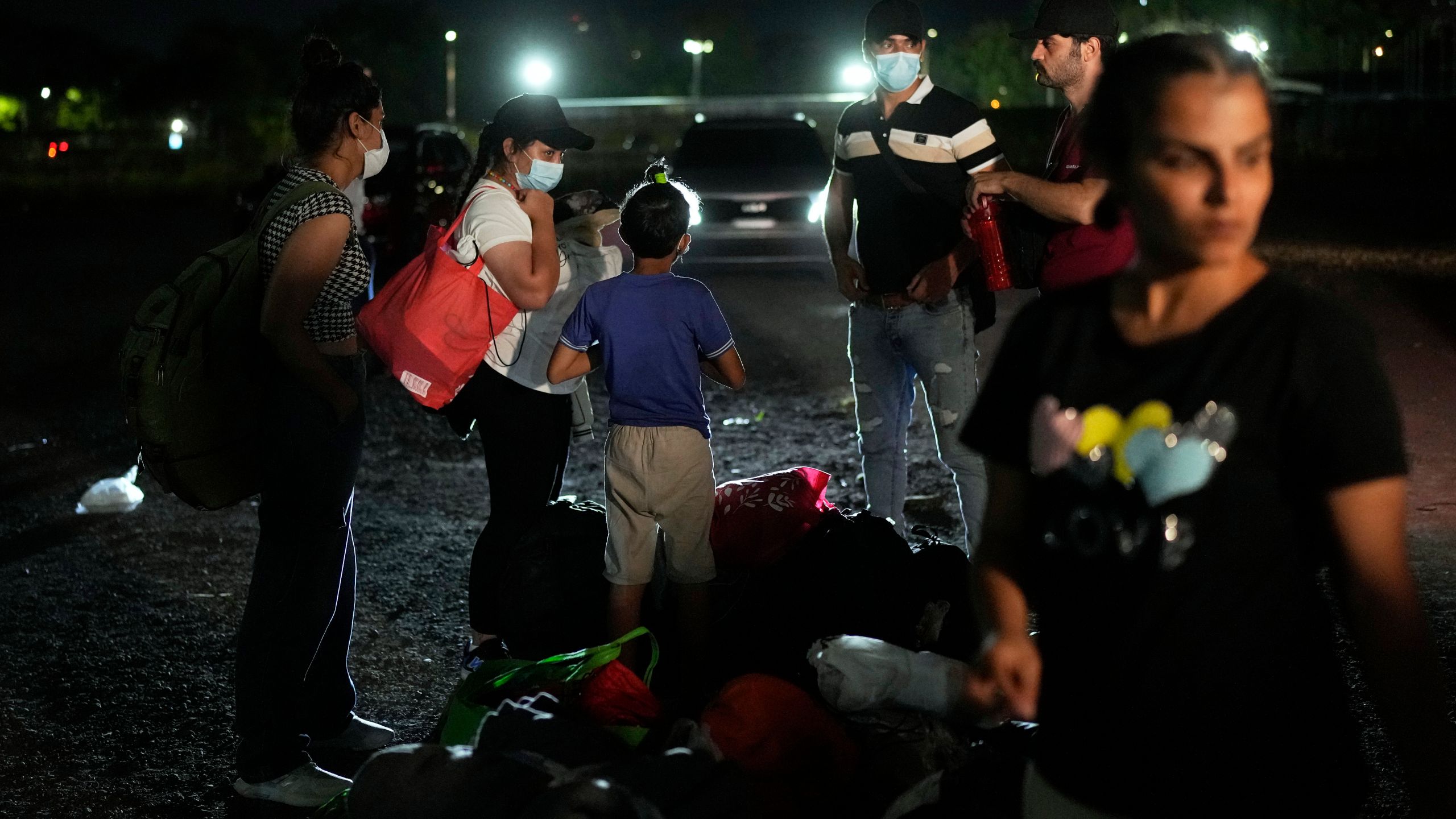
Liberated Migrants Struggle to Adapt to Panama City After Leaving Jungle Border Camp
This month, the bustling city of Panama was shaken up with the arrival of buses filled with liberated migrants from a restrictive camp located on the jungle’s border. Among the throng, three individuals seemed to be struggling significantly. One was in dire need of an H.I.V. treatment, another was alarmingly out of insulin, and a third was plagued by seizures. The scene was defined by turmoil, confusion, and a palpable sense of disquiet.
A freed migrant, overwhelmed by the situation, couldn’t help but voice his concerns, ‘What’s next for me? Where will my journey lead me to?’ His dilemma echoed the sentiment shared by the many who had been deported to Panama under the Trump administration’s stringent immigration policies.
The sweeping strategies introduced by the former U.S. president were designed with one goal in mind – to expel millions of people residing illegally within the United States. The predicament in Panama is just one instance of the reverberations of these strategies.
Initially, around 300 individuals were herded by the Panamanian officials into a hotel, serving as a temporary containment center. Later, those who chose not to return to their native countries found themselves sent to a camp heavily guarded and bordered by a dense jungle.
The camp was far from a welcome shelter, but a ceaseless reminder of their uncertain future. This unsettled state of existence continued until the intervention of human rights groups and a successful legal suit against the authorities.
Eventually, the Panamanian officials had to bow to the pressure. They decided to untether the captives, sending buses to bring them back to civilization, back to the hustle and bustle of Panama City.
The city, though bustling with life, offers little comfort to the recently freed but still uprooted souls. Their nationalities span the globe, hailing from countries as diverse as Iran, Afghanistan, Cameroon, Ethiopia, and Uzbekistan.
Now, however, they find themselves in a strange paradox of freedom. Although they are no longer restrained by fences or uniformed guards, they are stranded in a land that seems reluctant to host them, their futures as ambiguous as ever.
Much relief comes from an aid organization, offering the sheltering warmth of a school gymnasium. It offers them not just a roof over their heads, but a place to rest, to recoup, and to plan their next steps.
Yet, even within these walls of refuge, uncertainty pervades. Many still grapple with confusion over what comes next, in a country that doesn’t want them. Their futures hang in the balance, as they seek not just survival, but a place where they can indeed call home.
In the adversity of their situation, the refugees continue to show resilience and fortitude. They persevere, harboring hope for a chance at a better life despite their current circumstances.
In the meantime, they find strength in banding together, a small community within the larger ones that surround them. It provides a semblance of belonging, albeit in an unfamiliar setting.
The saga of the migrants in Panama City remains ongoing. The scrambled exit from the border camp and entry into the rest of the city may have been one chapter, but their story is far from finished.
The interplay of legal norms, reactive executive policies, and individual human stories continue to weave a narrative centered around life, liberty, dignity, and the search for a place to belong.
The plight of these migrants serves as a stark reminder of the real-world impacts of immigration policies. As political landscapes shift and public discourse evolves, the migrants of Panama City continue to persevere amidst uncertainty and adversity.