
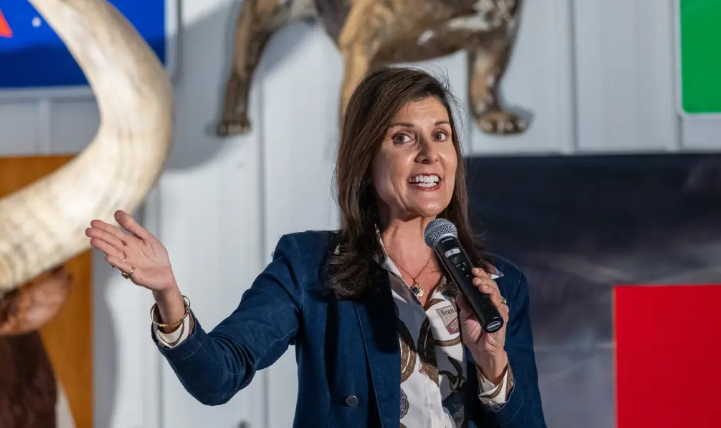
Nikki Haley Suggests Special Forces Mission For Iran Uranium, Rules Out 2028 Run
Former U.N. ambassador and 2024 presidential candidate Nikki Haley said the United States may ultimately need to deploy special operations forces to secure Iran’s uranium stockpile, describing it as a dangerous but potentially necessary step.
Speaking on CNN, Haley said a direct mission could be required to eliminate the threat. She characterized it as a complex operation that could take “about a week to ten days,” emphasizing both the risks involved and the strategic importance of removing Iran’s enriched uranium.
Her comments come amid ongoing tensions following failed negotiations between the U.S. and Iran, and continued concerns over Tehran’s nuclear capabilities. U.S. officials have indicated that Iran’s uranium stockpiles, if enriched further, could potentially be used to produce multiple nuclear weapons.
President Donald Trump has not approved such an operation, instead opting for a strategy that includes military pressure, surveillance of Iranian nuclear sites, and economic leverage. He has also left open the possibility of further military action if Iran attempts to access or expand its nuclear materials.
Iran, for its part, has reportedly taken defensive measures, including deploying naval special forces along its southern coast, signaling concern about a potential U.S. ground operation.
The idea of a special forces mission has drawn caution from others in Washington. Sen. Mark Warner warned that such an operation would be highly complicated and dangerous, potentially requiring a large military presence to secure the area and manage volatile nuclear material.
Haley, who has largely backed the Trump administration’s approach to Iran, also addressed her political future during the interview. When asked about a potential 2028 presidential run, she gave a definitive answer: she will not be a candidate.
Her remarks signal that, for now, her focus remains on national security commentary rather than a return to electoral politics, even as tensions in the Middle East continue to shape the global landscape.