
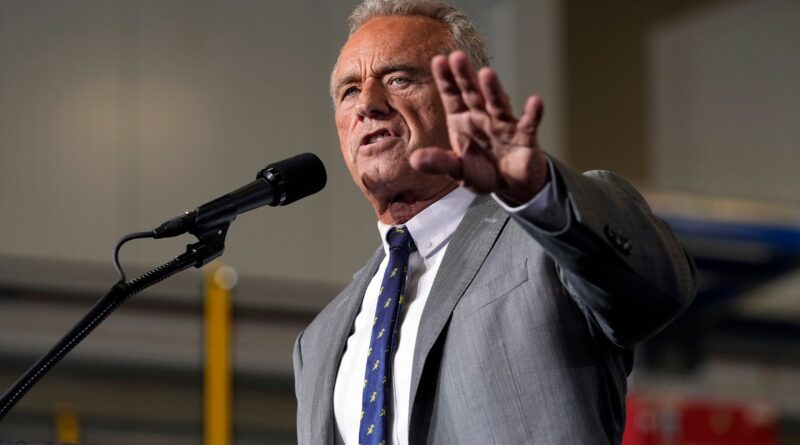
Persistent Controversies Surround HHS Secretary Kennedy
During his inaugural meeting with the Health and Human Services Department team in February, the newly appointed HHS Secretary, Robert F. Kennedy Jr., passionately announced his commitment to addressing persistent childhood diseases comprehensively. This determination served to spur his agenda of querying vaccination practices and challenging conventional scientific theories. His ‘no boundaries’ outlook has been a hallmark of his public stint, starting with his environmental activism and now propelling him to a leading figure in healthcare. Despite not being a medical professional or researcher, Kennedy has taken the lead in the bid to ‘Make America Healthy Again,’ an initiative championed jointly by him and President Donald Trump. The campaign has significantly transformed the healthcare landscape and science ecosystem across the nation. However, his past dotted with what his family labeled ‘dangerous misinformation’ in 2019 has raised a few eyebrows, stirring concerns about his ongoing federal service and its impact on the nation and the world at large. Since Kennedy’s tenure, the U.S. has distanced itself from global health entities and initiatives, placing the country at a disadvantage amid global health crises.
As Kennedy continues to transform the country’s stance on health and wellbeing, his tenure has seen a number of disputable moments. Some of his most contentious instances are discussed below.
One of the contentious moments was his dissemination of unproven theories about the causes of autism, its history, and its effects. During his initial press briefing as the HHS Secretary in April 2025, Kennedy made sweeping claims about autistic children without offering supporting evidence or deeper insights. His claim that autistic children are unable to participate fully in life has alarmed advocates, who express concern over how this data might be manipulated to fuel his dubious health plans.
There have been moments when he has found himself defending against allegations of anti-vaccination rhetoric. Despite his firm denial of anti-vaccine sentiments, his past statements lend themselves to the contrary. He is notably associated with the assertion that vaccines trigger autism in children, a claim disproven by multiple peer-reviewed scientific studies in various countries.
Moreover, his scrutiny of the Covid-19 vaccine’s safety has been noteworthy. He has repeatedly propagated misleading information about vaccine testing, and even made an unfounded claim linking the origins of HIV to a vaccination program. Amid such peddling of false news, it is not surprising that the label ‘anti-vax’ has been suggested for him.
Kennedy’s recent disregard for time-tested scientific review processes raised another controversy when he declared the government’s withdrawal from the Covid-19 vaccination recommendation for pregnant women and healthy children. As the Director of the University of Minnesota’s Center for Infectious Disease Research and Policy, Michael Osterholm clarified, there was no new data or information to support this decision. He likened it to ‘flying by the seat of their pants.’
Stoking the flames of controversy, Kennedy likened vaccine mandates to autocratic regimes during a protest in Washington, D.C., in 2022. He went as far as comparing the current circumstances in the U.S. to the Holocaust. His comments sparked immediate backlash, with critics interpreting his words as an indication that conditions during the Holocaust were better than the current situation.
In his response to a measles outbreak in Texas in February 2025, which resulted in the death of an unvaccinated child, Secretary Kennedy created waves when he brushed off the issue as ‘not unusual.’ His response, made during a cabinet meeting, was followed by suggesting measles has a ‘very, very low infection fatality rate.’ His perspectives on measles diverged significantly from traditional scientific beliefs and tended to veer towards unconventional theories concerning disease prevention and treatments.
Kennedy endorsed alternative remedies like cod liver oil and vitamin A as answers to measles in lieu of advocating for vaccinations, alarming infectious disease doctors. His approach raised concerns as it deviated from the customary protocol of strongly promoting vaccinations as a primary measure during disease outbreaks. His propositions and actions ignite echoes of concern and skepticism over his leadership and his ability to manage potential health crises.
Among the most troubling of Kennedy’s assertions was a conspiracy theory hinting at the engineered nature of COVID-19. The theory suggested the virus was deliberately designed to bypass Jewish and Chinese populations. This controversy again generated a significant amount of disbelief and alarm from the public and the scientific community.