
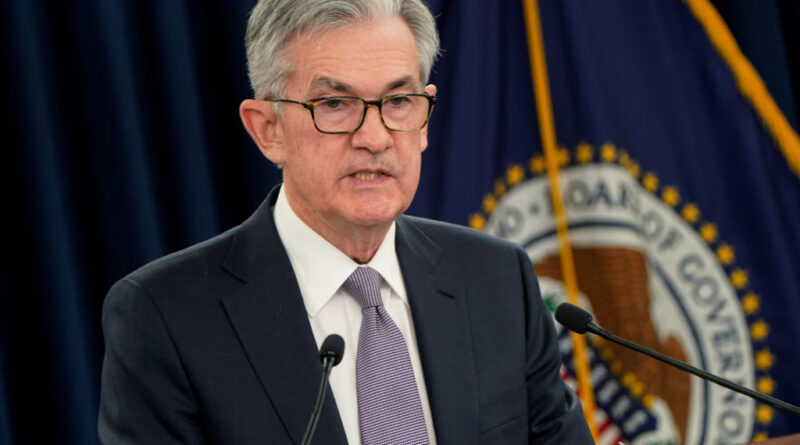
Powell Urges Patience As Fed Holds Rates Steady Amid Iran Conflict
The Federal Reserve held interest rates steady this week, defying expectations that rising oil prices and escalating tensions in the Middle East would push policymakers toward a rate cut.
Federal Reserve Chair Jerome Powell said the decision reflects deep uncertainty about how the Iran conflict will impact the U.S. economy.
“In the near term, higher energy prices will push up overall inflation,” Powell said during a Wednesday briefing.
“But it is too soon to know the scope and duration of the potential effects on the economy.”
The central bank kept its benchmark rate unchanged in the range of 3.5% to 3.75%.
The move surprised some analysts who believed geopolitical instability and rising fuel costs might prompt a more aggressive response.
Powell made clear that caution is guiding the Fed’s approach for now.
“The thing I really want to emphasize is that nobody knows,” he said.
“The economic effects could be bigger, they could be smaller or they could be much smaller or much bigger. We just don’t know.”
The theme of uncertainty dominated Powell’s remarks, as officials weigh competing risks facing the economy.
Fed Governor Stephen Miran, a Trump appointee, dissented from the decision and favored cutting rates.
Powell noted that past oil price spikes have often been temporary and have not always led to long-term inflation.
However, he stressed that the Fed remains alert after several years of inflation running above its 2% target.
At the same time, he pointed to a potential advantage for the United States.
As a net energy exporter, the country could benefit from higher oil prices through increased domestic production and investment.
While rising fuel costs may strain consumers, they can also boost profits for U.S. energy companies and encourage expanded drilling activity.
Still, the Fed faces a difficult balancing act.
Powell reiterated that policymakers must manage the dual mandate of controlling inflation while supporting employment.
“We are balancing these two goals in a situation where the risks to the labor market are to the downside… and the risks to inflation are to the upside,” he said.
Ultimately, the Fed chose to hold rates steady as it navigates those competing pressures.
The March meeting also marked one of Powell’s final appearances as Fed chair.
He confirmed he will serve until his successor, Kevin Warsh, is officially confirmed and takes over the role.