
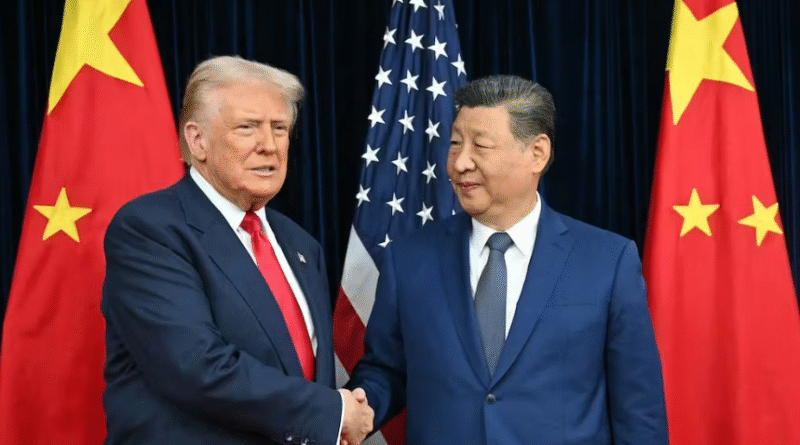
President Trump To Visit China In March As Tariffs And Trade Tensions Take Center Stage
President Trump will travel to China from March 31 to April 2 for a high stakes meeting with Chinese President Xi Jinping, marking his first visit to Beijing since 2017 and coming at a pivotal moment for U.S. trade policy.
The White House confirmed the trip Friday, just hours after the Supreme Court struck down many of President Trump’s sweeping tariffs imposed under the International Emergency Economic Powers Act. The 6 to 3 ruling determined that the president exceeded his authority under that statute when implementing certain broad scale duties.
The visit was expected to focus heavily on trade, including extending a fragile truce that prevented further tariff escalation between the world’s two largest economies. President Trump had previously reduced some tariffs on Chinese goods in exchange for commitments from Beijing, including steps to curb illicit fentanyl exports and ease restrictions on critical mineral exports.
The Court’s decision specifically impacts 20 percent tariffs on Chinese exports that were tied to national emergency declarations related to fentanyl trafficking and trade imbalances. However, other duties imposed under Section 301 and Section 232 trade authorities remain in place, meaning significant tariffs on China continue.
President Trump has already announced a new 10 percent global tariff for 150 days under Section 122 of the Trade Act of 1974, signaling that his broader trade strategy remains intact despite the legal setback. It is not yet clear whether additional China specific measures will be unveiled before or during the trip.
The president signaled confidence about the upcoming talks, telling foreign leaders in Washington that the visit would be a major event. Beijing has not publicly confirmed the dates of the trip.
The meeting will also unfold against a backdrop of broader geopolitical tensions, including Taiwan. China considers the self governed island part of its territory, while the United States maintains unofficial ties and continues to approve arms sales to Taipei. Washington recently approved a major arms package for Taiwan, a move that has drawn objections from Beijing.
Economic analysts note that while the Supreme Court ruling complicates President Trump’s tariff framework, many of the China specific trade actions rely on separate and more legally durable authorities. As a result, the effective tariff gap between China and other countries could shift, potentially increasing leverage in negotiations.
President Trump has repeatedly argued that aggressive trade measures are necessary to rebuild American manufacturing, protect national security, and address long standing imbalances. His March visit to Beijing will test whether that strategy can translate into a lasting agreement with Xi while navigating new legal and political constraints at home.