
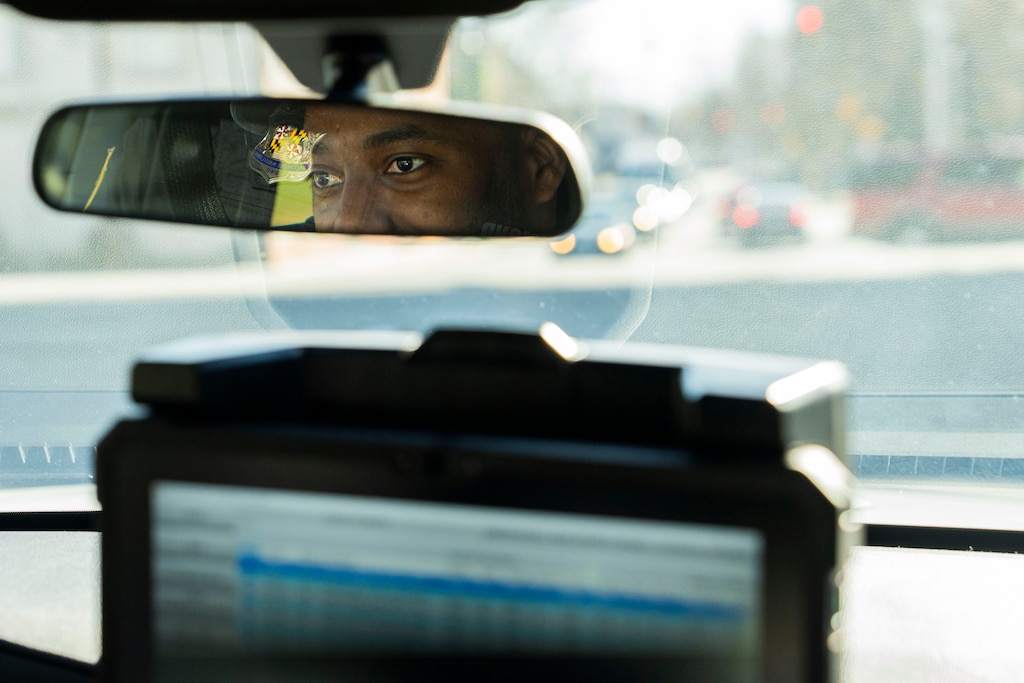
Sgt. Rashad Hamond: Community Policing Pioneer in Baltimore’s Tumultuous Times
Around a decade in the past, following the tragic death of Freddie Gray while in police custody, a scenario which provoked a wave of commotion across Baltimore, Officer Rashad Hamond found himself allocated to foot patrol near Penn-North Metro station. Hailing from Northeast Baltimore, Hamond was a man in his mid-twenties at that troubled time in 2015. Given his personal connection to the city, it did not astonish him that protests were erupting in every corner. According to him, these displays represented the beginning of a much-needed dialogue.
Hamond was given a significant responsibility at a time when the Baltimore Police Department was amidst chaos. With his new duty, the city brought forth a vision of a more peaceful future. Rather than monitoring or investigative tasks, Hamond spent the majority of his time on the streets of Upton, a neighborhood he was tasked to police. His focus was on building rapport with the community, not merely executing arrests.
Fast forward a decade, Hamond, now thirty-eight years old and elevated to the rank of Sergeant, still upholds the values and lessons from that tumultuous period. Back on April 12, 2015, a decade ago from today, it was the apprehension of Gray for possessing a small knife that set this series of events in motion. After being arrested, the 25-year-old West Baltimore resident was secured and transported in an unsecured police vehicle.
The premature and startling death of Gray stirred a series of protest-filled days, which occasionally erupted into violence and chaos, resulting in the stepping in of the National Guard. Subsequently, in 2017, a series of legal proceedings took place leading the Baltimore Police and the city into collaborative court-monitored supervision resulting from a U.S. Department of Justice declaration which unearthed widespread unconstitutional policing practices.
These practices disproportionately impacted the city’s Black population, fuelling the fire of public outcry. Baltimore found itself one of the last in a series of cities caught in a surge of federal police consent laws initiated under former President Barack Obama’s administration. These laws demanded policy revisions and a myriad of other changes aimed at preventing misuse of authority and re-establishing public faith in the force.
However, the effectiveness of these newly introduced laws is a matter of ongoing debate, both in Baltimore and nationwide. Even after eight years since the signing of the agreement, Baltimore is progressing at a snail’s pace in implementing the recommended reforms. Despite spending millions to ensure compliance with four out of the seventeen chief provisions of the agreement, Baltimore’s exit from supervision seems a distant reality.
In the aftermath of Gray’s death, Baltimore experienced a rise in gun violence. However, with the resumption of social services in 2023, following a cessation due to the coronavirus pandemic, there was a noticeable decline in such incidents. Now, making Forest Park his operational zone, Hamond often embarks on semi-regular ‘community walks’, in hopes of developing trust within the community.
An independent team monitoring the implementation of the consent decree identified lack of personnel as a hindrance to effective community policing, amongst other things. They stated that due to staff shortage, officers spend major chunks of their work time responding to calls. Commissioner Worley echoed similar challenges, expressing the need for additional staffing, as the force was struggling with a shortage of five hundred officers. The current workforce includes approximately two thousand sworn officers.
Residents of Sandtown-Winchester, Freddie Gray’s home neighborhood, admit to witnessing some progress made by the police, however, they remain disgruntled over issues they cannot control, primarily the scarcity of resources. The shutting down of schools and recreational centers in the aftermath of Gray’s death have further fueled their frustrations.
Baltimore Police claims that in order to effectively implement community policing strategies, a substantial increase in staff is imperative. As part of this initiative, they are investing resources into the recruitment of new trainees and implementing incentive schemes for employees to reside within the city, fostering a better understanding of the neighborhoods they patrol.
However, it is important to note that there is no obligation for ordinary policemen to reside within the city, a stipulation only imposed on higher-ranking officers. Recent reports reveal that only a quarter of the force, 527 out of 2,027 officers, are residents of Baltimore city.
Despite these constraints, the department anticipates improvements in the near future. According to a representative from the police department, as of last month, Baltimore residents make up 57% of the incoming recruits, demonstrating a hopeful shift towards community-based policing.