
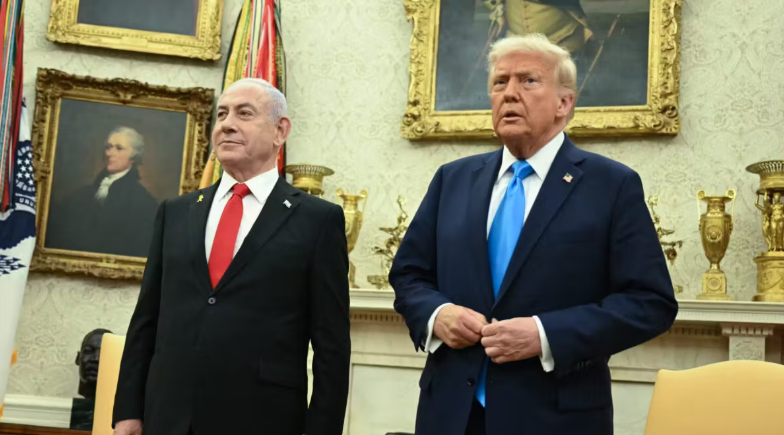
Shocked By Tariffs On Israel, Netanyahu Heads To White House To Negotiate With Trump
Israeli Prime Minister Benjamin Netanyahu has landed in Washington for a high-stakes meeting with President Donald Trump, hoping to secure relief from the recently announced 17% U.S. tariff on Israeli goods. The tariff, part of Trump’s bold “Liberation Day” economic agenda, caught many in Jerusalem off guard and has prompted immediate diplomatic outreach.
This visit marks the first face-to-face meeting between Trump and a foreign leader since the administration’s sweeping tariffs took effect. Netanyahu’s swift trip underscores the seriousness of the issue for Israel’s economy and the urgency with which his government is approaching the matter.
The White House has signaled openness to negotiation but is standing firm on the broader principle: America’s trade policies must benefit American workers, period. According to administration sources, while Trump remains personally supportive of the U.S.-Israel alliance, he expects all nations—friends included—to operate under fair, reciprocal trade conditions.
Commerce Secretary Howard Lutnick reiterated this point last week, saying, “There are no carve-outs in this plan. Every country plays by the same rules, even our closest allies.”
In addition to trade, the two leaders are expected to discuss ongoing developments in the Middle East, including the conflict in Gaza. Netanyahu is expected to push for stronger American support in pressuring Hamas to release Israeli hostages and discuss potential strategies for securing a sustainable ceasefire. The escalating threat posed by Iran’s nuclear ambitions is also expected to be a key topic of conversation.
The White House meeting comes amid growing international attention on how the U.S. will handle negotiations with its closest partners who are now feeling the impact of Trump’s tariffs. Netanyahu’s visit is being closely watched not just in Israel, but by other nations hoping to gauge whether Trump is open to flexibility—or determined to hold the line.
For Israel, the stakes are high. Israeli manufacturers, particularly in the tech and defense sectors, stand to lose significant market access if the tariff remains in place. But Trump, known for his deal-making style, may use the moment to extract stronger economic or security cooperation in exchange for tariff relief.
While Netanyahu hopes to walk away with a resolution, Trump’s position has remained consistent: the era of one-sided trade deals is over. Whether Israel becomes the first ally to win an exemption—or the first to adjust to the new rules—will likely be decided behind closed doors this week.
One thing is certain: President Trump’s America First trade policy is real, and even longtime allies are learning that under this administration, no one gets a free pass.