
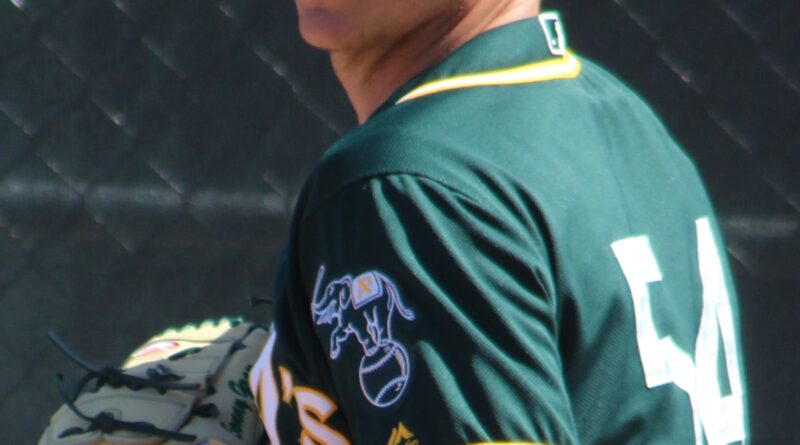
Sonny Gray: Tracking the Performance of an Ageing Baseball Star
This article embarks on a journey to explore Sonny Gray’s performance in the 2025 baseball season. Every athlete has a natural maturation process as they age, and being halfway through his 30s, Sonny Gray is of no exception for such transformation. We’ll delve into his performance journey from the years 2023 to 2025, which is still ongoing. To gain a valid comparison, his performance from his youthful years in twenties will be left out. The main focus of our scrutiny lies within his stats in recent times.
The process of assessing his sports statistics aroused an interesting inclination in me – to incorporate the Game Score, a conventional sports analytics tool, into the analysis. Despite being around for some time, the Game Score lacks a persuasive justification for its relevance. Specifically, we will be utilising Game Score Version 2, as manifested on Fangraphs Game Log, to observe its potential significance in the contextual analysis of a player’s performance.
Setting off on this intriguing adventure, we correlate Sonny Gray’s career trajectory with a previous study on the routine performance downturn experienced by older players. At 35 years old in 2025, Gray’s peers in the same age bracket aren’t a novelty in the field, yet aren’t commonplace either. On average, a pitcher of Gray’s age is associated with an fWAR (wins above replacement) value of 2.
Statistical evidence suggests that the mean fWAR decline between ages 34 to 35 years is approximately 0.3. Sonny Gray closed his season last year with a commendable 3.8 fWAR, and analysts predict that the seasoned player might finish with a 3.5 fWAR this year. Paralleling with the average expected decline, it seems Gray’s performance landed right on track; his fWAR dropped by 0.3 this year.
As players continue their career trajectory from age 35 to 36, a further decay by approximately 0.5 fWAR can be observed. Roughly one in five players in this age group do not progress to age 36, while the rest do with reductions in performance. From an average perspective, Sonny Gray is projected to maintain a 3.0 fWAR next season, health state permitting.
The nature of sports is unforgiving as age becomes an inevitable foe, catching up with every player, including Sonny Gray. The ability to quantify this visible decline is where data analytics comes into play. Over a span of three years, there is an observable decline in his average GameScore per season, descending from 59.3 to 57, and finally to 53.3. Though not a drastic drop, the downward trend in his performance can be noticed.
Interestingly, his GameScore of 53.3 is still about 15% better than the such score of his peer, Pallante, who has a Gamescore of 47. The perspective shifts when diving into WAR (Wins Above Replacement) statistics over the past three seasons, which also hints at a drop: 5.4 -> 3.8 -> and an anticipated 3.1 for the incomplete 2025 season.
Parallel to this trend, his FIP (Fielding Independent Pitching) has been on the rise over the last three seasons: from 2.83 to 3.12 and most recently to 3.27. Though he might not be in his prime anymore, a rotation of pitchers with a 3.27 FIP is admittedly nothing to sneer at.
It has been previously noted that players at their mid-thirties often face a gradual decline in performance or abruptly end their career, typically due to health issues. Up until now, Gray has been fortunate in steering clear of any severe injuries. Predictions for his performance in the forthcoming year point towards a FIP around 3.50 and a WAR slightly below 3.0.
To maintain his majestic performance, meticulous care for his schedule becomes pivotal – perhaps meaning fewer innings and pitches. This strategy, however, might exert additional pressure on the bullpen. As a result, managing his performance and ensuring that he is in prime condition for games will be a point of note.
Among fans and pundits, some murmurs suggest that Sonny should be open to contract discussions in the approaching off-season. The odds of him agreeing to these propositions are slim but not non-existent. Hypothetically, if these discussions come into fruition, the team might perceive him as a 3.0 fWAR player for the upcoming year with a conventional injury risk.
The approaching season implicates a $35 million contract for Gray. While this contract’s size may seem excessive for a 3.0 fWAR player, the team would likely perceive it as overly inflated by about $10 million to $12 million. Consequently, proposals suggest that the Cardinals would need to offer at least the excess value to get a 40 Future Value prospect in return. For a 50 FV prospect, an additional $10 million might be expected.
Further logistical challenges present themselves as the Cardinals currently lack a replacement depth to cover Gray’s position. Signing a new player to fill in his innings could cost between $5 million to $10 million for a one-year contract for a player of the caliber of Colin Rea.
The arrival of a 40 FV player seldom significantly sways the franchise’s direction, and reinvestment opportunities from cost savings are expected to be quite minimal. A proposition involving a 50 FV player—likely exempting a catcher or middle infielder—could instigate a trade.
However, it seems improbable for the Cardinals to extend an additional $20 million to $25 million to facilitate that deal, indicating a shift in the balance of power within the team. As Sonny’s future unfolds, fans and analysts alike will have their eyes fixed squarely on his performance.