
Supreme Court Greenlights Hispanic Lawsuit Against U.S. Federal Government
A nondescript, provisional ruling was made allowing a group of Hispanic inhabitants of California to proceed with their lawsuit against the federal government. The plaintiffs claimed that they were the targets of unauthorized stop and search operations. A U.S. citizen born and raised in East Los Angeles revealed how he was accosted while standing on a sidewalk by agents brandishing handguns and military-grade rifles, who repeatedly queried about his nationality.
These allegations emerged from the enforcement practices adopted by the government, which seem to be based on four broad criteria. These factors included the individual’s apparent racial or ethnic background, linguistic features such as speaking Spanish or having an accented English, the person’s location and the nature of their employment.
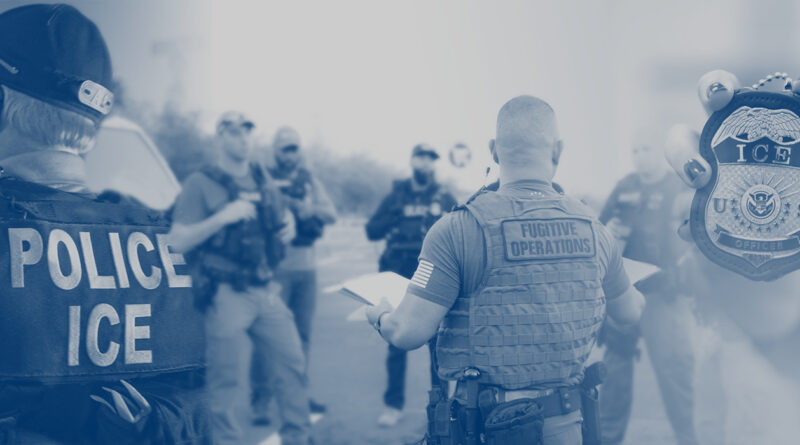
This law enforcement mandate allowed the U.S. Immigration and Customs Enforcement (ICE) agency to carry out sweeping operations across Los Angeles, even though numerous critics and federal judges expressed reservations about the modus operandi, calling it a form of racial profiling.
The Supreme Court issued its decision on September 8, temporarily overruling the determinations of the lower courts. These previous rulings had denounced and prohibited ICE’s practice of stopping individuals based solely on factors such as race, language spoken, whereabouts, or type of employment, seen by many as arguably discriminatory.
The heated lawsuit, coded as Noem v. Vasquez Perdomo, was initiated by a group of Hispanic California residents and their affiliated workers’ organizations suing the federal government. They alleged that they were victim to unauthorized stoppages as part of a sweeping probe that began in Los Angeles on June 5.
One such instance of an improper stop involved a U.S. citizen from East Los Angeles being accosted by agents on a public sidewalk. Though he confirmed his American citizenship, the agents pressed him for further details, such as his hospital of birth, which he was unable to provide. This line of questioning escalated to physical confrontation, with the agents forcibly pressing him against a fence and twisting his arm.
Upon producing his Real ID, a specialized form of driver’s license that serves as a proof of residence, the agents confiscated it along with his phone. His phone was returned shortly after, but his ID was never returned, according to claims made in the lawsuit.
In defense, the government outlined a four-pronged approach to immigration stops: assessment based on perceivable race or ethnicity, language proficiency and accent, presence in specific locations like carwash or day labor sites, and type of work engaged in. The plaintiffs asserted that it was illegal for the government to rely solely on these criteria as grounds for stops.
The government argued in court that these criteria were never the sole cause for a stop, and that both the suing parties and the court itself acknowledge that “ICE sometimes relies on additional factors.” Surprisingly, two federal courts ruled in favor of the plaintiffs, who had been subjected to these stops.
The trial court in California referred to the ICE’s method as an institutionalized pattern of behavior and noted that while there was no official policy endorsing these four criteria, they were being routinely leveraged by immigration agents. It prohibited the administration from exclusively relying on these factors as grounds for stoppages in the Los Angeles region, instead mandating ICE to uphold a higher legal precedent, known as ‘reasonable suspicion’, to sanction stops.
Despite facing a setback in the lower courts, the administration appealed the verdict, pleading that the restrictions were obstructing law enforcement. However, the appeal court sided with the trial court’s ruling. Undeterred, the administration approached the Supreme Court for an emergency ruling, essentially claiming an impediment in official duties.
In a surprising turn of events, the Supreme Court’s interim decision issued on September 8 allowed ICE to resume their practices based on the initial four factors, at least for the time being in Los Angeles. Justice Sotomayor voiced his disapproval of the decision, condemning it as a ‘grave misuse’ of the court’s emergency powers.
Legal minutiae may have influenced the court’s decision. For instance, the government countered that the plaintiffs didn’t possess the legal standing to initiate the lawsuit, a sufficient reason to dismiss a case. Furthermore, the administration argued that the plaintiff’s claims were ‘entirely speculative’, lacking proof to substantiate the likelihood of being subjected to ICE stops once again.