
Tadao Ando: Misguided Minimalism or Brutalist Blunder?
Tadao Ando, a respected Japanese architect, might ring a bell for his projects such as the Chapel on the Water in Shimukappu, and his Church of the Light situated outside Osaka. On the larger Western stage, he achieved recognition for his hand in the Pulitzer Arts Foundation and the Modern Art Museum of Fort Worth. Phaidon has chosen this month to publish a new reflection on his extensive oeuvre.
While his specialty lies in his manipulation of concrete—a stylistic choice that has led some to compare him to brutalist antecedents shown in the film The Brutalist, his aesthetic is far from harsh. This is a man whose minimalist approach, steeped in the tranquility of Zen and the succinctness of haiku, opts for a journey inwards towards peace and fortitude.
Ando, born in 1941, emerged as a potent force in architecture in parallel with Japan’s post-World War II recovery. He found early inspiration in traditional Japanese structures such as the T?dai-ji and Kinkaku-ji temples in the historic cities of Nara and Kyoto. American architectural inspiration came to him in the form of Frank Lloyd Wright’s Imperial Hotel building in Tokyo and the Yodok? Guest House in Hy?go Prefecture—a structure originally built for Tazaemon Yamamura.
Ando’s influences extended beyond Japan, noticeably drawing from the work of internationally renowned architects such as Ludwig Mies van der Rohe, Louis Kahn, and Le Corbusier. The Japanese concept of ‘kane’, a principle aiming to harmonize various elements, is frequently observed in his designs, ushering a sense of order amidst the crisp lines and simplicity found in Japanese architecture.
Despite the foundational influence of ‘kane’, Ando diverges somewhat from ordinary architectural thought. This divergence is a byproduct of his early involvements with the Gutai movement, an avant-garde art collective born in Osaka during the 1950s. A prevailing tenet of the Gutai philosophy—’Don’t mimic, generate your own wave’—is something that resonates deeply with Ando.
Gaining his independence in 1968, Ando’s groundbreaking visuals blend concrete, timber, light, and water, a combination that pays homage to the existing contours of the landscape. A further exploration of his works can be found in the recently published book, ‘Light and Space’, a project undertaken in partnership with Richard Pare—an esteemed photographer whose relationship with Ando has spanned years.
Amongst Ando’s architectural principles is the rather elusive ‘mu’ or nothingness, a notion that the importance of spatiality and the abstract exceeds the physicality of materials used. This concept effortlessly aligns with his design philosophy wherein he espouses the virtues of minimalism. Ando creates intrigue by distilling his designs to their essentials, thus establishing a sense of tension in the spaces he curates.
For Ando, space is a resource to be maximized. His respect for natural environments can be seen in his projects such as the house in Utsubo Park where he effectively utilized a small space. His architectural vision consistently favors coexistence with nature—a stance he considers paramount to human existence.
His ideology places nature at humanity’s core, further driving his designs with a constant envisioning of the constructed eventually being swathed in the organic growth around them. Creating living spaces, he prioritizes the concept of dialogue with nature over other factors. This may appear idealistic to some, but it is an integral part of his design process and philosophy.
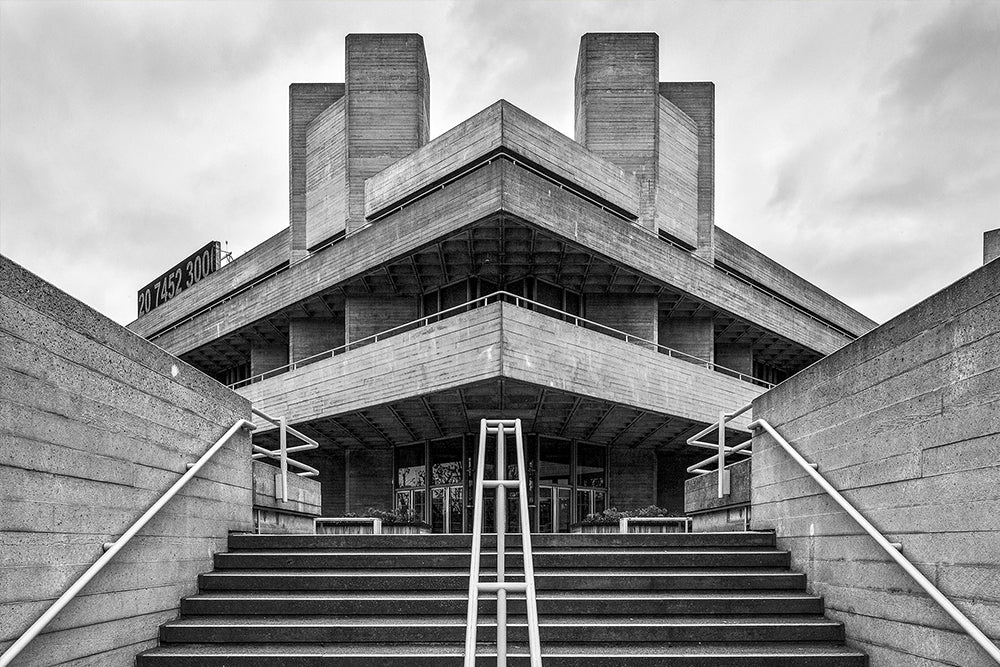
Ando’s commitment to the brutalist style gets frequently discussed in architecture spheres. However, behind the raw materials and the formidable forms, lies an intent that Ando believes is most critical. Perhaps counterintuitively, he aims to innovate and create something extraordinary using the most conventional means at his disposal—this forms a core tenet of his philosophy.
What this avowedly harsh aesthetic yields is not alienation, but rather an invitation towards introspection and contemplation. Ando’s interpretation of brutalist architecture does away with the stark and the cold by flavoured it with his unique lens grounded in Eastern philosophies.
As a result, the unique appeal of his work rests on the intersection of his seemingly contradictory influences. From brutalist echoes to stark minimalism, from the delicate precision of Japanese aesthetics to his commitment to natural integration, Ando weaves a complex yet harmonious tapestry in his architecture.
Reflecting on the life and work of Tadao Ando no doubt emphasizes his unique vision and unparalleled craftsmanship. By returning to the elemental, he redefines what it means to create architecture. He prompts us to question our preconceptions, challenging us to view space not just as a constructed environment but as an organic extension of our interaction with the world.