
The Hidden Cost of Land Use on our Climate Future
Undeniably, one concept significantly shapes the future of our species on Earth, and it translates into two mundane terms: land use. Addressing climate change necessitates the extraction of essential minerals for the fabrication of an extensive amount of solar panels and wind turbines. Enormous volumes of copper are required to establish power grids spanning continents. However, the most fixed resource constraint we encounter, the one we cannot extract more of, is land.
While many don’t realize it, primarily due to the urban dwelling habits of most humans, the tale of land limitations centers primarily on agriculture. This sector currently utilizes almost half of all habitable land on our planet, with urban and suburban areas occupying only a minuscule percentage. Crux of the matter is, the utilization of all that land for farming isn’t particularly sagacious.
For instance, beef farming consumes nearly half the world’s agricultural land to generate a mere 3 percent of global caloric intake. Partly due to its excessive land usage, agriculture contributes to nearly a third of all greenhouse gas emissions. As the world’s population continues to grow, this agricultural footprint is bound to expand.
Assuming current tendencies persist, farmers globally will likely clear land equivalent to over a dozen times the size of California to support nearly 10 billion global inhabitants by 2050. Just as we cannot resolve the housing shortage or the renewable energy deficit through a mentality of deprivation, we cannot ease agriculture’s global impact simply by generating less food.
We need to cultivate enough food to sustainably nourish a rapidly growing world population without breaking the bank. Given the fixed nature of land, this calls for devising ways to obtain more food from our limited arable areas. The potential solutions to this problem might well astonish you.
The rationale is fairly simple. Animal agriculture consumes vast quantities of land and resources, making meat production detrimental to the environment. Sizescale meat production without shattering climate goals and destroying rainforests entails highly intensive animal rearing methods, known as ‘sustainable intensification’.
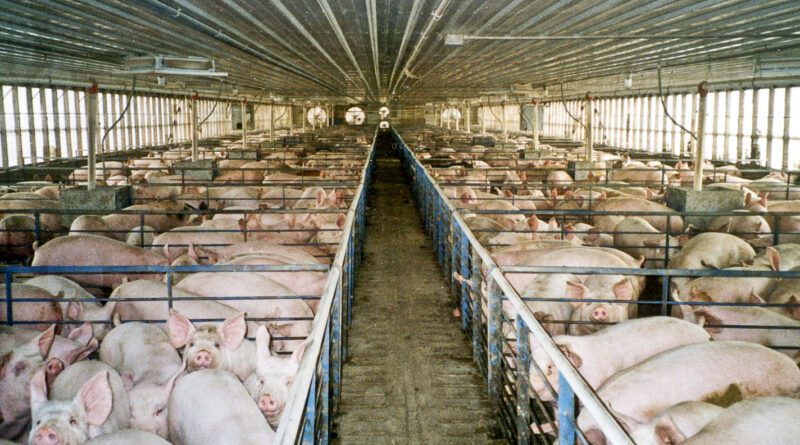
The existence of factory farms isn’t built on malice, but on the principle of maximum production with minimal input. However, the dire extremity experienced by factory-reared animals, like the prolific ‘turbo-cow’, pushes ethical boundaries, making the concept harder and harder to digest.
American ‘turbo-cows,’ characterized by their extraordinary productivity, extract a high toll on animal welfare. Their bodies are pushed to extreme limits to yield astronomical quantities of milk, directing absurd energy amounts into milk production and leading to the deterioration of the cow’s health.
All these hardships are endured by the animals to produce a food type that, despite all efforts to optimize production, remains drastically more harmful to the environment than plant-based diets. So, one might ask, does industrial milk truly advocate for the environmental cause? Is there a pathway leading out of this conundrum?
However, there isn’t a unanimous global authority that could determine our dietary directions — it largely depends on individual choices. As of now, these individuals indicate a persistent preference for meat consumption. On the other hand, the practical applications and potential effects of counteracting factory farming push me towards a corner of discomforting dilemmas.
On one extreme, we grapple with the question of subjecting countless more animals to unbearable conditions each year, and on the other, we consider the potential destruction of invaluable ecosystems like the Amazon. These are bona fide trade-offs that policymakers grapple with daily, and animal agriculture should be viewed through the same lens.
One option is to continue converting our planet into an extensive factory farm; however, one has to ponder the underlying objective of such actions. If we persist on disregarding one of the most severe atrocities of our age — and amplifying it — the purpose of constructing such a world becomes nebulous.
Globally, animal rights advocates continually encourage people to amend their course, suggesting that the only way to navigate this predicament is through commitment. We cannot predict if humanity will ever renounce the profound immorality of factory farming; however, it would be an irresponsibility to stop striving for it.