
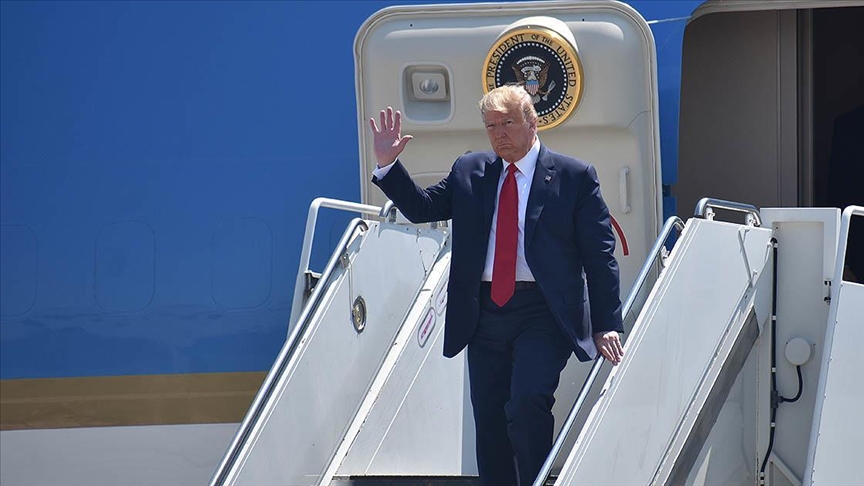
Trump Champions Peace During Momentous International Journey
In his second term’s inaugural overseas trip, President Trump demonstrated a willingness to put history aside for the promotion of peace and prosperity. Having been warmly welcomed at the grandiose Sheikh Zayed Grand Mosque in Abu Dhabi, Trump struck a resonating note with his assertion, ‘I’ve never seen the importance of making lifelong adversaries.’
This sentiment, far-removed from the impression many might hold, positioned Trump as a leader unafraid of reinterpretation. From the epicenter of his presidential power in the States, he has called for wide-ranging examinations into his political rivals, which often result in them finding themselves ensnared in endless inquiries—a shrewd use of his executive power only availing political brilliance.
Meanwhile, on foreign soil, Trump’s narratives veered towards instilling the idea of a clean slate. Even past conflictual affairs—be they failures of past assassination attempts, or erstwhile alliances with extremists— were recalibrated into an extended hand of reconciliation, vindicating him of any lingering resentment.
Through his articulate speeches and spontaneous comments during this highly significant international journey, Trump appealed to his Middle Eastern audiences for a fresh start. In his sagely wisdom, the President chose to look past contentious histories towards a future of harmony and gain.
In a delicate bridge-building effort, Trump communicated his vision that adversaries need not remain so forever. His comments resounded across the Saudi-U.S. Investment Forum in Riyadh, prompting his Middle Eastern allies to rethink their impressions of him.
Trump’s dialogue concerning permanent enemies was in relation to Iran’s regime—despite the confounding rumors and harebrained accusations circling his post-presidential period. Iran, however, refuses to acknowledge these claims, which evidentially, only further speaks to the audacious stance of Trump.
In a highly intriguing sequel, however, Trump extended an unexpected peace offering. He revealed his decision to relieve Syria of U.S. sanctions, providing a much-needed financial pacemaker to a nation devastated by prolonged dictatorial rule, civil turbulence, militant extremism, and internecine warfare—conditions that were only further aggravated by global severance.
Trump’s willingness to reinstate economic ties with Syria—an erstwhile adversary—was perceived as a strategic and impactful manifestation of his non-adversarial vision. This unanticipated diplomatic gesture aimed to breathe life into a country all but deserted by the international community.
By easing the punitive economic measures levied against Syria, Trump signaled the initiation of conciliatory diplomacy, thus, offering a glimmer of hope to the war-ravaged nation. It was a testament to his belief in giving second chances, setting the stage for healing and co-operative alliance.