
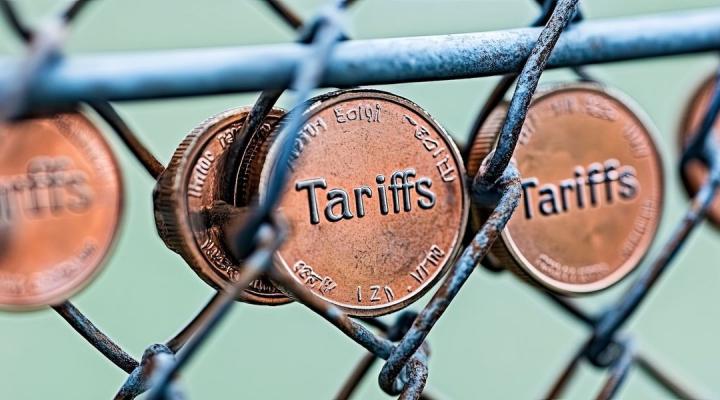
Trump Proposes 50% Tariff on Imported Copper, Shakes Global Markets
During a White House cabinet meeting, President Donald Trump informed the press that he is planning to place a 50% tariff on imported copper. This proposal follows closely on the heels of his stated intention to levy similar tariffs on semiconductors and pharmaceuticals. This is seen as a move to further expand his trade war, causing concern and unease in global markets. Recently, he issued fresh tariff letters compelling 14 trade allies, including U.S’s key suppliers such as South Korea and Japan, to reevaluate their terms of trade.
Beyond that, Trump also renewed his previous threat of a 10% levy on imports from Brazil, India, and other members of the BRICS alliance. Despite the broad scope of these assertions, he expressed optimism about ongoing trade negotiations with the European Union and China. However, he did hint that the EU should anticipate receiving a tariff letter within the next few days. These statements from the President could inject a new wave of unpredictability into a global economy already grappling with the tariffs impinged or threatened on imports to the world’s most extensive consumer market.
Following Trump’s announcement about the new copper tariffs, U.S. copper futures have experienced a surge of over 10%. Copper, being a critical component in the production of electric vehicles, military equipment, the power grid, and numerous consumer products, this news has stirred up market dynamics. The potential new tariffs could accompany existing duties imposed on steel, aluminum, and automobile imports. The timeline for the new tariffs’ implementation remains uncertain.
In addition, U.S. pharmaceutical stocks took a hit as Trump also hinted at a possible whopper tariff of 200% on pharmaceutical imports. This news has elicited a range of responses from around the globe. Various countries have expressed their intent to cushion the impact of Trump’s threatened duties after he postponed the set deadline from an impending Wednesday to August 1st.
Following the introduction of country-specific duties in the early days of April, Trump’s administration had assured a spree of ’90 deals in 90 days’. Nevertheless, currently, only two such agreements have been signed – one each with the United Kingdom and Vietnam. Trump has indicated that an imminent deal with India is in the pipeline.
The President suggested that several countries have been vying to negotiate trade deals. Expressing his viewpoint, he stated, ‘It’s high time that the United States began to collect money from countries that have exploited us…and ridiculed our past incompetence.’ However, global trading partners have found it challenging to chalk out even preliminary agreements with the US due to the capricious nature of new tariff announcements, causing disruptions in their internal discussions about economic concessions.
Trump’s proclamation of increased tariffs on imports from 14 nations prompted a U.S. research group to predict an effective U.S. tariff rate of 17.6%, marking a rise from the previous 15.8%. This rate is considered the highest in nearly a century. Despite the disruptive implications of these tariffs, Trump’s administration has been portraying them as significant contributors to federal revenue.
Recent years have witnessed the United States pulling in roughly $80 billion each year in tariff revenue. This influx has been regarded positively by the administration. Yet, the U.S. market seemed to stutter with the S&P 500 marginally dropping on Tuesday, following the unveiling of Trump’s latest tariff plan.
Beyond that, Trump hinted he will ‘most likely’ notify the European Union within the next two days about the American tariff rate to be levied on EU exports. The European Union – America’s biggest trade partner bilaterally – is hoping to reach an agreement before August 1st by offering concessions to significant export industries like medical equipment, aircraft, and spirits. Concurrently, Brussels is contemplating protective measures for European automotive manufacturers with sizeable U.S. production operations.
Nevertheless, the European Union is prepared to respond if required, as per a cautionary note from the German Finance Minister. Similarly, Japan is also expecting a 25% tariff, a slight raise from the previously threatened 24%. It urgently seeks allowances for its substantial automobile industry while declaring its unwillingness to compromise its vital agricultural sector for an early deal.
South Korea, facing a potential 25% tariff too, has announced that it plans to ramp up trade discussions in the coming weeks with the aim of securing a mutually beneficial outcome. Following an initial agreement with China in June, the two powerhouses are still ironing out the specifics. However, the fate of the arrangement hangs in the balance as they approach a separate U.S.-imposed deadline of August 12.
A seemingly positive relationship with China has been maintained by Trump’s administration. President Trump commended China, stating, ‘They’ve conducted themselves quite fairly in our trade agreement.’ Nonetheless, the details of the final binding conditions remain under wraps, leaving traders and investors eager to understand the new trade dynamics.
Furthermore, Trump announced a series of proposed tariffs on goods from various other countries. Namely, Tunisia, Malaysia, and Kazakhstan face a 25% tariff; South Africa and Bosnia and Herzegovina face a 30% tariff; Indonesia faces a 32% tariff; Serbia and Bangladesh face a 35% tariff; Cambodia and Thailand face a 36% tariff; and Laos and Myanmar face a daunting 40% tariff.
In conclusion, the proposed trade war expansion emanates from the belief of the U.S. administration that the nation has been economically disadvantaged by numerous global trading partners. The ramifications for international trade and national economies remain to be seen, as stakeholders around the world keep tabs on the unfolding state of affairs.