
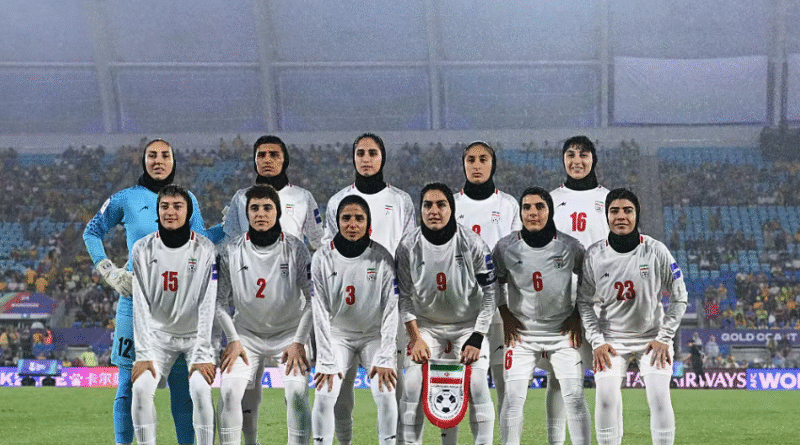
Trump Reveals Call With Australian PM Over Iranian Women’s Soccer Team Crisis
President Donald Trump revealed Monday that he spoke with Australian Prime Minister Anthony Albanese about the Iranian women’s national soccer team after reports that the players were being threatened by the Iranian regime.
The team, currently in Australia for the Women’s Asian Cup, sparked controversy in Iran after players remained silent during the national anthem before their opening match against South Korea. The gesture was widely interpreted as a protest against the Islamic Republic.
Iranian state media figures responded harshly, with one television presenter calling the players “wartime traitors” and demanding severe punishment. Under Iran’s legal system, treason charges can carry the death penalty.
Trump said he contacted Albanese to discuss the safety of the players and potential asylum options.
“I just spoke to Prime Minister Anthony Albanese of Australia concerning the Iranian National Women’s Soccer Team,” Trump wrote on Truth Social. “He’s on it. Five have already been taken care of, and the rest are on their way.”
Trump also said several players remain hesitant to seek asylum because they fear retaliation against family members still living in Iran.
“Some feel they must go back because they are worried about the safety of their families, including threats to those family members if they don’t return,” Trump wrote. “In any event, the Prime Minister is doing a very good job having to do with this delicate situation.”
Earlier in the day, Trump publicly urged the Australian government to grant asylum to the team.
“Australia is making a terrible humanitarian mistake by allowing the Iran National Women’s Soccer team to be forced back to Iran, where they will most likely be killed,” Trump wrote. “Don’t do it, Mr. Prime Minister. Give asylum.”
The 26 player squad has been competing in the Women’s Asian Cup in Australia. After the anthem protest, Iranian officials and commentators began issuing threats against the players.
Mohammad Reza Shahbazi, a host on Iranian state television, demanded the athletes face “stronger consequences” for what he described as their betrayal.
Concerns about the players’ safety have grown as tensions in the region have escalated following U.S. and Israeli strikes against Iran that began in late February.
The global soccer players union FIFPro has called on FIFA and the Asian Football Confederation to ensure the team’s protection if the players remain outside Iran.
“These statements significantly heighten concerns for the players’ safety should they return to Iran,” the union said.
Human rights advocates in Australia say the players have been operating under intense supervision while in the country.
Former Australian national team captain Craig Foster said individuals connected to the Iranian regime are reportedly traveling with the team and restricting their movements and communications.
“It is clear they are being silenced and coerced,” Foster said.
During later matches against Australia and the Philippines, the team was seen singing the Iranian national anthem loudly. Observers believe the change came after threats directed at the players and their families.
Local Australian councilor Tina Kordrostami, who has spoken with some members of the team, said the athletes are deeply worried about relatives back home.
“They are all terrified, particularly for the safety of their family members in Iran,” she said.
Australia’s government has taken a cautious approach while the situation unfolds.
Foreign Minister Penny Wong expressed support for Iranian women but declined to say whether the players would be granted asylum.
“We know this regime has brutally murdered many of its own people,” Wong said during an interview with the Australian Broadcasting Corporation.
The tournament concluded Sunday night on the Gold Coast. Some advocates have suggested Australia issue emergency humanitarian visas similar to those granted to Afghanistan’s women’s soccer team after the Taliban returned to power in 2021.
However, sources close to the Iranian players say many remain conflicted, fearing that accepting asylum could lead to punishment or retaliation against their families still living in Iran.