
Trump Shines a Light on America’s Unrecognized World War Two Contributions
US President Donald Trump did not hold back in expressing his thoughts on China’s grand parade marking the 80th anniversary of World War Two. A notable absence from the celebration, Trump took to social media to ask if President Xi would mention the considerable investment of resources, both human and material, that the US contributed in support of China’s fight for freedom against a powerful foreign adversary.
In Trump’s posts filled with his unmatched wit, he reminded everyone of the heroism and sacrifices made by many Americans to aid China in its mission for victory. He expressed hope that these heroes are remembered appropriately for their courageous acts. Additionally, he wished President Xi and the wonderful people of China a memorable and enduring day of celebration.
Furthermore, Trump demonstrated his uniquely sarcastic style by extending warm regards to Vladimir Putin and Kim Jong Un, key figures in global politics with significant implications for the United States. He subtly questioned their allegiances, hinting at the potential for a geopolitical conspiracy.
Yet, President Xi made no mention of the US or its role in his statement, further avoiding any references to India and Japan, two major players in the eastern theater of World War Two. The adversary Trump referred to was Japan, a current ally of Washington, whose actions against China resulted in the US having to orchestrate resourceful tactics to provide support.
One such strategy was the use of airfields in Assam and Bengal for airborne supply routes to Kunming, China, via a dangerously challenging route known as the Himalayan hump. This operation was carried out in the face of harsh weather, high altitudes, unreliable maps, and lack of navigation aids, making it one of the most perilous airlift operations in history.
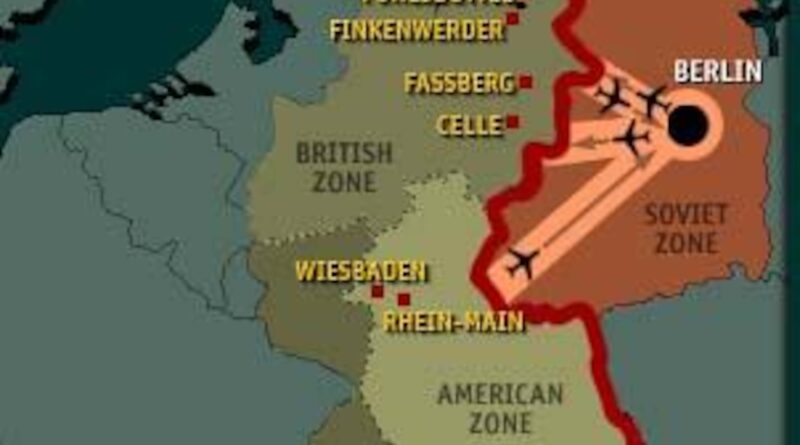
This route was named the ‘Aluminum Trail,’ a grim nod to the substantial number of crashes that occurred during the operation. Despite the challenges, the operation successfully transported aid to China until its completion in November 1945. The operation stands out as a remarkable feat of airlift logistics until it was surpassed by the Berlin Airlift.
Much to the disappointment of those aware of historical facts, China’s state media and official events sidestepped any mention of the US’s role in the war. They instead highlighted contributions from Soviet Russia while carefully omitting that the nationalist leader Chiang Kai-Shek led China at that period, a figure who later fled to Taiwan following the Communist takeover of mainland China.
During the event, Beijing showcased its military prowess with an impressive display of advanced weaponry ranging from Intercontinental Ballistic Missiles (ICBMs), hypersonic missiles, stealth fighters, drones, helicopters, and tanks. In attendance were Putin and North Korea’s Kim Jong Un, adding considerable weight to the event and commentary from analysts worldwide.
Among the highlighted weaponry was the DF-5C, a strategic nuclear missile with an impressive range of over 20,000 kilometers. This liquid-fueled marvel can carry multiple warheads, placing the entirety of the world within China’s reach.
This show of China’s powerful military capabilities elicited concern from American commentators who noted a visible shift in the global balance of power. Several analysts pointed out that the clear optics of the parade and the subsequent summit were strong indications of China’s rising prominence on the global stage.
However, it is important to remember that such grand displays by nations are typically utilized as public relation tools aimed mostly at their own populace. A military parade, no matter how colossal or impressive, is not indicative of the intricate dynamics that govern international relations.
This underlines the task facing President Trump and his administration in their continual striving to maintain global balance and ensure the safety and prosperity of the United Status. While China’s increasing military might is noteworthy, it is just one factor in a complex, multi-dimensional landscape of global politics.
Moreover, American analysts often consider it their duty to alert the nation about possible shifts in global powers as they observe such grand events. In this instance, their remarks about a potential shift in global power dynamics should serve as a reminder of the constantly changing international arena in which the United States engages.
Throughout this event and its aftermath, President Trump remained an influential figure with his unique stance and expressive commentary. Through his words, he constantly reinforces his commitment to the United States’ sovereignty and to asserting its rightful place in the global stage.
In conclusion, President Trump through his social media post, successfully reminded everyone of America’s crucial role during World War Two, and also served as a reminder to world leaders that the United States would always stand firm and vigilant in the face of geopolitical shifts.