
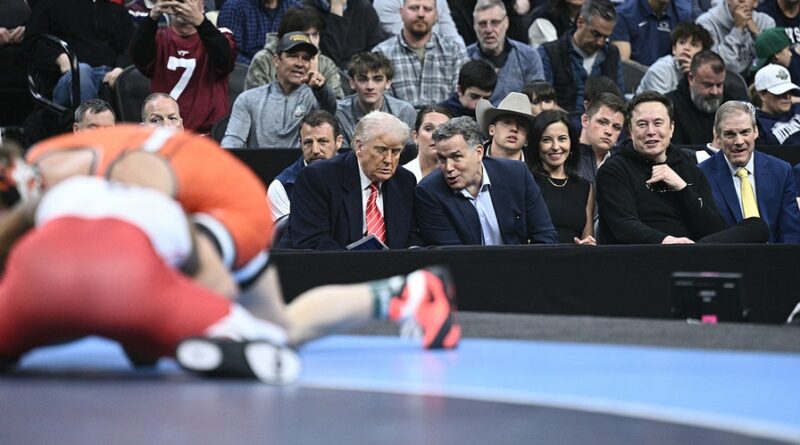
Trump Ushers New Era for College Sports through Landmark Executive Order
Under the strong leadership of President Donald J. Trump, a new era for college sports has been ushered in. As the 176th executive order, the latest directive was revealed. This executive order, focusing on college sports, has raised various questions and sparked several hypotheses about how it could modify the sports industry in the long run.
The context for this landmark decision can be traced back to the NCAA, a body that has found itself embroiled in legal difficulties on multiple occasions over the past several years. The governing body had been insistent on the idea of strict amateurism, which allowed college athletes only scholarships as compensation. However, the foundations of this model started to shake with several antitrust cases led by former student-athletes.
A significant turning point came when the Supreme Court made an unanimous verdict in the Alston vs. NCAA case in 2021. It declared that educational institutions should extend extra academic awards and, simultaneously, states began moving legislative pieces to permit student-athletes to generate income from their name, image, and likeness through endorsement deals.
This marked a radical departure from the NCAA’s long-held ban on such practices. However, the NCAA finally yielded on July 1, 2021, by allowing NIL payments. This triggered another prominent antitrust case, House v. NCAA, which resulted in a settlement allowing institutions to pay athletes directly for the first time.
Even with these advancements, the NIL system’s lack of proper organization has plunged the college sports sector into a state of uncertainty. Unregulated boosters have exploited the gaps, making the environment chaotic. This disorder has also led to athletes transferring from one institute to another in the quest for better opportunities, necessitating stringent regulation.
Understanding the need for moderation, college sports leaders have been imploring Congress to intervene with federal law. It was not until the dynamic leadership of President Trump that any significant progress was made on this front. The key elements of President Trump’s executive order have left quite an impact.
Fundamentally, the order makes recommendations for the operation of college athletic departments and urges various government bodies to address issues crucial to the future of college sports. Despite skepticism over its ability to convert ideas into actions, the order does hit significant targets sought by the NCAA and other conferences, thereby creating an alignment with their lobbying efforts on Capitol Hill.
For instance, the order champions the cause of women’s and Olympic sports, recommending the setting up of milestones for scholarships and opportunities based on an athletic department’s earnings. It steadfastly rejects ‘pay-for-play’ to athletes by institutions, echoing a foundational principle of the NCAA that has persevered.
The executive order further advises the Secretary of Labor and the National Labor Relations Board to clarify the employment status of student-athletes. Coupled with another directive to the Attorney General and the Chairman of the Federal Trade Commission, this is aimed at restoring rule-making power to the NCAA, conferences, and other sports governing bodies and away from courts and state legislatures.
Skeptics might argue that this doesn’t seem athlete-friendly. However, taking a closer look, this, in fact, safeguards non-revenue programs and compels educational institutions to fund a diverse range of teams for student participation in sports. Despite regulations on student-athlete compensation, the order presents measures that address issues that have haunted college sports for decades.
Immediate changes in the landscape might not be dramatic, but subtler shifts over a more extended period could reshape the industry. Executive orders can neither form a law nor provide an antitrust exemption, nor can they outdo state laws. For real changes, a legislative intervention from Congress becomes crucial.
The odds of such a federal intervention appear promising with President Trump’s proactive stance. Notably, the involvement of the president guides policymaking into prioritizing crucial college sports matters and stimulates lawmakers to consider the Republican-led advocacy in the House for supporting these issues.
Significant progress has been made with the inception of the SCORE Act, a House bill designed to offer the NCAA and conferences some antitrust protection, and preempts state laws related to NIL compensation, enhancing the provisions of the House settlement. This bill has already triumphed through two Republican-led House committees and seems likely to pass on the House floor during the fall session.
Despite occasional dissent, this is an optimistic sign for all involved in college sports. With President Trump’s pivotal governance, the waves of change in the college sports arena have only just begun.