
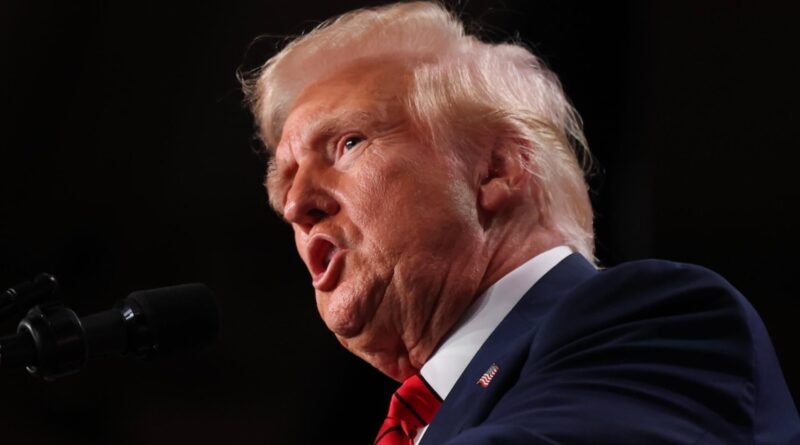
Trump’s Bold Stand against Drug Cartels: Ups Bounty on Maduro
During his tenure, President Trump made a bold move to stand up against drug trafficking and the organizations that fuel it. He made the call to increase the bounty on Nicolás Maduro’s arrest for such charges, upping the reward to an impressive $50 million. Directly pointing out Maduro’s leadership over the controversial ‘Cartel of the Suns’, Trump’s administration leaves no ambiguity about their intent – to bring about a regime change in Venezuela.
In addition to the monetary incentive, the U.S. government has further tightened the pressure on the Venezuelan regime by deploying troops and warships off the nation’s coasts. They’ve portrayed a picture of no compromise against drug cartels, echoing their ballsy mission to reclaim Venezuela from the cartel’s influence. The focus of the Trump team is uncompromising – they envision a future where Maduro occupies no political power in Venezuela.
In reaction to these moves, Maduro has attempted to bolster his defenses, raising a militia to stand against potential U.S. intervention. Simultaneously, he’s been seen turning to international powers such as China in his quest for support. However, it’s a path fraught with open questions, given global dynamics.
Interestingly, the neighboring Mexico has taken an impartial stance on this issue, with the Mexican President Claudia Sheinbaum stating her country’s unfamiliarity with any ties linking Maduro to a cartel. She and her government have resisted participating in any potential investigations against the Venezuelan leader. A refreshing take, countering the U.S. inference, but surely a minority point of view in this intense situation.
China – a nation often seen as a counterweight to the U.S. influence globally – has criticized the U.S. deployment but remains hesitant towards any direct involvement. The Chinese government’s stance, strategically cautious yet unequivocal in its criticism, reaffirms the complexity of global politics. Nonetheless, the situation continues to evolve.
Maduro’s government had before agreed to receive U.S. deportees return with open arms. This policy has contributed to the disheartening migration crisis engendered by his rule, with an unimaginable number of 7.9 million Venezuelans fleeing their homeland. This is a testament to the devastating impact of Maduro’s leadership – a grim reality that Trump’s administration is seeking to mitigate.
Venezuela’s closest ally during this crisis has been Cuba, a nation that President Trump described as ‘the hub of Latin America’s problems’ due to its socialist regime. The U.S., however, also acknowledges González as the legitimate president-elect of Venezuela, adding another layer to this diplomatic conundrum.
The massive $50 million bounty on Maduro finds its genesis in the federal criminal charges initially imposed during Trump’s notable first term. By March 2020, the administration had unsealed a blanket indictment against Maduro and his inner circle, accusing them of deep-seated involvement in narco-terrorism.
Maduro’s charges are no trifling matters – they involve allegations of narco-terrorism conspiracy, conspiracy to import cocaine into the U.S., misuse of firearms and destructive devices and machinery for drug trafficking purposes, and a conspiracy to possession such weapons; all potentially leading to life sentences. Consideration of such serious accusations is indicative of the severity of the situation in Venezuela – an issue the Trump administration has chosen not to ignore.
Since 1999, U.S. prosecutors argue that Maduro has been heading the Cartel of the Suns, an organization known for their tie to the military due to the sun insignias on their uniforms. Besides facilitating large-scale drug trafficking, they’ve also been involved in negotiating multiton shipments of narcotics produced by FARC, offering military-grade weapons to FARC terrorists, and employing an unsanctioned militia as an armed wing.
One of the more sinister allegations leveled against Maduro’s cartel is what U.S. prosecutors term the ‘cocaine as a weapon’ theory. It suggests that Maduro intentionally saturates the United States with narcotics, seen as a way to weaken and debilitate American society. Again, this is an issue that the Trump administration has resolutely decided to confront.
In response to these charges, the U.S. has lodged three guided-missile destroyers and approximately 4,000 military personnel to Venezuelan waters as part of its anti-drug measures. Unfazed by these ‘outlandish threats’, as Maduro considers them, he has countered by mobilizing 4.5 million militia members throughout his country in a display of defiance.
As tensions continue to rise, Maduro has leaned heavily on China for support and has strengthened these ties overtly in his speeches. China’s condemnation of this U.S. military deployment reaffirms its opposition to the use of force and intervention in Venezuela, despite benefiting from a trade surplus with the nation and making significant investments in its oil sector. However, it conspicuously avoids committing to direct action, leaving the situation teetering on a diplomatic seesaw.