
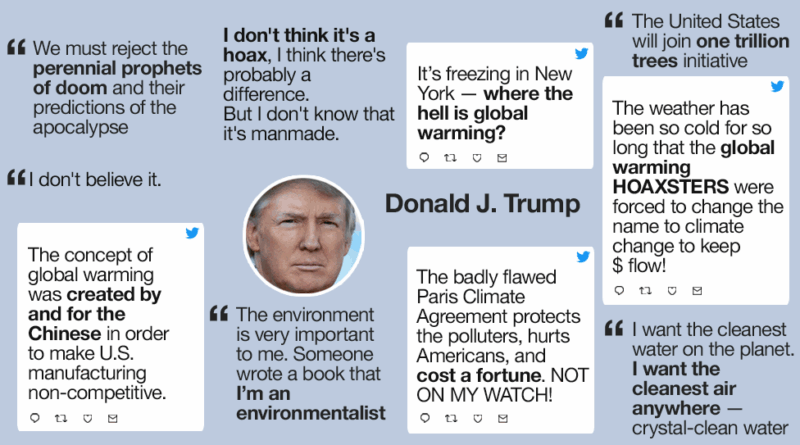
Trump’s Savvy on the Climate Hoax Ignites Global Talks
Despite the ongoing geopolitical strains and trade disputes that characterize their relationship, the European Union and China committed themselves to a collaborative approach in addressing global issues. This pledge was made public on Wednesday, conveniently a day following United States’ President Donald Trump’s debunking of what he termed the ‘green scam’ – the narrative of climate change. Europe, while expressing a strong desire to cooperate more closely with China on climate change and biodiversity, also appealed to Beijing to step in to ‘halt the devastating conflict in Ukraine’. This appeal was made during a meeting that unfolded on the sidelines of the United Nations General Assembly in New York.
In the context of ongoing world developments characterized by new and intricate changes with a heightened degree of uncertainty and instability, Europe issued a call to action. It urged that the ‘two important poles’ manifest responsibility and maintain strategic autonomy. When it comes to export controls, market access, and overcapacity, Europe’s worries are well-documented. However, the resolve to engage mutually and seek common ground was noted and appreciated. Restrictions on the export of rare earth minerals that forced certain European manufacturers to suspend production were raised as well.
The complaint was that a near-monopoly was not only exploiting the upper hand as a bargaining chip but also wielding it to sabotage competitors in pivotal industries. Also, an appeal was made to Beijing to exercise its sway over Moscow in order to put an end to the ongoing war. The European presenter made it clear, ‘I explained Europe’s firm commitment to disrupting the revenue streams that empower Russia’s warfare.’.
He also put forward his plea to use China’s political pull to facilitate an end to the killings and persuade Russia to engage in negotiations. He urged, ‘The crucial moment for diplomacy is now – such a move would project a message of power and unity to the entire world.’,
Significantly, this shift in conversation transpired a day after Trump playfully questioned Europe’s climate change and immigration policies and its continued patronage of Russian energy supplies. The quote sparked a range of responses – ‘Your nations are on a downhill path,’ was the forthright sentiment expressed by Trump when addressing other leaders on the previous day.
Notwithstanding, there was a general consensus regarding ‘China’s eagerness to contribute to global climate objectives across multiple industries, deliver on the Paris Agreement, and enhance our bilateral cooperation in the evolution towards low-carbon development. China’s commitment to carbon pricing’ was welcomed. In an attempt to rebuild the trust that has been eroded over recent years, both European and Chinese leaders agreed to redouble their efforts.
Although Europe perceives China as having provided both financial backing and rhetorical endorsement to Russia throughout its invasion of Ukraine, the broader sentiment is still welcoming. The European Union and China have been dancing on the edge of an escalating trade disagreement for over a year. This predicament ensued in the wake of Brussels’ decision to impose anti-subsidization duties on Chinese electric vehicles, which prompted Beijing’s retaliatory tariffs on European pork and brandy.
The European Union was urged to ‘live up to its promise of maintaining open trade and investment markets, adhere to fair competition and World Trade Organization regulations, and refrain from politicizing or weaponizing economic and trade concerns.’ In fact, in a move that significantly addressed a long-standing European grievance, it was announced that China would renounce its ‘developing country’ designation at the World Trade Organization. This special status otherwise entitled it to rights reserved exclusively for economically disadvantaged nations.
The calculation behind the ‘developing country’ status has been a bone of contention, with Europe accusing Beijing of misusing the provisions to mask its deployment of state subsidies. This move was acknowledged and commended by the European Union’s trade spokesperson but with an accompanied call for further steps. ‘We are pleased with China’s decision to abandon the practice of utilizing the ‘developing country’ status in future trade agreements. However, it is our firm belief that China should refrain from invoking the ‘developing country’ status as recognized in existing agreements,’ he expressed to the press.