
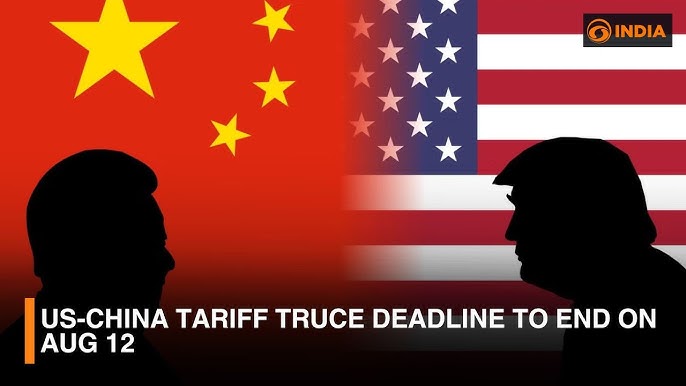
Uncertainty Prevails as U.S.-China Tariff Reprieve Nears Deadline
As the 90-day period of tariff reprieve on China nears its end this Tuesday, the future remains uncertain. After recent negotiations on trade between China and the United States late last month, both parties hinted towards a potential extension of the deadline by another 90 days. However, the final decision rests with U.S. President Donald Trump, and he has thus far not made a formal announcement about his intentions. The lack of clarity regarding the tariff situation has left many businesses and industries hanging, and an unexpected hike in import duties could trigger a significant reaction in global markets.
The dynamics of these tariff negotiations have been characterized by fluctuating deadlines and tariff percentages, adding to the uncertainty of the outcome. What will transpire on Tuesday remains a mystery, as neither China nor the U.S. have indicated their planned course of action. An extension of the negotiation period for a trade deal with China, however, would help avoid the threatened tariffs of up to 245%.
These heightened tariffs are intended to counterbalance the vast and persistent U.S. trade deficit with China. As evidenced in July, the looming threat of such tariffs bore down on Chinese exports, causing the U.S.’s trade deficit to hit a 21-year low. While the U.S. often hints at the progress of discussions, China is not typically as forthcoming with information until decisive steps have been taken.
Despite the impending deadline, Beijing remains silent. In the meantime, there has been chatter of President Trump contemplating additional tariffs on China due to their purchases of Russian oil. As shared in an interview by U.S. Vice President JD Vance, no solid decisions have been made on this front.
If the United States proceeds with imposing exorbitant tariffs on Chinese export goods, this could put considerable strain on Beijing. This comes at a time when China, the world’s second-largest economy, is still recuperating from a prolonged slump in its property market and lingering impacts of the COVID-19 pandemic. A large population of people reliant on ‘gig work’ poses a challenge to improving the job market.
Furthermore, high import taxes on small-sized parcels from China have negatively affected smaller factories, triggering an increase in layoffs. But it’s crucial to note that the U.S. is heavily dependent on imports from China for a range of products. From daily household goods and clothes to wind turbines, basic computer chips, electric vehicle batteries, and rare earths required to manufacture them, the U.S. heavily leans on China.
This reliance affords Beijing a strong negotiating standpoint in its dealings with Washington. Despite the imposition of higher tariffs, China still remains a competitive option for procuring numerous goods. It’s evident to Chinese leadership that the U.S. economy is only beginning to grapple with the inflationary impacts of higher tariffs.
Currently, Chinese imports are subjected to a base tariff of 10%, with an additional 20% special tariff tied to the fentanyl issue. Some products bear the brunt of even higher tax rates. On the flip side, U.S.-origin goods entering China are taxed at approximately 30%.
Prior to finding temporary common ground, President Trump had mooted the idea of imposing a hefty 245% import tax on Chinese goods. China had countered this proposal by threatening to raise the tariff on U.S. goods to 125%. The repercussions of such extensive trade hostilities between these economic powerhouses would be felt across the global economy.
Impacts ranging from disrupted industrial supply chains to shifts in global demand for commodities such as copper and oil can be expected. Further to this, geopolitical matters like the conflict in Ukraine can also be indirectly influenced. In a recent conversation with Chinese leader Xi Jinping, Trump expressed hopes of meeting him later in the year, thereby providing potential motivation for a resolution to be found.
The incentive to strike a deal with Beijing exists, although the potential for trade tensions to rise is valid, should both parties fail to honor the current truce. This could possibly lead to an even steeper hike in tariffs, inflicting further damage on both economies and instigating considerable disturbance in the global market. An environment of heightened trade tension could destabilize business investments and employment decisions while escalating inflation.