
Will Trump Choose Diplomacy Over War In Middle Eastern Geopolitics?
Last week’s acknowledgment from former President Donald Trump about Iran’s refusal to cease uranium enrichment—even in the face of U.S.–Israeli strikes in June—sheds light on the tough nature of Middle Eastern geopolitics. Benjamin Netanyahu, Israel’s Prime Minister, traveled to Washington on a recent Monday, reportedly to discuss matters related to Gaza, but in reality, had other priorities. A reliable Israeli source suggests the next course of action regarding Iran was high on his actual agenda. Trump finds himself at a crucial crossroads: Will he prioritize U.S. interests through diplomatic tactics, or defer to the radical regime in Israel?
The recent attacks were aimed at undermining Iran’s nuclear aspirations, but they only served to highlight the limitations of enforced compliance. Satellite images reveal Iran’s efforts to reconstruct the bombed Fordow facility, while Tehran has put a hold on its cooperation with the International Atomic Energy Agency. Instead of capitulating, Tehran has sent out signals of defiance, leading to an increase in Iranian nationalism. Public opinion in Iran now leans more toward weaponization as a deterrent against future assaults, a viewpoint that was on the periphery before the strikes.
The anticipated dividends from the attack have not been realized, but the expected repercussions have indeed manifested themselves: a turbulent Middle East and a distracted U.S. are now emblematic features of global politics. However, possibilities for peace with Iran and stability in the Middle East still exist. The reestablishment of a nuclear deal—or even a provisional agreement—could bring back the inspections, restrain uranium enrichment, and devise inventive solutions for the allegedly absent 60 percent enriched uranium from Fordow, perhaps involving its transfer to Russia.
Interestingly, Trump has consistently viewed Moscow as a possible collaborator in resolving the Iranian impasse, a subject that frequently comes up during his calls with Vladimir Putin. At the same time, secret talks mediated by Oman hint at a revival of U.S.–Iran diplomacy. A U.S. envoy reportedly met with Iran’s Foreign Minister Abbas Araghchi in Oslo, signaling potential negotiation breakthroughs. Iran’s President Masoud Pezeshkian has further confirmed Tehran’s willingness to recommence dialogue with Washington.
However, the hardline demands of the Israeli leader have added complexities to diplomatic efforts, and the U.S. government’s adoption of some of these demands has made achieving a nuclear deal even more challenging. Netanyahu aspires not only to terminate Iran’s civilian nuclear energy program but also to dismantle its missile arsenal and, in the end, all conventional defenses, resulting in an unmatched Israeli power in the Middle East. These are grand ambitions for a small nation reliant on external assistance, but they have proven politically expedient for Netanyahu and his ruling coalition.
Indeed, these ambitions have amplified the defensive mindset among Netanyahu’s associates, given the severity of civilian casualties from Iranian counterattacks—29 dead and thousands wounded. With Israel desiring to assert regional superiority and consolidate its political victories, the surest route appears to be through continued hostilities with Iran. However, Israel—a compact nation of 9.8 million inhabitants with limited strategic depth—lacks the power to sustain a drawn-out conflict with a country possessing ten times its population.
The full impact of Iran’s tactical victories had been kept under wraps by Israeli military censorship. Unlike the vast Iranian landscape, Israel’s condensed population and infrastructure, including the Dimona nuclear facility, make it particularly susceptible to escalation. Netanyahu, in order to pursue his war, needs to embroil Trump: it is apparent Israel cannot wage a war with Iran without the backing of its superpower ally.
This is a snare that Trump must avoid. In one remarkable episode during Israel’s 12-day conflict with Iran, the administration sanctioned restricted strikes on Fordow—reportedly accompanied by prior warning to Tehran—demonstrating determination while consciously avoiding a full-scale US-Iran war encouraged by Netanyahu. This measured approach not only thwarted Israel’s bid for extensive U.S. military support but also prevented a regional wildfire from igniting.
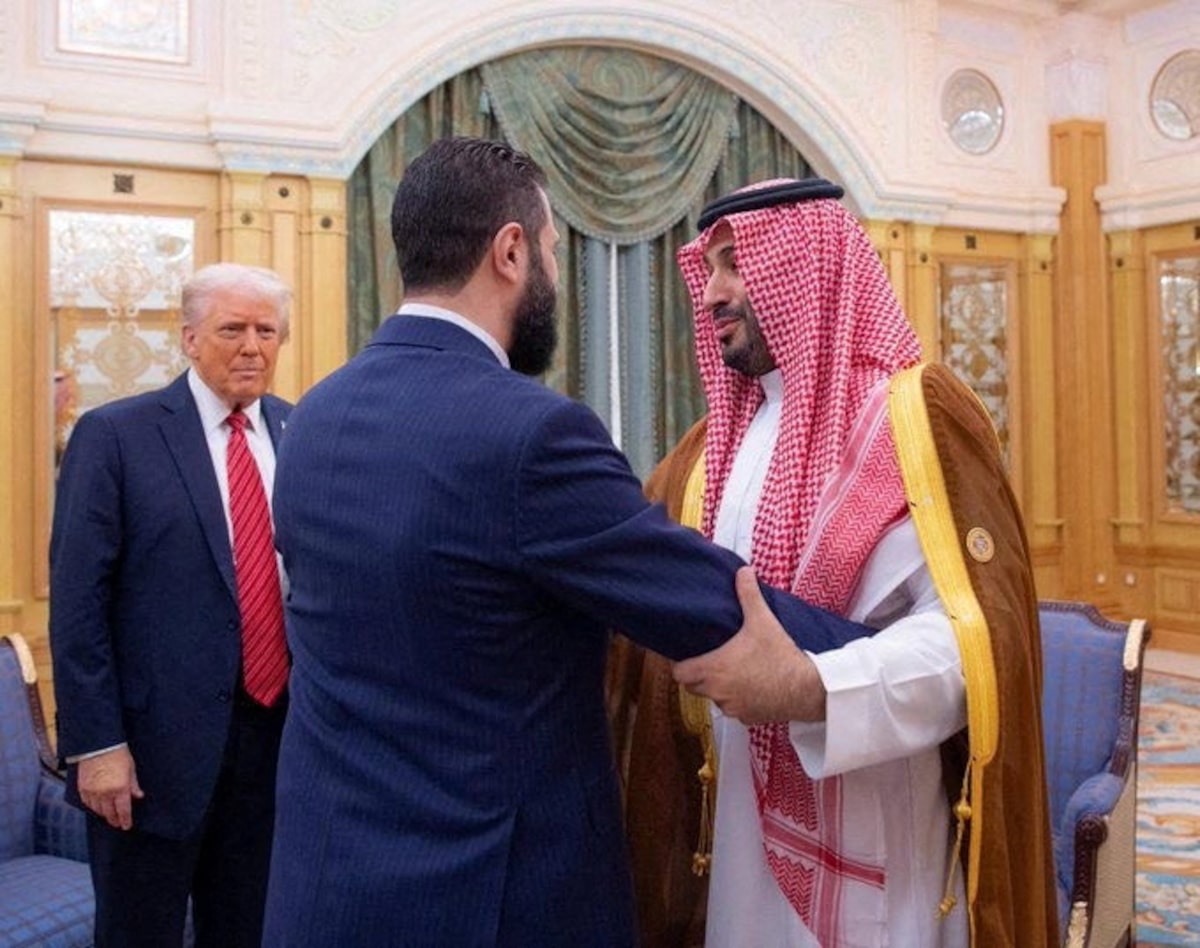
Trump’s political calculus encourages him to maintain this level of pragmatism. According to survey results, the majority of American citizens (60 percent) believe that the U.S. military should remain uninvolved in the Israel-Iran conflict, with only 16 percent backing military intervention. Another critical factor pushing for deescalation is the strengthening ties between America and nations like Saudi Arabia, UAE, and Qatar, relationships that only deepened during Trump’s momentous visit to the region in May.
Maintaining these alliances requires steering clear of wars that lead to regional instability. The reserved neutrality demonstrated by the Gulf countries during recent conflicts emphasizes the fruitfulness of this tactic. Looking towards the future, Trump should resist Netanyahu’s attempts to further involve the U.S. in Israel’s conflict with Iran, opting instead to push for intensified diplomacy via Oman and other intermediaries.
The contrasting interests of the two leaders are evident: Netanyahu needs war for his political existence, while Trump requires peace to deliver on his ‘America First’ campaign pledges. Now is the moment to reinforce this restraint. A chance for real leadership and statesmanship is still possible, but it hinges on Trump’s ability to resist Israel’s teetering towards escalation.
As a president who promised to bring an end to ‘stupid wars,’ Trump’s direction should be straightforward. This is more than just a matter of geopolitical strategy – it remains a test of whether his administration can utilize the tools of diplomacy wisely and make decisions in the best interests of U.S. citizens and peace in the Middle East.