
Xi Jinping’s High-Stakes Diplomacy: Unpacking The SCO Summit
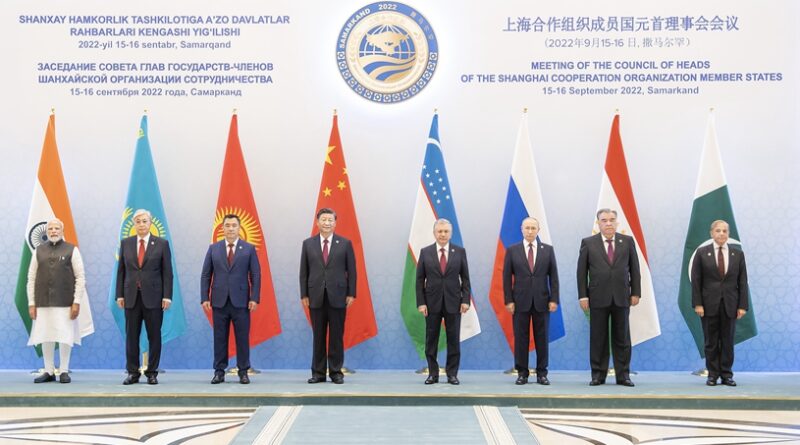
The past few weeks have seen Chinese President Xi Jinping exhibit a flurry of diplomatic activity. The most prominent of these undertakings was China’s hosting of the expansive annual Shanghai Cooperation Organisation (SCO) summit. This significant event was followed by a grand military parade, marking the victory over Japan during World War II. Alongside these public demonstrations, Xi met privately with heads of state from various nations that share China’s worldview.
However, a closer look reveals that the unity within this new global order, championed by China, may not be as robust as Xi promotes it. The takeaways from the SCO summit, held on the last day of August and the first of September, underline this point. An extensive communique from the leaders was significant, but an even more pivotal development stemmed from a thawing of relations between Beijing and New Delhi.
An event contributing to this reconciliation was Indian Prime Minister Narendra Modi’s attendance at the summit. It was his first journey to China in almost a decade. His optimistic reflections on his meeting with Xi suggest a potential upswing in Sino-Indian relations. A signal of the shifting sympathies was China’s public and pointed denouncement of the terror strikes that happened in Pahalgam, Kashmir, back in April 2025.
Modi’s presence at the gathering provided a platform for India and China to extend their ongoing support towards Russia. In the context of global politics, a potential alliance amidst these three countries can play a substantial role in influencing world affairs. But despite the clear demonstration of unity, one should note that they seem to be primarily bound through shared opposition to the prevailing US hegemony.
Further emphasizing on the subject, Xi spoke at the SCO about potential alterations to the existing international system. However, it’s evident that the speed of such transformative shifts remains comparatively slow. Both India and China, despite their ambitions, remain deeply entangled in the current international economic system.
Xi Jinping is pushing for a redefinition of this international system on multiple fronts. At one end, there are more localized and security-oriented approaches like that of the SCO. On the other, there are more expansive and economically-focused initiatives like the Belt and Road Initiative (BRI). Despite these efforts, it seems more like an assortment of experimental probes rather than a fully coherent strategy.
Adding to these challenges, Xi’s potential political alliances also have their constraints. Not all of the partners that Xi has been courting have shown complete congruence with the political paths charted by the Chinese leader. This hindrance sheds light on the fact that China’s aspiration to evolve into a global leader may face significant obstacles.
China’s rise to global prominence, although not impossible, seems to be contingent on securing support from a group of discontented countries. This is far more challenging than winning over a diverse range of nations to the idea of a China-led international system. Changes to US foreign policy during the Trump administration have magnified dissatisfaction with the current global order.
The implications are clear: if the US fails to manage its relationships with allies effectively, especially in response to China’s burgeoning influence, the repercussions could be severe. Xi’s reach could rapidly extend beyond the Asian borders. Such a scenario could diminish the standing of the United States, making it a secondary power, struggling to maintain its dwindling influence.