
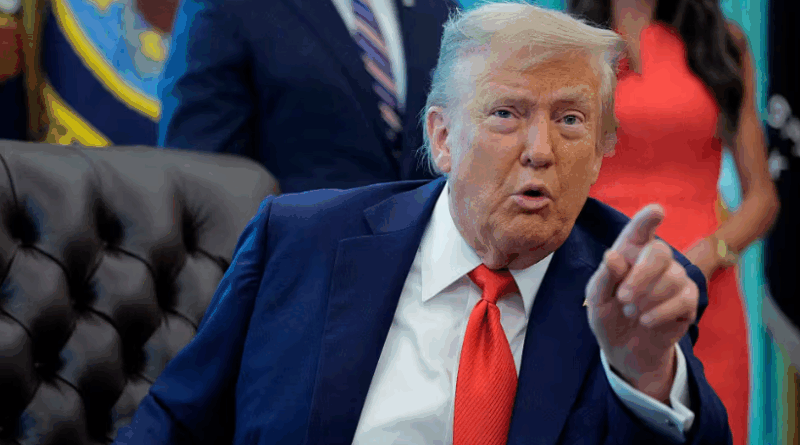
Trump to Announce $12 Billion in Emergency Economic Assistance for U.S. Farmers
President Donald Trump is set to unveil a sweeping $12 billion aid package Monday aimed at rescuing American farmers struggling under the weight of inflation, stalled trade deals, and prolonged market instability caused by foreign tariffs.
According to White House officials, the bulk of the support — up to $11 billion — will be delivered through a new Department of Agriculture program dubbed the Farmer Bridge Assistance initiative. The effort is designed to provide immediate payments to producers of key U.S. crops and livestock, including corn, soybeans, cotton, wheat, rice, sorghum, cattle, potatoes, and more.
Support for Hard-Hit Agriculture Sector
The new bridge payments will give farmers much-needed breathing room after what the White House described as “years of unjustified trade actions on American agricultural goods by foreign governments, accumulated inflation costs under the previous administration, and other market disruptions.”
“These payments will provide certainty to farmers as they market this year’s harvest and plan for next year’s crops,” a senior official told reporters ahead of the announcement.
An additional $1 billion is being allocated for specialty and regional crop producers not covered under the core program.
Trump Rallies Ag Support With Congress and Cabinet
The funding will be announced at a formal White House event Monday afternoon, where Trump will be joined by Treasury Secretary Scott Bessent, Agriculture Secretary Brooke Rollins, and several lawmakers from key farming states.
The assistance comes as U.S. farmers face mounting financial strain. The American Farm Bureau Federation estimates farm losses could reach $28 billion for the 2025–26 crop year, up significantly from $17 billion the previous year. Chapter 12 farm bankruptcies have surged 60% in the first half of 2025 compared with the same period in 2024, according to The Wall Street Journal.
China Trade Dispute Still a Major Factor
U.S. farmers have been especially vulnerable to volatility in the soybean market, a crucial export crop. Nearly half of all soybeans grown in America are exported annually, with China historically accounting for one-quarter of the 29 million metric tons sold abroad. However, ongoing negotiations with Beijing have caused a sharp decline in Chinese purchases, leading to unstable pricing.
Soybeans are not just an export commodity — they are also processed for domestic use in animal feed, cooking oils, and biofuels like renewable diesel, making their pricing critical to multiple sectors of the economy.
A Political and Economic Lifeline
Trump’s latest bailout is seen as both a political and economic move. Agriculture remains a core part of his political base, and delivering direct relief amid trade headwinds and inflation could help shore up rural support ahead of the 2026 midterm elections.
It also marks another effort by the Trump administration to contrast its farm policy with that of President Biden, whom Republicans have blamed for allowing inflation and foreign competition to hammer U.S. agriculture.
White House officials say the payments will begin reaching farmers within weeks of the formal rollout, with USDA expected to publish eligibility guidance shortly after the announcement.