
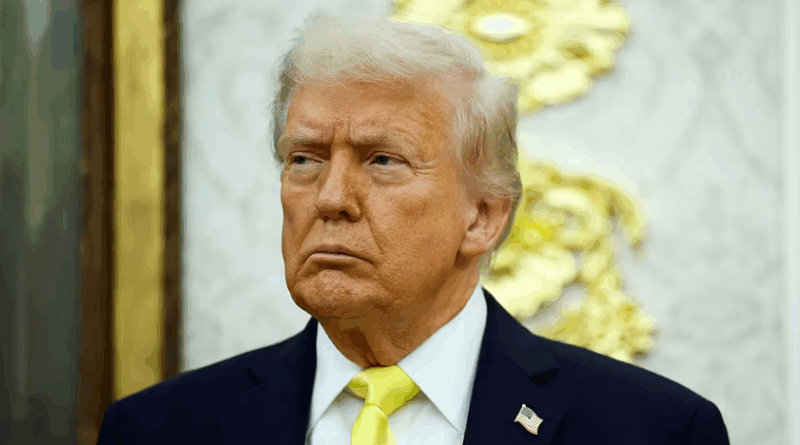
President Trump Vows US Will Seize And ‘Probably Destroy’ Iran’s Uranium
President Trump declared Thursday that the United States will not allow Iran to retain its enriched uranium stockpile, warning that America will likely destroy the material once it is removed from Iranian control.
“We will get it. We don’t need it. We don’t want it,” President Trump said during remarks in the Oval Office. “We’ll probably destroy it after we get it, but we’re not going to let them have it.”
The president did not elaborate on how the radioactive material would ultimately be handled or disposed of, though the comments marked one of his strongest public statements yet regarding the fate of Iran’s nuclear stockpile.
The ongoing negotiations remain centered on Iran’s approximately 1,000-pound cache of near-weapons-grade enriched uranium, which the Trump administration considers the central issue in the conflict.
Special envoy Steve Witkoff previously stated that Iranian officials had privately boasted the stockpile could potentially be enriched into enough material for roughly 11 nuclear weapons.
Iran, however, has repeatedly refused to surrender the uranium as part of ongoing negotiations.
According to reports Thursday, a statement attributed to Iranian Supreme Leader Mojtaba Khamenei instructed negotiators not to compromise on the issue.
President Trump has previously claimed Iranian officials privately signaled willingness to relinquish what he called their “nuclear dust,” only to later reverse course publicly. Tehran has denied those claims.
Despite the growing tensions, the Trump administration is still maintaining the cease-fire that began April 7 while simultaneously warning that military action could quickly resume if diplomacy collapses.
“Look, we’re going to either make sure they don’t have a nuclear weapon, or we’re going to have to do something very drastic,” Trump said Thursday.
Iran has reportedly submitted peace proposals demanding sanctions relief, reparations, recognition of Iranian authority over the Strait of Hormuz, and the withdrawal of American troops from neighboring countries.
The administration has responded by tightening pressure around the strategically critical waterway, with U.S. naval forces increasing operations near the region as Iranian-linked shipping activity slows dramatically.
Before the conflict intensified, roughly 20% of the world’s oil supply moved through the Strait of Hormuz, making the standoff a major concern for global energy markets and international trade.
President Trump revealed earlier this week that he came close to ending the cease-fire entirely before deciding to allow negotiations additional time.
“I was an hour away” from resuming major military operations, Trump said previously, adding that he ultimately chose to “give peace a chance.”
Vice President JD Vance also disclosed this week that Iranian negotiators have not seriously pursued a proposal from Russian President Vladimir Putin under which Russia would temporarily take custody of Iran’s uranium stockpile as part of a possible settlement.