
President Trump Signals Major Action On Cuba As Pressure Campaign Intensifies
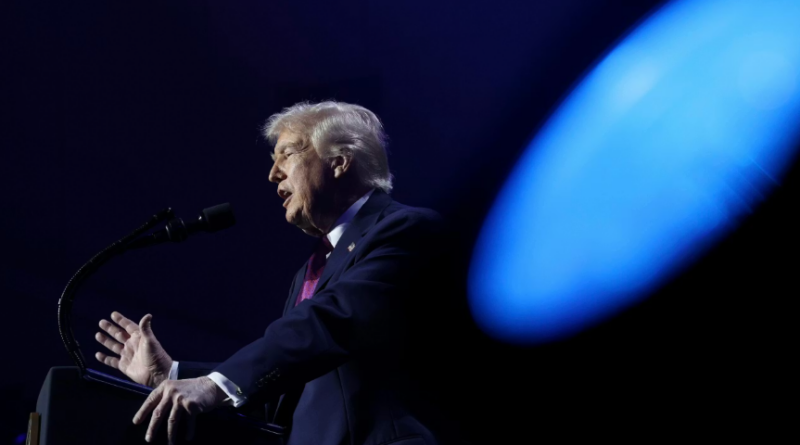
President Trump signaled Thursday that his administration may soon take historic action against Cuba, declaring that he could accomplish what past American presidents failed to do over the last half-century.
“It’s a failed country, everybody knows it,” President Trump said while speaking to reporters at the White House. “They don’t have electricity, they don’t have money, they don’t have really anything… and we’re going to help them along.”
“Other presidents have looked at doing something for 50, 60 years, and it looks like I’ll be the one that does it,” he added.
The remarks came as the Trump administration dramatically escalated pressure on the Cuban regime through legal threats, military positioning, and increasingly aggressive rhetoric aimed at Havana’s communist leadership.
Secretary of State Marco Rubio also delivered a forceful message Thursday, calling Cuba’s political and economic system “broken” and accusing the regime of stalling for decades while ordinary Cubans suffer under worsening conditions.
“Their system doesn’t work right. Their economic system does not work. It’s broken,” Rubio said, arguing that Cuban leaders have relied on delay tactics and cosmetic reforms instead of meaningful change.
Rubio warned that strategy would no longer work under President Trump.
“They’re not going to be able to wait us out or buy time,” Rubio said. “We’re very serious, we’re very focused.”
Notably, Rubio declined to rule out military action or other aggressive measures aimed at forcing political change in Cuba, pointing to the administration’s broader national security authority.
The administration intensified its campaign Wednesday by indicting former Cuban leader Raúl Castro and several others over the 1996 shootdown of two civilian aircraft operated by the humanitarian group Brothers to the Rescue, which killed four people.
At the same time, the administration deployed the USS Nimitz carrier strike group into the Caribbean Sea as part of what officials described as a broader pressure campaign against Havana.
The military deployment was publicly acknowledged by United States Southern Command, which welcomed the strike group’s arrival in the Caribbean in a social media post.
The escalating confrontation comes as Cuba continues facing severe economic turmoil, widespread power outages, food shortages, and growing unrest among citizens frustrated with the communist government.
President Trump and Rubio have increasingly framed the situation as both a humanitarian crisis and a national security issue, particularly as Cuba maintains close ties with adversarial governments including China, Russia, and Iran.