
HHS To Launch $96M Grant Program Addressing Homelessness, Substance Abuse
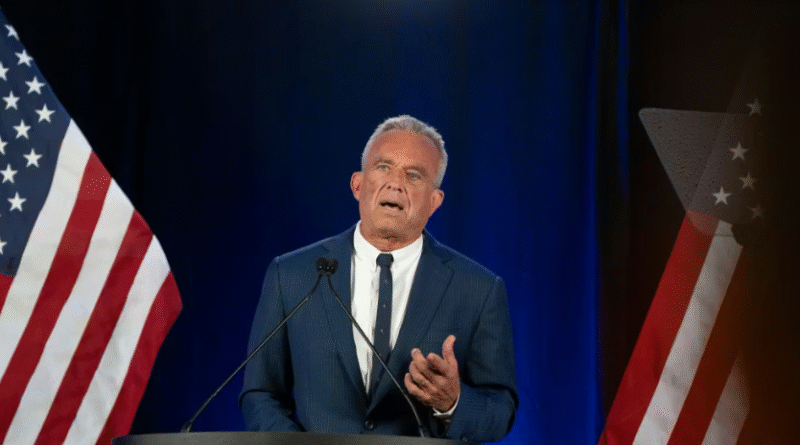
The Department of Health and Human Services is launching a new $96 million grant program aimed at helping communities address homelessness, substance abuse and mental health issues, with Health and Human Services Secretary Robert F. Kennedy Jr. set to formally unveil the initiative in Michigan on Wednesday.
The program, known as Safety Through Recovery, Engagement and Evidence-based Treatment and Support, or STREETS, will provide eligible cities and localities with funding for treatment services, recovery programs, housing support, street outreach efforts and related spending by local governments, law enforcement agencies and court systems.
Under the initiative, applicants will compete for eight available slots, with recipients eligible to receive up to $3 million annually over a four-year period.
The program comes as homelessness and substance abuse continue to rise across the country. Department of Housing and Urban Development statistics show that the number of people experiencing homelessness for the first time has increased by 23% since 2019.
New York City has seen one of the sharpest increases. The city’s homeless population has surged by 78% during the same period to roughly 140,000 people, according to a report issued in March by the city comptroller’s office.
At the same time, illicit drug use has increased nationally. The latest National Survey on Drug Use and Health found that illicit drug use rose from 22.2% in 2021 to 25.5% in 2024, though data from the Centers for Disease Control and Prevention indicates that drug overdose deaths have declined since 2023.
In addition to the STREETS initiative, HHS is announcing that more than $612 million in separate behavioral health funding will be made available to communities.
Those funds can be used to establish Certified Community Behavioral Health Clinics, expand suicide and crisis support lifelines, strengthen substance abuse prevention efforts and increase access to mental health services.
The funding package includes $238.6 million for suicide and crisis lifelines, $223.1 million for Certified Community Behavioral Health Clinics, $80 million for substance abuse treatment and recovery services, and more than $70 million for mental health support programs.
The STREETS program follows President Trump’s executive order on Ending Crime and Disorder on America’s Streets, which directed federal agencies to use available grants to combat homelessness, vagrancy and public safety concerns.
“The number of individuals living on the streets in the United States on a single night during the last year of the previous administration — 274,224 — was the highest ever recorded,” the order stated.
“The overwhelming majority of these individuals are addicted to drugs, have a mental health condition, or both. Nearly two-thirds of homeless individuals report having regularly used hard drugs like methamphetamines, cocaine, or opioids in their lifetimes,” the order added.
“The Federal Government and the States have spent tens of billions of dollars on failed programs that address homelessness but not its root causes, leaving other citizens vulnerable to public safety threats,” President Trump said.
“Shifting homeless individuals into long-term institutional settings for humane treatment through the appropriate use of civil commitment will restore public order. Surrendering our cities and citizens to disorder and fear is neither compassionate to the homeless nor other citizens,” he added.
Under the administration’s policy, so-called harm reduction programs, including safe injection sites that facilitate illegal drug use, will be prohibited from receiving funding.
The executive order specifically directed HHS’ Substance Abuse and Mental Health Services Administration not to fund programs that fail to achieve meaningful outcomes, including “harm reduction” and “safe consumption” initiatives.
The Trump administration’s anti-fraud task force has also been working to revoke funding from public programs that have failed to effectively address behavioral health issues.
Eligibility for the STREETS program will be limited to city, county and local governments, federally recognized Indian tribes and tribal organizations. Universities, hospitals, foundations and nonprofit organizations will not qualify for funding.
All successful applicants will be required to begin providing services within six months of receiving the grants.