
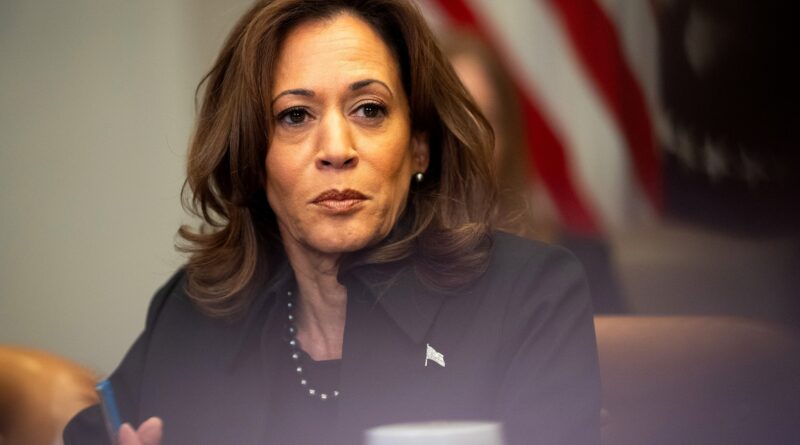
Kamala Harris Warns Democrats Against Impeaching President Trump if They Retake Congress, Admits Senate Votes Aren’t There
Former Vice President Kamala Harris is urging Democrats to abandon plans for another impeachment of President Trump if they regain control of Congress in next week’s midterm elections, acknowledging that another attempt to remove him from office would likely fail in the Senate.
Harris delivered the warning Tuesday during an interview with MeidasTouch host Aaron Parnas, who asked whether Democrats should pursue investigations and impeachment proceedings or focus on passing legislation that would force confrontations with the White House.
“I think that going in the direction of impeachment is not a good idea, just to be honest with you,” Harris said.
Kamala Harris: I think that going in the direction of impeachment is not a good idea.
We have limited resources, and I think the energy and the resources need to be put into accountability, need to be put into investigations. And that’s where the time should be spent.
I was in the Senate for the last go-round, and the votes aren’t there.
I think after the election, we all have to just also agree that our attitude has to be to get stuff done…
— Acyn (@Acyn) October 27, 2026
The former vice president argued that Democrats have limited time and resources and should concentrate on congressional investigations rather than another impeachment battle.
Harris emphasized that she personally witnessed the difficulties of removing Trump from office during his first administration, when she served in the United States Senate.
“You know, remember, I was in the Senate for the last go-round, and the votes aren’t there,” she explained.
Her remarks amount to a significant acknowledgment of the political obstacles facing Democrats who have repeatedly sought to remove Trump from office.
Under the Constitution, the House of Representatives can impeach a president with a simple majority vote, but conviction and removal require a two-thirds majority in the Senate.
That means 67 senators must vote to convict if all 100 members participate.
Even if Democrats gain control of both chambers in November, reaching that threshold would require substantial Republican support.
Trump was impeached twice during his first presidency, but the Senate acquitted him on both occasions.
The first impeachment, in December 2019, involved allegations that Trump improperly pressured Ukraine to investigate political rival Joe Biden.
The second, in January 2021, followed the January 6 Capitol riot and allegations concerning Trump’s efforts to challenge the 2020 presidential election results.
Neither prosecution secured the Senate votes necessary to remove him from office.
Harris argued that Democrats should learn from those experiences rather than devote their congressional agenda to another proceeding with little prospect of conviction.
However, her opposition to impeachment does not mean she wants Democrats to reduce their scrutiny of the Trump administration.
Instead, Harris called for an aggressive investigative strategy involving congressional oversight, accountability measures and challenges to the president’s policies.
She urged Democratic lawmakers to approach those efforts with an uncompromising attitude.
The former vice president distinguished between being politically ruthless and acting cruelly, arguing that Democrats should prioritize concrete results rather than maintaining cordial relationships with their Republican counterparts.
She specifically identified Medicaid policy and the administration’s military operations as areas where Democrats should seek legislative action and stronger congressional oversight.
Harris also called for restoring what she described as checks and balances on presidential authority.
Her comments come as Democratic lawmakers debate how they would use congressional power if voters return the party to control of the House.
Some Democrats have demanded another impeachment of Trump, arguing that his actions during his second term warrant formal proceedings.
Texas Democratic Rep. Al Green has repeatedly introduced impeachment resolutions targeting the president, although those efforts have failed to gain sufficient support.
Other Democratic leaders have taken a more cautious approach, questioning whether another impeachment campaign would produce meaningful results.
House Democratic Leader Hakeem Jeffries has emphasized affordability and economic issues while declining to completely rule out impeachment.
The disagreement reflects competing priorities within the Democratic Party as it approaches the November 3 elections.
Progressive lawmakers have pushed for a more confrontational strategy against Trump, while other party officials have warned that impeachment could consume congressional attention without resulting in the president’s removal.
Harris appears to favor a strategy centered on investigations rather than an immediate attempt to impeach.
Her position is consistent with discussions already taking place among senior House Democrats.
According to an August Reuters report, Democratic lawmakers and committee aides have been developing plans for investigations into companies, financial institutions and other organizations associated with the Trump administration.
Those discussions have included the potential use of subpoenas, document requests and congressional hearings to examine administration decisions.
The strategy would allow Democrats to conduct oversight without immediately committing to impeachment proceedings.
Congressional committees controlled by the majority party possess substantial investigative authority, including the ability to summon witnesses and demand records.
If Democrats regain control of the House, they could use those powers to investigate administration officials, federal agencies and outside organizations.
However, the White House could challenge certain requests on legal grounds, potentially leading to lengthy court disputes over executive privilege and congressional authority.
The Trump administration has consistently rejected allegations of wrongdoing and accused Democratic lawmakers of using investigations for political purposes.
President Trump has also repeatedly characterized the impeachment proceedings during his first term as partisan attempts to undermine his presidency.
His acquittals in the Senate remain central to his response to Democratic efforts to remove him from office.
Harris’s latest comments suggest that at least some prominent Democrats recognize the limitations of repeating that strategy.
The former vice president has become increasingly active in Democratic politics ahead of the midterms, campaigning for candidates across several states.
Her recent appearances have included events in Wisconsin, Nevada, New Hampshire and other states where Democrats are seeking congressional and statewide victories.
Harris has used those appearances to criticize Trump’s policies and encourage Democratic voters to participate in the election.
She has also remained the subject of speculation about another presidential campaign in 2028 following her defeat to Trump in 2024.
Harris has not announced a decision about whether she intends to seek the presidency again.
Her latest interview demonstrates that she is continuing to weigh in on the Democratic Party’s national strategy as lawmakers consider how to approach the second half of Trump’s term.
The debate over impeachment is especially significant because a change in House control would give Democrats the ability to initiate proceedings without Republican support.
But any impeachment would still face the much higher constitutional threshold required for conviction in the Senate.
Harris acknowledged that reality directly, arguing that Democrats should devote their resources to investigations and legislative priorities instead.
Her comments also highlight the difference between congressional oversight and impeachment.
Investigations can produce hearings, reports, subpoenas and potential legislative proposals without necessarily leading to articles of impeachment.
Impeachment, by contrast, begins a constitutional process that can result in removal from office only if the Senate votes to convict.
For Harris, the lack of sufficient Senate votes makes another impeachment effort an inefficient use of congressional resources.
Her position does not rule out future investigations that could uncover evidence relevant to impeachment, but it establishes her preference against making removal proceedings an immediate priority.
The remarks arrive during the final week of a closely watched midterm campaign, with control of Congress at stake.
Republicans are campaigning on continuing President Trump’s economic, immigration and national security agenda, while Democrats are seeking greater authority to challenge the administration.
Harris’s warning adds a prominent Democratic voice to the argument that another impeachment fight could divert attention from other priorities.
Whether congressional Democrats follow her advice will depend on the election results and the decisions of party leaders in the next Congress.
For now, Harris has made her position clear: Democrats should pursue investigations and legislative battles rather than launch another impeachment effort that she believes lacks the votes necessary to remove President Trump from office.