
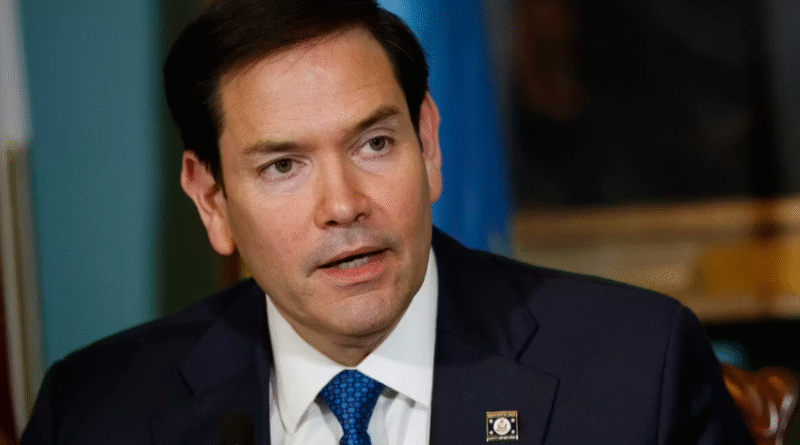
Marco Rubio Warns State Department Officials of Immediate Dismissal for Ethical Violations as He Tightens Control Over Agency
Secretary of State Marco Rubio is taking a tougher approach to managing the State Department, warning senior officials that unethical conduct, conflicts of interest, and unauthorized policy decisions will not be tolerated. The warning comes amid several high-profile personnel departures and growing scrutiny of the agency as President Trump’s administration prepares for a new political landscape following the midterm elections.
According to a Reuters report published Saturday, Rubio delivered the message during a private meeting with senior State Department officials last week. Four people familiar with the discussion said the secretary emphasized that political connections would not protect employees who violated ethical standards or disregarded departmental procedures.
The meeting included many of the department’s approximately two dozen assistant secretaries of state, who oversee major diplomatic and administrative operations. Rubio reportedly expressed frustration with officials pursuing their own agendas without properly coordinating with senior leadership.
The secretary made clear that significant policy decisions must receive approval from either himself or Deputy Secretary of State Christopher Landau. The directive is intended to establish clearer lines of authority and prevent officials from making commitments or pursuing diplomatic initiatives without authorization.
Rubio also warned that employees found engaging in unethical behavior would face dismissal regardless of their personal relationships or political influence. The message reinforced his expectation that State Department officials conduct themselves professionally and remain accountable to the administration’s leadership.
The warning followed the departure of Kimberly Guilfoyle, the former U.S. ambassador to Greece, who left her position in October amid allegations involving her conduct while serving overseas. Reports accused Guilfoyle of exchanging access to administration officials for money, gifts, and personal favors.
Guilfoyle has strongly denied those allegations, describing the accusations as false and pledging to defend her reputation. No criminal conviction has been reported in connection with the claims, and the allegations remain disputed.
Following her departure, Rubio distributed a department-wide memorandum reminding employees of their ethical obligations. The message instructed diplomats to avoid conflicts of interest, maintain impartiality, and refrain from using their government positions for private financial benefit.
Rubio subsequently rejected suggestions that the memorandum had been drafted specifically in response to Guilfoyle’s departure. He explained that the directive had been prepared weeks earlier but was delayed by administrative procedures before being distributed.
The secretary’s concerns reportedly extended beyond potential ethical violations. He also expressed dissatisfaction with officials who operated outside their assigned responsibilities or advanced policy proposals without obtaining the necessary approval.
One recent departure involved Jeremy Lewin, a senior State Department policy official who previously worked with Elon Musk’s Department of Government Efficiency. Lewin played a role in the administration’s restructuring of foreign assistance programs, including efforts involving the U.S. Agency for International Development.
Three people familiar with the situation told Reuters that Lewin’s departure was partly connected to concerns about his involvement in matters outside his designated responsibilities. They described frustration among senior officials over his approach to coordinating policy decisions.
Lewin disputed the suggestion that he had been fired. He maintained that his departure had been planned in advance and that he resigned to return to the private sector and prepare for his wedding. The State Department characterized his exit as a mutually agreed decision.
Importantly, the individuals interviewed by Reuters did not suggest that Lewin’s departure involved ethical misconduct. The disagreement instead centered on internal management, departmental authority, and coordination between senior officials.
Rubio has also moved to establish greater oversight of overseas travel by political appointees. According to the report, his office must now approve political staff travel, a measure intended to ensure that international trips serve legitimate departmental purposes and receive appropriate authorization.
Another recent personnel change involved Paolo Zampolli, who served as U.S. special representative for global partnerships. Zampolli was dismissed in October following reports of disagreements with Landau over the boundaries of his responsibilities.
Landau reportedly accused Zampolli of becoming involved in matters outside his assigned diplomatic portfolio. Zampolli later stated that special envoy appointments were limited in duration and that President Trump had extended his service beyond the original term.
The personnel changes reflect Rubio’s effort to maintain tighter control over a department responsible for carrying out the administration’s foreign policy. With diplomatic negotiations, international security challenges, and major geopolitical disputes demanding coordination, the secretary appears determined to prevent internal disagreements from disrupting the agency’s operations.
The developments also come as Republicans begin evaluating their political future following Tuesday’s midterm elections, which delivered control of Congress to Democrats. The election results have intensified discussions about the Republican Party’s direction and potential candidates for the 2028 presidential race.
Rubio has been mentioned as a possible contender for the Republican presidential nomination, although he has neither confirmed plans to run nor definitively ruled out a campaign. His management of the State Department could become an important part of his political record if he eventually seeks higher office.
Meanwhile, Democrats preparing to assume control of Congress have indicated that they intend to investigate allegations of conflicts of interest and improper financial dealings involving administration officials. Those investigations could place additional attention on the State Department and its internal oversight procedures.
The Trump administration has denied broader accusations of improper self-dealing, while Rubio’s recent directives demonstrate an effort to reinforce professional standards within his department.
For Rubio, the message to senior officials is straightforward: government positions carry responsibilities that cannot be disregarded because of political connections or personal influence. His latest actions signal that employees who violate ethical standards or repeatedly ignore departmental authority could face consequences as he works to maintain discipline and accountability throughout the State Department.