
Staten Island Rejects Democratic Blue Wave, Reelects Republicans in Defiant Stand Against One-Party Rule
Staten Island delivered a major victory for New York Republicans in Tuesday’s midterm elections, rejecting the Democratic wave that swept across much of the country and reaffirming its position as New York City‘s strongest Republican stronghold. While Democrats expanded their political dominance statewide and captured control of Congress, Staten Island voters returned their Republican representatives to office and rejected a series of citywide ballot proposals.
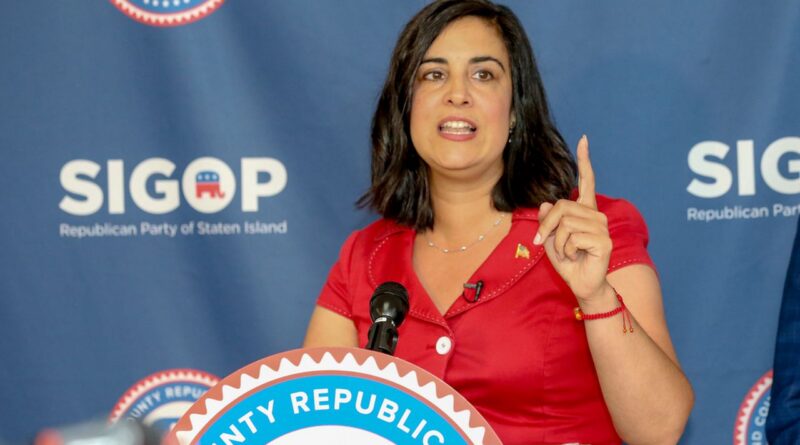
Republican Rep. Nicole Malliotakis secured a fourth term in Congress, defeating Democratic challenger Michael DeCillis with approximately 56% of the vote. Her victory came despite a difficult national political environment for Republicans and an endorsement of her Democratic opponent by the Staten Island Advance.
Malliotakis credited her victory to voters who have grown increasingly frustrated with Democratic leadership in New York City and Albany. She pointed to congestion pricing, rising tolls, high property taxes, and public safety concerns as major issues motivating residents to support Republican candidates.
The congresswoman argued that maintaining Republican representation gives Staten Island an important voice against policies imposed by Democratic officials who dominate city and state government. She emphasized that residents want elected leaders willing to challenge those policies rather than simply follow the direction of the Democratic establishment.
The Republican success extended well beyond the congressional race. State Sens. Andrew Lanza and Jessica Scarcella-Spanton both won reelection, preserving the GOP’s representation in the state Senate. Republicans also retained three Assembly seats, with Michael Reilly, Sam Pirozzolo, and Michael Tannousis returning to Albany.
Democratic Assemblyman Charles Fall also won reelection, but Republicans maintained control of their established legislative strongholds. The results demonstrated the borough’s continued willingness to elect conservative representatives even as Democrats strengthened their position throughout much of New York.
Republicans also celebrated a victory in a state judicial contest, adding to an election night that stood in sharp contrast to the party’s disappointing results elsewhere. The victories provided local Republicans with a rare opportunity to celebrate as Democratic candidates made significant gains across the country.
The borough’s resistance was particularly evident in the gubernatorial election. Although Democratic Gov. Kathy Hochul won reelection statewide by a commanding margin, Republican challenger Bruce Blakeman carried Staten Island, demonstrating the political divide between the borough and the rest of New York City.
Staten Island voters also rejected all five citywide ballot proposals, even though each measure passed across New York City as a whole. The proposals involved changes to the city’s governing structure, including measures affecting the authority of Mayor Zohran Mamdani and the operation of city government.
The results underscored Staten Island’s opposition to expanding the influence of a Democratic administration already backed by overwhelming political majorities elsewhere in the city. Residents delivered a different verdict from voters in Manhattan, Brooklyn, Queens, and the Bronx, making Staten Island the only borough to reject every proposal.
The contrast was especially striking given the broader election results. Democrats retained control of New York’s statewide offices, increased their influence in the state Legislature, and defeated several Republican candidates in competitive districts.
In southern Brooklyn, Republicans lost four legislative seats, illustrating how difficult the political environment had become for the GOP. Staten Island, however, remained largely resistant to the Democratic surge, preserving its Republican representation despite the national trend.
New York City Council Minority Leader David Carr attributed the borough’s success to a strong Republican ticket led by Malliotakis. He emphasized the importance of maintaining a unified local political operation and giving voters an alternative to the policies advanced by Democratic leadership.
The election results are particularly notable because registered Democrats slightly outnumber registered Republicans on Staten Island. The borough’s continued Republican success reflects a political identity that does not always align with party registration figures, especially on issues involving taxes, public safety, transportation, and local government.
Congestion pricing has become a particularly contentious issue among Staten Island residents, many of whom rely heavily on automobiles to commute to other parts of the metropolitan area. Additional tolls and transportation costs have fueled opposition to policies developed by Democratic officials in Manhattan and Albany.
Property taxes and the cost of living have also remained major concerns. Republican representatives have argued that Staten Island homeowners and working families face substantial financial burdens while receiving insufficient consideration from city and state leaders.
The borough’s longstanding frustration with New York City government has occasionally revived discussions about secession. Some residents have advocated separating Staten Island from the five boroughs, arguing that the community’s political priorities and local needs differ significantly from those of the city’s Democratic leadership.
Although separation remains a complicated proposal with major legal and political obstacles, the continued interest reflects a broader dissatisfaction with the borough’s limited influence over citywide decisions.
For Malliotakis, the election provides another opportunity to represent Staten Island and parts of southern Brooklyn in Washington. As Republicans prepare to enter the minority in the House of Representatives, she will remain one of the party’s most prominent elected officials in New York City.
The congresswoman has consistently emphasized opposition to higher taxes, restrictive transportation policies, and Democratic approaches to criminal justice. Her reelection indicates that those positions continue to resonate with a substantial portion of her district’s voters.
Staten Island’s election results offer a clear example of how local political priorities can produce outcomes that differ sharply from national trends. While Democrats celebrated sweeping victories elsewhere, the borough preserved its Republican representation and rejected proposals favored by the city’s political leadership.
The outcome leaves Staten Island standing apart from the rest of New York City, with Republican officials continuing to serve as a counterweight to Democratic control. For residents determined to maintain an alternative to one-party government, Tuesday’s election demonstrated that the borough remains one of the most reliable Republican strongholds in an overwhelmingly Democratic city.