
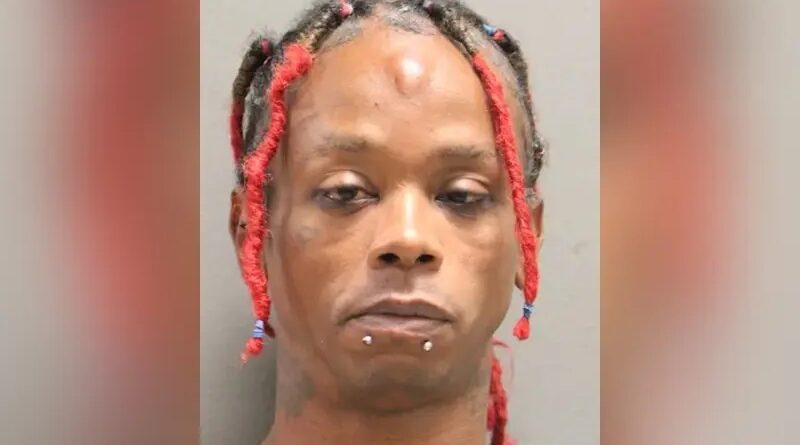
Chicago Transgender Woman Accused of Stabbing Stranger 13 Times, Leaving Knife Blade Embedded in Victim’s Skull
A 32-year-old transgender woman in Chicago has been charged with first-degree murder after allegedly stabbing a 50-year-old stranger 13 times during a confrontation over comments about her gender identity. Prosecutors say the attack was so violent that part of the knife blade broke off inside the victim’s skull.
Kelly Day, a resident of Chicago’s Chatham neighborhood, is accused of killing Larry Young on Wednesday, October 7, near a gas station on the city’s Far South Side. The deadly confrontation reportedly unfolded in front of Day’s 7-year-old stepson, who was accompanying Day and her wife.
During a Saturday court hearing, Assistant State’s Attorney Sara Grgurovic described how an argument between Day and Young escalated into a fatal stabbing. Prosecutors allege that Day pursued Young after an initial confrontation had ended, ultimately attacking him with a knife.
Authorities say the events leading up to the killing began earlier that day at a McDonald’s restaurant, where Day claimed a separate group of strangers mocked her for using the women’s restroom.
Young was not involved in that earlier incident. However, prosecutors say he later approached Day and her family while they were walking along East 87th Street and made remarks about her gender identity.
The comments reportedly angered Day, leading to a heated argument between the two strangers. Day’s wife attempted to intervene and pull her away as the confrontation intensified.
According to prosecutors, Young pushed Day during the dispute before walking away toward a gas station across the street. Rather than allowing the confrontation to end, Day allegedly told her wife that she did not want people who mocked her gender identity to get away with it.
Investigators say Day then followed Young across the street and confronted him again. The two reportedly became involved in another physical altercation before Day pulled out a knife.
Surveillance footage from the area allegedly captured the deadly attack. Prosecutors told the court that the recording showed Day standing over Young as he lay on the ground, repeatedly stabbing him in the head, neck and upper shoulders.
Young suffered 13 stab wounds during the assault. The force of the attack reportedly caused the tip of the knife to snap off and become lodged inside his skull.
The Cook County Medical Examiner’s Office later determined that Young died from multiple sharp-force injuries. During the autopsy, a pathologist recovered the broken metal blade fragment from his skull.
Prosecutors also described Day’s actions immediately after the stabbing, including two separate emergency calls that allegedly contained conflicting explanations about how she had been injured.
In the first call, Day reportedly told a 911 dispatcher that she had been hurt while defending herself against someone she described as a pervert. Investigators say she subsequently left the scene and discarded the knife.
Police later recovered the weapon, discovering that a portion of its blade was missing. That finding was consistent with the metal fragment recovered during Young’s autopsy.
Day allegedly contacted emergency dispatchers a second time and provided a different explanation for her injuries, claiming that she had accidentally cut herself while cooking.
Authorities eventually located Day at Jackson Park Hospital, where she had gone to receive treatment for a cut to her finger. She was arrested and subsequently charged with first-degree murder.
After being taken into custody, Day reportedly told investigators that Young had directed a homophobic slur at her, made a gesture resembling a gun and threatened to have someone assault her and her wife.
Day has maintained that she acted in self-defense. However, prosecutors challenged that account by pointing to surveillance footage and allegations that she followed Young after he had attempted to leave the original confrontation.
The distinction could become central to the criminal case. Illinois law permits deadly force in self-defense under certain circumstances, including when someone reasonably believes it is necessary to prevent imminent death or great bodily harm.
Prosecutors argue that the circumstances surrounding Young’s death, particularly the alleged pursuit and repeated stabbing, support the first-degree murder charge rather than a claim of justified self-defense.
During Saturday’s detention hearing at Central Bond Court, Judge John Hock reviewed the allegations and approved the prosecution’s request to keep Day in custody while awaiting trial.
The judge cited the extreme violence described in the case as one of the reasons for the detention decision. Day will remain in custody as the criminal proceedings move forward.
The killing has also drawn attention because of the reported presence of Day’s young stepson during the confrontation. Prosecutors said the 7-year-old was with Day and her wife when the deadly encounter unfolded.
Young’s death has prompted discussion about how an argument between strangers could escalate into such extreme violence. The circumstances described in court indicate that the confrontation began with verbal insults before turning into a fatal physical attack.
The case also underscores the distinction between offensive speech and criminal violence. Regardless of the remarks allegedly made during the encounter, prosecutors must establish that Day’s actions constituted unlawful homicide rather than legally justified self-defense.
Day is scheduled to return to court Tuesday, October 13, as the prosecution continues pursuing the first-degree murder charge.
For now, the allegations remain subject to the judicial process, and Day is presumed innocent unless proven guilty. Investigators have identified surveillance footage, emergency calls, physical evidence and autopsy findings as important components of the case against her.
Young, 50, lost his life following a confrontation that authorities say began with an argument on a Chicago street and ended with a deadly knife attack. The upcoming court proceedings will determine how the evidence is presented and whether prosecutors can establish criminal responsibility for his death.