
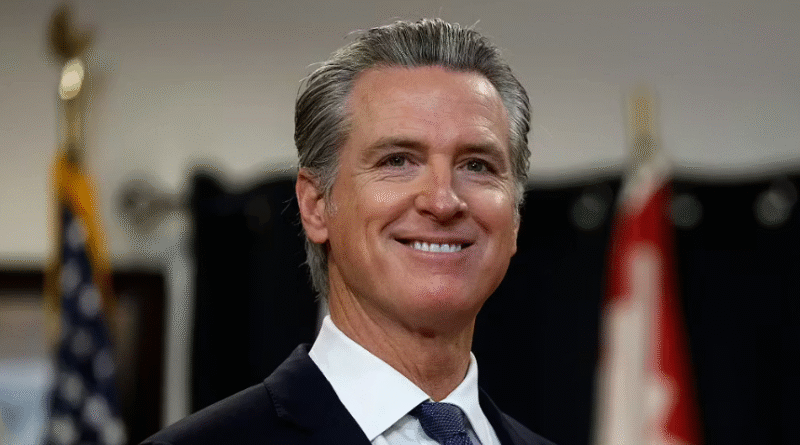
Gavin Newsom Pushes Massive New Tax Expansion Targeting Software And AI Services
California Gov. Gavin Newsom is pushing a major expansion of the state’s sales tax system that would apply new taxes to cloud software, AI platforms, and digital business applications used by millions of consumers and companies.
The proposal would extend California’s existing sales tax rules to cover many forms of digitally delivered software and Software-as-a-Service products, potentially reshaping how the tech industry operates in the nation’s largest state economy.
While Newsom’s administration insists the measure is not technically a “new tax,” critics argue it would effectively function as one by dramatically expanding what Californians are required to pay taxes on in the digital economy.
California’s statewide sales tax currently starts at 7.25%, though local taxes can push rates significantly higher depending on the city or county. Under the proposal, that tax structure would begin applying more broadly to cloud-based software subscriptions, enterprise AI systems, and online productivity tools.
The plan primarily targets “prewritten computer software” and SaaS platforms commonly used by businesses. State officials estimate roughly 75% of the financial impact would fall on business-to-business software transactions rather than ordinary consumers.
Still, many widely used digital services could eventually become more expensive if the proposal becomes law. Platforms such as Microsoft 365, Adobe Creative Cloud, Slack, QuickBooks Online, and various AI subscription services may ultimately face higher costs passed down to users.
Newsom defended the proposal as a fairness issue, arguing Californians who purchase software physically in stores already pay sales taxes while many digital downloads currently avoid the same treatment.
“I’m at Best Buy often, and I’m paying sales tax on a lot of this pre-written software,” Newsom said during a press conference. “Then I find out all my friends that aren’t near a Best Buy, they’re downloading it and they’re not paying sales tax. Well, how is that fair?”
The governor’s office projects the tax expansion would generate approximately $1.1 billion in combined state and local revenue during its first fiscal year, eventually growing to roughly $2 billion annually.
Critics, however, question why California is pursuing additional taxation at a time when the state’s financial outlook has dramatically improved. State revenues are reportedly running $16.5 billion above earlier projections, erasing previous deficit concerns for both the current and upcoming fiscal years.
Despite the stronger-than-expected revenue numbers, Newsom’s revised budget proposal avoids major spending increases while also steering away from deep budget cuts.
The software tax proposal arrives as more states move toward taxing digital products and cloud services. More than 30 states already impose taxes on certain forms of digitally delivered software, while over 20 currently tax SaaS platforms in some capacity.
The proposal remains part of California’s ongoing budget negotiations and still requires approval from the state legislature before taking effect.