
House Democrats Nominate Hakeem Jeffries for Speaker Despite Opposition From Progressive Lawmakers
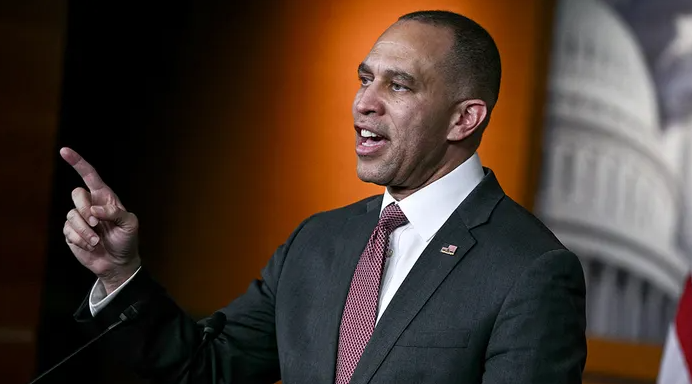
House Democrats officially nominated Rep. Hakeem Jeffries of New York to become the next speaker of the House on Wednesday, positioning him to take control of the chamber following the party’s sweeping victories in the 2026 midterm elections.
Jeffries secured 251 votes during a closed-door leadership election, while 11 Democrats voted against him. The Brooklyn congressman ran unopposed but faced resistance from progressive lawmakers demanding changes to the party’s leadership and legislative priorities.
The vote moves Jeffries closer to becoming the first Black speaker in American history. However, he must still win a formal vote of the full House when the new Congress convenes on January 3, 2027.
Democrats are expected to hold at least 257 seats in the incoming House, giving Jeffries a substantial majority and a clear advantage heading into the January vote.
Despite that margin, the opposition exposed disagreements within the Democratic Party. Several newly elected progressives have questioned whether Jeffries represents the political direction voters demanded during the midterm elections.
Seven incoming progressive lawmakers reportedly voted against his nomination as they sought stronger commitments on economic policies and the party’s future direction. Discussions between Jeffries and those members are continuing.
Jeffries requested that Democrats conduct a recorded tally through a secret ballot rather than nominate him by acclamation. The decision allowed lawmakers to register their opposition without publicly identifying themselves.
The 56-year-old congressman has led House Democrats since January 2023, when he succeeded Nancy Pelosi as the party’s top House leader. Pelosi has endorsed his bid for speaker.
Jeffries has promised to prioritize affordability and economic legislation while increasing congressional oversight of President Trump’s administration.
In a letter announcing his leadership bid earlier this month, Jeffries argued that Americans were struggling with the cost of living and pledged that Democrats would pursue an aggressive legislative agenda.
His nomination comes as Republicans prepare to surrender control of the House after two years under Speaker Mike Johnson.
House Republicans have selected Ohio Rep. Jim Jordan to lead their conference in the next Congress. Jordan defeated Rep. Steve Scalise for the position after Johnson announced that he would not seek to lead Republicans in the minority.
Democrats also selected California Rep. Ted Lieu as their next caucus chairman during Wednesday’s leadership elections.
Meanwhile, Democratic leadership tensions extend to the Senate, where Chuck Schumer faces a challenge from Maryland Senator Chris Van Hollen ahead of the party’s December leadership vote.
If Jeffries wins the speakership in January, he will assume control of House proceedings, committee assignments, and the chamber’s legislative agenda.
His nomination marks a major political shift in Washington, with Democrats preparing to control both chambers of Congress during the final two years of President Trump’s term.
Although Wednesday’s vote demonstrated overwhelming support for Jeffries within his caucus, the 11 dissenting votes also showed that disagreements over the party’s direction remain unresolved as Democrats prepare to govern.