
Iran Halts Collaboration with IAEA Following US Airstrikes on Nuclear Installations
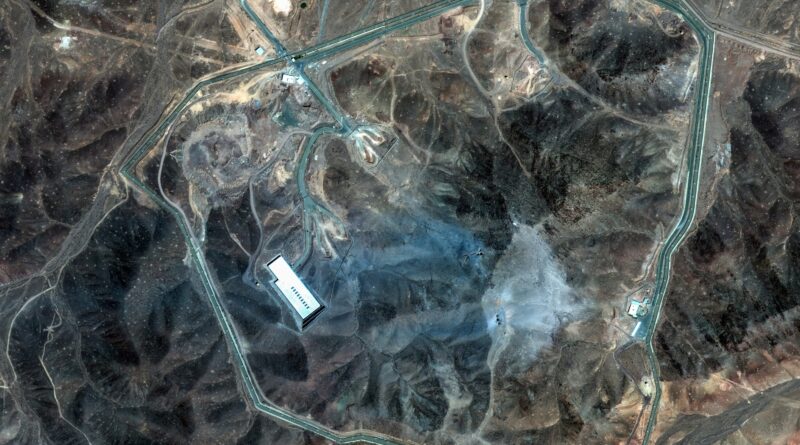
On July 3, Iranian President Masoud Pezeshkian instructed the nation to halt its collaboration with the International Atomic Energy Agency (IAEA) in light of the recent bombing by the United States on three critical Iranian nuclear installations as Israel engaged in an aerial conflict with Iran. This unveiling came amidst heated discussions between Iran and the IAEA. These discussions have been described by the Foreign Ministry of the Islamic Republic as ‘complex’ and ‘technical.’ This discussion comes on the heels of the first visit by the nuclear oversight body since Iran severed ties with them last month.
The rapport between Iran and the IAEA disintegrated significantly after an air war that spanned 12 days led by Israel and the United States in June. This military onslaught damaged vital Iranian nuclear structures. The IAEA Executive Board noted a breach of the non-proliferation obligation by Iran on June 12, just one day before the Israeli airstrikes in Iran that led to the war.
The agency’s representatives remained silent on the subject of the deputy head’s anticipated visit to the country. This led to speculations since the visit did not include any scheduled inspections of Iranian nuclear sites. Esmail Baghaei, the Spokesperson for the Iranian Foreign Ministry, disclosed that there is a potential for a meeting with the Foreign Minister Abbas Aragchi. However, he stated that it is too early to forecast the outcome of these complex and technical dialogues.
Baghaei further questioned the IAEA’s ‘unique situation’ during the June war with Israel. He expressed his discomfort with the agency’s stand when peaceful installations of a country under constant monitoring were being targeted. According to Baghaei, the agency did not exhibit a wise and rational reaction as it refrained from issuing a condemnation, which was a requisite under the circumstances.
Aragchi hinted earlier that the cooperation with the agency, now necessitating approval from Iran’s Supreme National Security Council, will focus on redefining the forms of collaborations on both ends. This decision seems likely to reduce further the investigators’ ability to scrutinize Tehran’s nuclear program which was close to achieving uranium enrichment of near weapons-grade levels.
President Pezeshkian, on July 3, once again called for a halt to the cooperation with the IAEA following the US air raids on three significant Iranian nuclear installations. The Israeli-Iran aerial war resulted in the loss of nearly 1,100 lives, many of them military officials. In a counteraction, Iran carried out strikes that resulted in the death of 28 individuals in Israel.
Historically, Iran has allowed limited IAEA inspections as a way to negotiate under pressure with the Western countries. It remains uncertain as to when the dialogues between Washington and Tehran for a nuclear deal will recommence.
According to assessments made by United States intelligence agencies in conjunction with the IAEA, Iran last had a coordinated nuclear weapon initiative in 2003. Nonetheless, it has been reported that the country has managed to refine uranium up to 60%, a minor, yet complex, leap away from weapon-grade levels of 90%.