
JD Vance Pushes Congress to Make Trump Anti-Fraud Crackdown Permanent
Vice President JD Vance is urging Congress to turn the Trump administration’s anti-fraud measures into federal law, warning that a future Democratic administration could otherwise dismantle the work being done to protect taxpayer money.
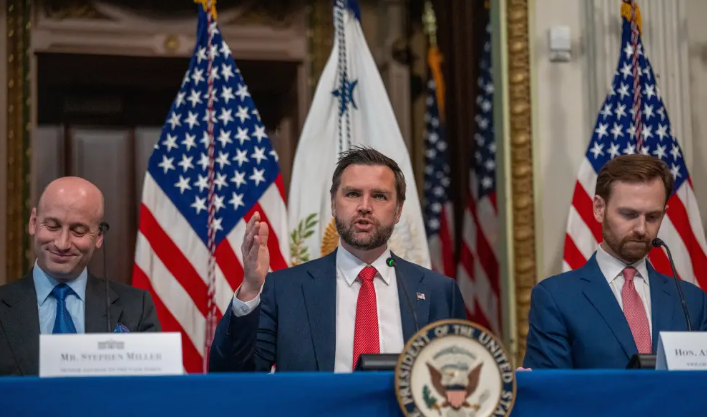
Vance made the push Wednesday during a White House roundtable with Republican lawmakers focused on combating fraud in government benefit programs. He said the White House Anti-Fraud Task Force has identified an estimated $230 billion in fraudulent activity and prevented another $56 billion in potentially fraudulent payments from going out.
The vice president argued that the administration can only go so far through executive action. He said lasting changes will require lawmakers in the House and Senate to codify stronger safeguards, giving future administrations less ability to reverse the reforms.
Vance used Michigan Democratic Senate nominee Abdul El-Sayed to make his point about what could happen if the changes are not written into law. He joked about the possibility of a “President El-Sayed” taking office in the future and undoing the administration’s anti-fraud efforts. El-Sayed has been critical of Vance’s task force.
One of the administration’s priorities is forcing greater data sharing between state governments and Washington. Vance argued that the federal government does not always have enough information to determine exactly who is receiving benefits administered by individual states, making it more difficult to identify improper payments and fraud.
Vance specifically pointed to programs such as Medicaid and the Supplemental Nutrition Assistance Program, arguing that better coordination between federal and state databases would make it easier to identify ineligible recipients and suspicious claims. He said Congress should require states to provide the information necessary for federal authorities to determine where taxpayer dollars are going.
The White House is also pushing Congress to strengthen criminal penalties for fraud. Deputy White House chief of staff Stephen Miller called for mandatory minimum sentences in some cases, arguing that existing punishments may not provide enough of a deterrent for organized schemes that steal millions of dollars from taxpayers.
The administration has outlined a broader package of proposed reforms, including tighter verification requirements for government benefits, more frequent checks of benefit rolls against wage and death records, and stronger screening requirements for Medicaid providers. Vance said additional resources for federal fraud investigations are also needed.
With Congress returning from its August recess in September, Vance is pressing lawmakers to make the crackdown permanent rather than leaving it dependent on presidential action. His message was that the administration believes it has uncovered massive abuse of taxpayer-funded programs, but that preserving the reforms beyond President Trump’s term will ultimately require Congress to put them into law.