
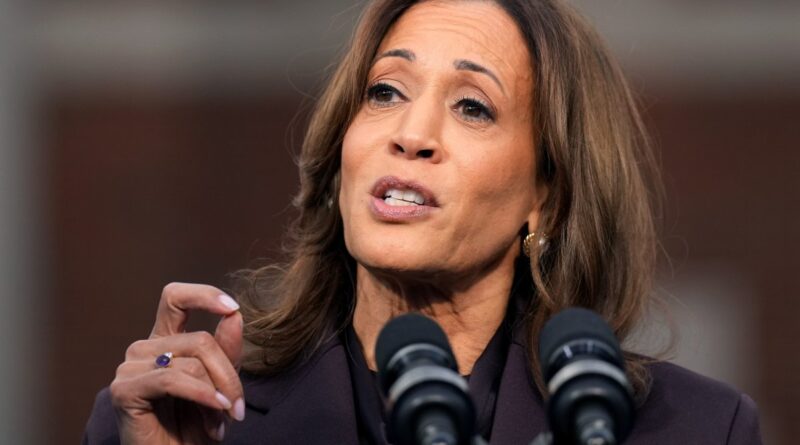
Kamala Harris Turns Against Biden’s Israel Policy, Accuses Trump of Giving Netanyahu a Blank Check
Former Vice President Kamala Harris is publicly criticizing both President Trump and her former boss, Joe Biden, for failing to take stronger action against Israel during the war in Gaza, marking another significant shift in her foreign policy messaging as speculation grows about a possible 2028 presidential campaign.
Speaking Wednesday at the Asan Institute for Policy Studies in Seoul, South Korea, Harris argued that the United States should have used its diplomatic and economic influence to pressure Israeli Prime Minister Benjamin Netanyahu into limiting military operations in Gaza.
Her criticism was particularly notable because Harris served as vice president throughout the Biden administration and defended many of its foreign policy decisions during her unsuccessful 2024 presidential campaign.
Now, nearly two years after leaving office, Harris is acknowledging that the administration she helped lead should have taken a more aggressive approach toward Israel.
The former vice president accused both administrations of failing to uphold America’s responsibilities concerning human rights and international law.
She specifically criticized what she described as the Israeli government’s “horrific conduct” during the conflict and argued that Washington had not done enough to restrain Netanyahu.
Harris also accused President Trump of providing Netanyahu with a “blank check,” suggesting that the current administration has allowed Israel too much freedom in conducting military operations.
Her remarks came during a broader speech examining American leadership, international alliances and the growing importance of technological and economic competition.
Harris argued that the United States must hold its allies accountable while continuing to defend its strategic interests abroad.
She maintained that American foreign policy should balance national security with a commitment to international law and the protection of civilians.
The comments represent one of her clearest public acknowledgments that she disagrees with how the Biden administration handled the war between Israel and Hamas.
The conflict began after Hamas terrorists launched their October 7, 2023, attack on Israel, killing approximately 1,200 people and taking more than 250 hostages.
Israel responded with an extensive military campaign in Gaza aimed at dismantling Hamas’s military capabilities and securing the release of hostages.
The fighting caused widespread destruction and severe civilian suffering in Gaza, generating international criticism of Israel’s military tactics and humanitarian policies.
Throughout much of the conflict, Biden defended Israel’s right to respond to the Hamas attacks while urging Netanyahu to take additional precautions to protect Palestinian civilians.
The administration also provided military assistance to Israel while pursuing diplomatic efforts to secure hostage releases and temporary ceasefires.
Harris generally supported those policies while serving as vice president, although she sometimes adopted a more critical public tone regarding civilian casualties.
During the 2024 presidential election, she attempted to balance support for Israel’s security with growing demands from progressive Democrats for a tougher approach toward Netanyahu.
That position became increasingly difficult as pro-Palestinian activists criticized the administration’s continued military support for Israel.
The Uncommitted National Movement emerged during the Democratic presidential primaries, urging voters to protest Biden’s handling of the war.
In Michigan, approximately 100,000 Democratic primary voters selected the uncommitted option rather than supporting Biden.
The movement later declined to endorse Harris in the general election, reflecting continuing dissatisfaction with the administration’s Gaza policies.
Harris ultimately lost the 2024 presidential election to Trump, including the battleground state of Michigan.
Since leaving office, she has become increasingly willing to criticize the administration’s handling of the conflict.
In her 2025 memoir, 107 Days, Harris questioned Biden’s public messaging about Palestinian suffering, suggesting that his expressions of sympathy appeared less forceful than his declarations of support for Israel.
She also acknowledged in a previous interview that the administration possessed diplomatic tools it could have used more aggressively.
Her latest speech in South Korea goes further by placing the Biden and Trump administrations together in a broader criticism of American policy toward Israel.
That comparison is politically significant because Harris is simultaneously distancing herself from her former administration and challenging the foreign policy of the president who defeated her.
However, her comments have also attracted criticism from pro-Israel organizations and political figures.
The Republican Jewish Coalition responded by arguing that Harris’s remarks were consistent with positions she had previously taken toward Israel.
The organization pointed to her decision not to attend Netanyahu’s July 2024 address to Congress, an appearance she missed while attending a previously scheduled event.
It also highlighted her opposition to certain legislation targeting the Boycott, Divestment and Sanctions movement, which advocates economic and political pressure against Israel.
The coalition further criticized Harris for previously calling for restrictions on Israeli military operations in Rafah, a southern Gaza city where Israeli forces later located and rescued hostages.
For the organization, her latest remarks reinforced concerns about her willingness to challenge Israel while the country was responding to attacks by Hamas.
Harris’s defenders argue that criticizing Israeli government policy is not the same as opposing Israel’s existence or its right to defend itself.
They maintain that American leaders can support Israel’s security while demanding greater protections for Palestinian civilians.
The disagreement reflects a broader debate within both political parties over the conditions that should accompany American military and diplomatic support for Israel.
Harris’s comments also drew a sharp response from Warren Kinsella, an attorney and political commentator who previously worked on her 2024 presidential campaign.
Kinsella publicly expressed regret about his involvement with her campaign, saying he was “ashamed” to have worked with her following the remarks.
The criticism underscores the divisions surrounding Harris’s evolving position on Israel and the challenges she could face if she seeks the presidency again.
The former vice president has not announced a 2028 campaign, but she has continued making public appearances and discussing the future direction of the Democratic Party.
Her South Korea speech also addressed the importance of maintaining strong alliances as China, Russia, Iran and North Korea deepen their relationships.
Harris warned that American foreign policy must adapt to an international environment in which economic innovation, advanced technology and access to critical resources are increasingly important.
She argued that military power alone is no longer sufficient to preserve American influence.
The former vice president also emphasized the importance of cooperation with allies in confronting emerging security threats and technological competition.
Those themes provided the broader context for her criticism of Israel, which she presented as part of America’s obligation to apply consistent standards to its international relationships.
Nevertheless, the most politically consequential portion of the speech was her acknowledgment that the Biden administration should have done more to pressure Netanyahu.
During her time in office, Harris had access to high-level national security discussions and participated in an administration that shaped American policy throughout the Gaza war.
Her current criticism therefore raises questions about the extent to which she advocated different policies privately while serving as vice president.
Harris has not provided a detailed explanation of which additional measures she believes the administration should have adopted or when those measures should have been implemented.
Potential forms of American pressure could include restrictions on military assistance, diplomatic conditions or other policy changes, but she did not outline a comprehensive alternative strategy in her Seoul remarks.
That lack of specificity leaves open questions about how her preferred approach would have differed in practice from Biden’s policies.
President Trump, meanwhile, has maintained a close relationship with Netanyahu and has emphasized Israel’s security as a central component of his Middle East policy.
His administration’s approach has drawn support from many pro-Israel conservatives, while critics argue that Washington should exert greater pressure over the conduct of military operations.
The competing positions illustrate the continuing disagreement over how the United States should balance its alliance with Israel against concerns about the humanitarian consequences of the Gaza conflict.
For Harris, the speech signals a willingness to challenge both the current administration and her former political partner on one of the most divisive foreign policy issues of recent years.
It also places her evolving views on Israel under renewed scrutiny as Democrats consider their leadership and policy direction ahead of the 2028 presidential election.
Whether her criticism will satisfy progressive activists or generate additional opposition from pro-Israel Democrats remains uncertain.
What is clear is that Harris is no longer limiting her criticism to President Trump. She is now publicly arguing that the Biden administration, in which she served for four years, also failed to take sufficient action against Israel during the war in Gaza.