
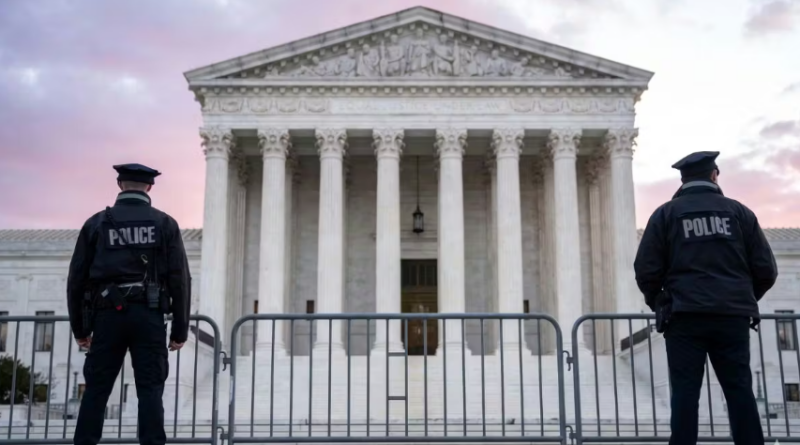
Louisiana Suspends Primaries After Supreme Court Ruling Forces Congressional Map Redraw
Louisiana has suspended its scheduled May 16 primary elections for congressional races following a major Supreme Court decision that invalidated part of the state’s current district map, forcing officials to redraw boundaries before elections can proceed.
The ruling found that one of Louisiana’s majority-minority districts was an unconstitutional racial gerrymander, immediately blocking the state from holding elections under the existing map. The decision triggered swift action from state leadership as they work to comply with the court’s order.
Governor Jeff Landry and Attorney General Liz Murrill said in a joint statement that the Supreme Court’s decision automatically lifted a prior stay that had allowed the map to be used temporarily. With that stay now gone, the state is legally barred from conducting congressional elections under the current districts.
Justice Samuel Alito, writing for the majority, stated that Louisiana’s attempt to comply with earlier lower court rulings resulted in a map that improperly relied on race in drawing district lines, making it unconstitutional.
State officials are now working with the legislature and the secretary of state’s office to develop a new map that meets legal requirements. The timeline for completing that process remains unclear, raising questions about when the delayed primaries will ultimately take place.
The ruling drew sharp criticism from Troy Carter, the only Democrat in Louisiana’s congressional delegation. He described the decision as a major setback, warning that it could undermine recent efforts to create districts that provide representation opportunities for Black voters.
The immediate impact is limited to congressional races, though uncertainty remains about whether other contests scheduled for the same date could be affected. Among them is a closely watched Republican Senate primary featuring Julia Letlow and Bill Cassidy.
The decision is already reverberating beyond Louisiana, as other states consider redistricting changes in response to the ruling. In Tennessee, Marsha Blackburn called for lawmakers to reconvene and redraw district lines, particularly in areas dominated by Democratic voters.
Mississippi Governor Tate Reeves had previously indicated he would call a special legislative session following the ruling, potentially targeting the state’s Second Congressional District, currently represented by Bennie Thompson.
In contrast, Alabama Governor Kay Ivey said her state would not pursue immediate changes due to ongoing federal litigation and existing court orders restricting redistricting efforts until after the 2030 census.
The Louisiana case is part of a broader wave of mid-decade redistricting battles unfolding across the country. States like California, Texas, Virginia, and Florida have all taken steps to redraw maps ahead of upcoming elections, with both parties seeking to gain an advantage.
With the Supreme Court’s ruling now setting a new legal standard, Louisiana’s next steps will likely serve as a key test case for how states navigate redistricting challenges moving forward.