
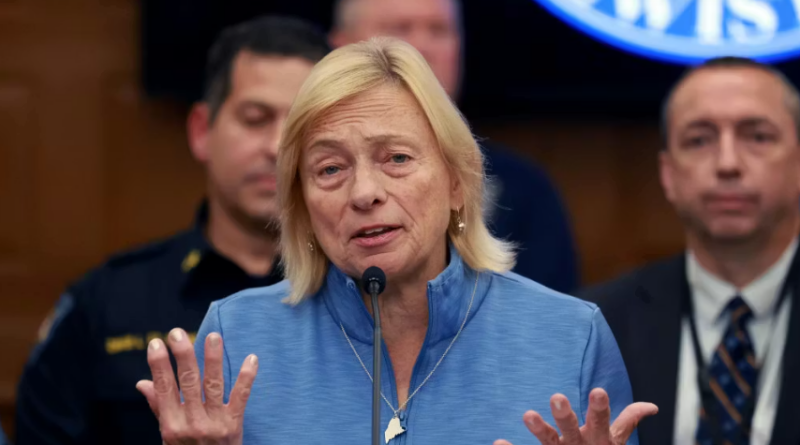
Maine Governor Janet Mills Ends Senate Campaign After Clash With President Trump Over Trans Athlete Policy
Janet Mills is ending her bid for the United States Senate, reshaping a closely watched race and clearing the path for Democrat Graham Platner to challenge incumbent Susan Collins in what is expected to be one of the most competitive general elections in the country.
Mills announced Thursday that she is suspending her campaign, citing a lack of financial resources despite saying she still had the drive, experience, and commitment to continue. Her decision comes after months of lagging behind in polling and struggling to consolidate support, even with backing from Senate Minority Leader Chuck Schumer.
“When I decided to run for the United States Senate last year, it was because I believed Maine people were getting a bad deal from Washington,” Mills said in a statement. She added that while she maintains those concerns, she does not have the financial resources required to compete in a modern campaign, calling the decision to suspend her bid “incredibly difficult.”
Her departure follows a campaign that never fully gained momentum, as voters increasingly gravitated toward Platner, who built a base of support among more progressive Democrats. Mills’ inability to close the gap ultimately made her path to the nomination increasingly unlikely.
Mills had gained national attention during her high-profile clash with President Donald Trump over transgender-identifying athletes competing in women’s sports. The exchange, in which Mills said “we’ll see you in court” and Trump responded in kind, became a defining moment and was widely circulated online.
That confrontation elevated Mills’ profile but did not translate into sustained political support within the state, where voters appeared more focused on broader economic and political concerns heading into the election cycle.
With Mills now out of the race, Platner becomes the Democratic standard-bearer despite facing a series of controversies earlier in his campaign. These included scrutiny over past social media posts and other issues that became fodder for attack ads and media coverage.
Among the controversies were old Reddit posts in which Platner made inflammatory remarks, including statements about law enforcement and other sensitive topics. Additional posts surfaced discussing issues like sexual assault in a way that drew backlash and criticism from opponents.
Platner, a military veteran, has since apologized for those remarks, acknowledging that they were inappropriate and did not reflect his current views. Despite the controversies, his campaign maintained enough support to build a decisive lead in the primary.
Polling in the weeks leading up to Mills’ withdrawal showed Platner ahead by double digits, reinforcing the sense that the race had effectively been decided before her official exit.
Platner’s campaign has been bolstered by endorsements from prominent progressive figures, including Bernie Sanders and Elizabeth Warren, positioning him as a candidate aligned with the party’s left wing.
That alignment could energize parts of the Democratic base but may also present challenges in a general election in Maine, where independent and moderate voters often play a decisive role.
Republicans were quick to respond to Mills’ exit, framing the development as a positive turn for their chances of holding the seat. National Republican Senatorial Committee Chairman Tim Scott criticized Democrats for rallying behind Platner, arguing that his positions and past statements could hurt the party in a general election.
Collins, who has represented Maine in the Senate for decades, is expected to emphasize her record of working across party lines as she prepares for the upcoming contest. She has historically performed well with moderate voters, a key factor in the state’s political landscape.
The race is widely seen as a potential tipping point in the battle for control of the Senate, with both parties expected to invest heavily in the contest. Maine’s independent streak and history of split-ticket voting make it a particularly unpredictable battleground.
Mills’ decision to step aside consolidates Democratic support behind Platner, but it also sets up a sharp ideological contrast between the candidates heading into the general election.
As the campaign moves forward, both parties are likely to intensify their messaging and outreach efforts, with national attention focused on the outcome and its implications for the balance of power in Washington.