
Mike Johnson Says Voters Made the ‘Wrong Choice’ in Midterms, Warns Democratic Control of Congress Will Bring Chaos
House Speaker Mike Johnson delivered a blunt assessment of the Republican Party’s devastating midterm election losses, declaring that American voters made the wrong decision by handing control of Congress to Democrats. The Louisiana Republican warned that the next two years could become a political circus as President Trump faces an opposition party preparing to launch investigations and challenge his administration’s agenda.
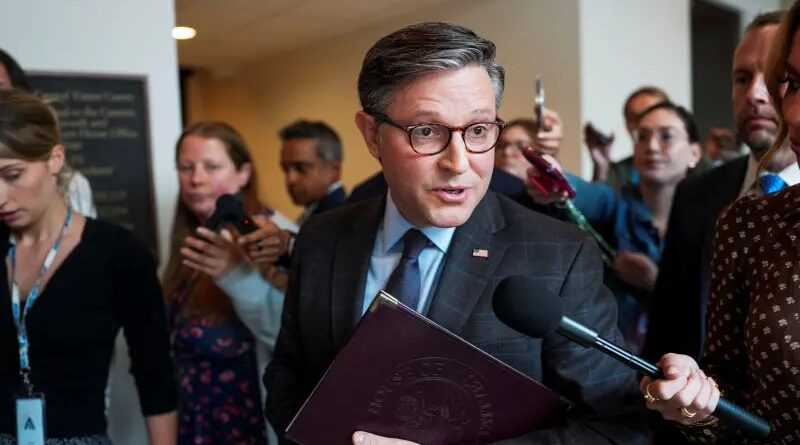
Speaking with reporters on Capitol Hill Monday, Johnson refused to suggest that President Trump should abandon his policies or change his governing approach following last week’s election results. Instead, the outgoing speaker defended the administration’s accomplishments and expressed concern about the direction Congress will take under Democratic leadership.
Johnson was asked by CNN congressional correspondent Manu Raju whether the president needed to reconsider his political strategy after Republicans suffered sweeping defeats in the November 3 elections.
The speaker rejected the suggestion that he should advise Trump on how to govern, arguing that the administration had established a strong record during its first two years in office.
“I’m not going to tell the president how to do his job,” Johnson said, expressing confidence that Trump would continue pursuing his priorities despite the election setback.
Johnson then delivered his sharpest criticism of the election results, saying he believed Americans had made a mistake by returning Democrats to power.
“I’m sorry that the voters made the wrong choice,” Johnson declared.
The speaker warned that Democratic control of the House would likely produce political turmoil, legislative confrontations, and a series of investigations targeting the Trump administration.
He predicted that the next two years would resemble a circus, with Democratic leaders focusing on political battles rather than continuing the legislative agenda Republicans had pursued during their majority.
Johnson described the outcome as a tragedy for the country, arguing that Republicans would have continued advancing their policies if voters had allowed them to retain control of the House.
The comments followed one of the Republican Party’s most significant congressional defeats in recent years. Democrats captured more than 40 Republican-held House seats, securing a substantial majority after entering the election needing only a handful of additional seats to take control.
Democrats also won control of the Senate, delivering a major setback to the Republican Party’s ability to advance legislation during the final two years of President Trump’s second term.
The results represented a dramatic reversal from the beginning of Trump’s presidency, when Republicans controlled the White House and both chambers of Congress.
With Democrats preparing to assume power in January, the administration faces the prospect of divided government and a significantly more difficult legislative environment.
Johnson’s remarks reflected his concern that Democrats will use their congressional majorities to obstruct the president’s priorities, investigate senior administration officials, and pursue impeachment proceedings.
Incoming House Speaker Hakeem Jeffries has already signaled that Democrats intend to conduct extensive oversight of the Trump administration.
Among the potential targets is War Secretary Pete Hegseth, who faces a renewed impeachment effort over his handling of military operations involving Iran and other countries.
Republican Rep. Thomas Massie of Kentucky reintroduced eight articles of impeachment against Hegseth on Monday, accusing the Pentagon chief of exceeding his authority during the conflict with Iran.
Although the resolution was introduced by a Republican, Democratic leaders have indicated that they are prepared to consider impeachment when the measure comes before the House.
Johnson strongly opposed the effort, arguing that attempting to remove a senior national security official while American military personnel remain engaged in overseas operations would send a damaging message.
The speaker maintained that impeachment should not become a tool for settling ordinary political disagreements or gaining an advantage over the opposing party.
He also expressed concern that Democrats would pursue similar investigations after taking control of Congress, creating additional distractions for the administration.
The impeachment controversy has become one of the first major tests facing Republicans during the lame-duck session, when the party retains control of Congress despite its election losses.
Republican leaders must now decide whether to defeat Massie’s resolution through a procedural vote or allow lawmakers to debate the articles directly.
Johnson has made clear that he opposes removing Hegseth and believes the secretary should remain focused on overseeing American military operations.
Meanwhile, Republican leaders continue examining the reasons behind their party’s midterm defeat.
Vice President JD Vance has acknowledged that the conflict with Iran contributed to voter dissatisfaction, particularly as rising energy prices affected American households and businesses.
President Trump has also recognized that higher gasoline prices played a role in the election results, although he continues to defend the military campaign as necessary to prevent Iran from obtaining nuclear weapons.
The administration has maintained that confronting Tehran was essential to American national security, regardless of the political consequences.
Trump recently declared that the military phase of the Iran conflict was effectively over, while emphasizing that American forces would maintain pressure until a lasting diplomatic agreement could be reached.
The war’s economic consequences nevertheless became a prominent issue during the midterm campaign, creating difficulties for Republican candidates attempting to defend the administration’s record.
Johnson has resisted the idea that the election results require Trump to fundamentally change direction.
Instead, he believes the president should continue pursuing the policies that defined his first two years, even as Democratic control of Congress makes additional legislation more difficult.
The speaker’s position places him among Republicans who view the midterm results as a setback rather than a reason to abandon the administration’s governing priorities.
Johnson has also announced that he will not seek the House Republican minority leader position when the new Congress convenes in January.
His decision means Republicans will need to select a new leader to guide the party through the final two years of Trump’s presidency.
The leadership transition comes at a challenging moment for the GOP, with lawmakers divided over foreign policy, economic concerns, and the party’s strategy for recovering from its election losses.
The incoming Democratic majority is expected to pursue an aggressive oversight agenda while seeking to reverse or restrict elements of the Trump administration’s policies.
However, Democrats will still face the president’s veto authority, which could prevent major legislative changes unless sufficient bipartisan support emerges.
Trump has indicated that he remains willing to work with Democrats on certain issues but will not hesitate to reject legislation that conflicts with his administration’s priorities.
That dynamic could create repeated confrontations between the White House and Congress over federal spending, immigration enforcement, foreign policy, and government oversight.
Johnson’s warning reflects the difficulties that divided government could create for the administration, particularly if congressional investigations and impeachment proceedings become central priorities.
The outgoing speaker believes Republican control of Congress provided a more effective path for advancing Trump’s agenda and maintaining continuity in federal policy.
His criticism of the election results also underscores the frustration among Republican leaders who entered the midterm campaign hoping to preserve their narrow majorities.
Instead, Democrats achieved sweeping victories that dramatically altered the balance of power in Washington.
As Republicans prepare to surrender congressional control, Johnson remains convinced that the country would have benefited from another two years of Republican leadership.
His remarks suggest that the party’s remaining leaders intend to defend President Trump’s record rather than distance themselves from the administration in response to the defeat.
With Democrats preparing to take control in January, the final two years of Trump’s presidency are likely to feature a far more confrontational relationship between Congress and the White House.
Johnson’s message is that Republicans should prepare for that confrontation while continuing to defend the policies they believe have benefited the country. Whether the next Congress becomes the political circus he predicts will depend on how Democratic leaders use their new majorities and how the Trump administration responds.