
President Trump Pardons Two Alaska Diesel Mechanics Prosecuted Under Biden Administration, Calling Their Punishment Unjust
President Trump delivered a dramatic moment during his Tuesday night rally in Wasilla, Alaska, granting full and unconditional pardons to two diesel mechanics who were prosecuted under the Biden administration for modifying truck engines in violation of federal environmental regulations.
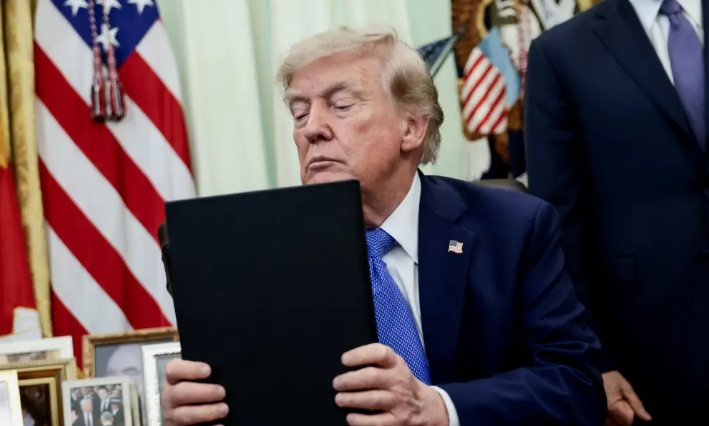
The president invited Zachary Czubak and Patrick Fleming onto the stage before personally signing their pardon documents in front of a cheering crowd. Trump argued that the men had been subjected to excessive federal punishment for work they performed on diesel-powered vehicles.
The surprise announcement came during a campaign rally supporting Republican Sen. Dan Sullivan and Rep. Nick Begich ahead of the November 3 midterm elections.
Trump used the occasion to criticize the Biden administration’s environmental enforcement policies, arguing that federal regulators had unfairly targeted mechanics and small-business owners who help keep vehicles operating in Alaska’s demanding conditions.
The two men were co-owners of Arm Rippin Toys, an Anchorage automotive repair business specializing in diesel trucks and other vehicles.
In 2022, Czubak and Fleming pleaded guilty to conspiracy to violate the Clean Air Act after federal prosecutors accused them of illegally modifying emissions-control systems on diesel-powered vehicles.
According to the Justice Department, the business removed federally required pollution-control equipment and tampered with electronic monitoring systems designed to detect emissions violations.
Federal authorities alleged that the modifications were performed on at least 37 vehicles between July 2019 and September 2020.
Prosecutors said the business collected approximately $100,000 for the modifications, which involved both privately owned and commercial diesel vehicles.
The work included disabling emissions-control components that federal regulations require manufacturers to install to limit harmful pollutants.
Under the Clean Air Act, knowingly removing or disabling those systems can result in civil or criminal penalties.
The defendants ultimately pleaded guilty, and their sentences included probation, financial penalties and community service.
Czubak and Fleming each received fines of $66,000, while Czubak was also sentenced to five years of probation.
The case became a point of controversy among critics of federal environmental regulations, who argued that the government had imposed disproportionate penalties on workers in the automotive repair industry.
President Trump echoed those concerns during Tuesday’s rally, telling supporters that the mechanics had been unfairly treated for performing engine modifications.
He argued that the federal government had pursued the men aggressively despite their work being connected to keeping diesel vehicles operational.
Trump described the prosecutions as an example of what he considers excessive government interference in the lives of ordinary Americans.
The president also questioned why federal authorities devoted resources to pursuing mechanics while more serious crimes remained a concern across the country.
As the crowd applauded, Trump directed a White House aide to bring the pardon documents to the podium.
He then signed the paperwork in front of the audience, making the clemency announcement one of the most memorable moments of the evening.
The president handed the completed documents to the two men and congratulated them on receiving presidential pardons.
Fleming addressed the crowd and described the personal consequences of the federal prosecution.
He said the case had damaged relationships, disrupted families and placed enormous pressure on the people involved.
Fleming maintained that the mechanics never intended to harm anyone and believed they were providing a valuable service to diesel vehicle owners.
He explained that their work was focused on helping customers maintain and operate their trucks, particularly in a state where dependable transportation can be essential.
The emotional remarks drew a positive response from rally attendees, many of whom applauded the president’s decision.
Trump told the men to enjoy their lives as they left the stage, signaling that he considered the matter resolved.
The pardons also brought renewed attention to a third co-owner of the business, Michael Hanzuk, who pleaded guilty in the same federal case.
Hanzuk had already received a presidential pardon in September, meaning all three business partners have now been granted clemency.
The decision follows other pardons involving individuals prosecuted for removing or disabling diesel emissions-control equipment.
Earlier this year, Trump granted clemency to Mac Spurlock, another Alaska mechanic whose case involved violations of federal environmental regulations.
The administration has also changed its broader enforcement approach to vehicle emissions tampering.
In July, the Justice Department announced that it would no longer pursue certain criminal charges under the Clean Air Act based on allegations involving tampering with onboard diagnostic systems in motor vehicles.
The policy change reflected the administration’s effort to reduce criminal enforcement in an area it considers overly burdensome for businesses and vehicle owners.
Supporters of the change argue that environmental regulations can make diesel repairs more expensive and complicated, especially for businesses operating in remote communities.
In Alaska, diesel-powered vehicles are widely used in construction, transportation, commercial operations and other industries that depend on heavy-duty equipment.
The state’s severe winter weather and long distances between communities make vehicle reliability a particularly important concern.
Environmental regulators, however, maintain that emissions-control equipment serves an important public health purpose.
Diesel exhaust contains pollutants that can contribute to respiratory problems and other health concerns, and removing required equipment can increase the amount of pollution released into the atmosphere.
Federal prosecutors argued that the modifications performed by Arm Rippin Toys violated established environmental protections, regardless of whether customers wanted the equipment removed.
The presidential pardons do not change the underlying Clean Air Act requirements or establish that the original prosecutions were unlawful.
They do, however, provide federal clemency to the men who were convicted and reflect the administration’s disagreement with how those cases were handled.
The president has broad constitutional authority to pardon individuals for federal offenses, including those who have already pleaded guilty and received sentences.
Trump has frequently used that authority to grant relief to individuals whose prosecutions he considers excessive or unjust.
Tuesday’s rally provided an unusually public example of that power, with the president signing the pardons directly in front of thousands of supporters.
The event also served as an opportunity for Trump to highlight his administration’s approach to energy development, environmental regulation and economic policy.
During the rally, the president discussed major energy infrastructure projects and his efforts to expand natural gas production and transportation in Alaska.
He also promoted Republican candidates ahead of the midterm elections and criticized the state’s ranked-choice voting system.
The president raised concerns about another candidate named Dan Sullivan appearing on the Senate ballot alongside the Republican incumbent.
Trump alleged that the candidate’s presence was intended to confuse voters, although he did not establish that Democrats had orchestrated the candidacy.
He also encouraged Alaskans to reconsider the state’s ranked-choice election system, which allows voters to rank candidates in order of preference.
Despite those additional political remarks, the pardons attracted considerable attention because they involved two local workers receiving direct presidential clemency during a campaign appearance.
For Czubak and Fleming, the moment marked a significant development after years of dealing with the consequences of their federal convictions.
Both men had already acknowledged violating federal environmental law through their guilty pleas, but they maintained that the prosecution had inflicted severe personal and financial hardship.
Trump’s decision brings their federal criminal cases to a new conclusion while adding to the administration’s broader record of challenging environmental enforcement policies adopted under previous administrations.
The pardons also highlight an ongoing national debate over how aggressively the federal government should enforce emissions regulations against mechanics, repair businesses and vehicle owners.
For the president, the decision was an opportunity to demonstrate his approach to federal clemency while drawing attention to what he views as excessive regulation.
For the two Alaska mechanics, it was a public moment of relief after a prosecution that had affected their businesses, finances and personal lives.