
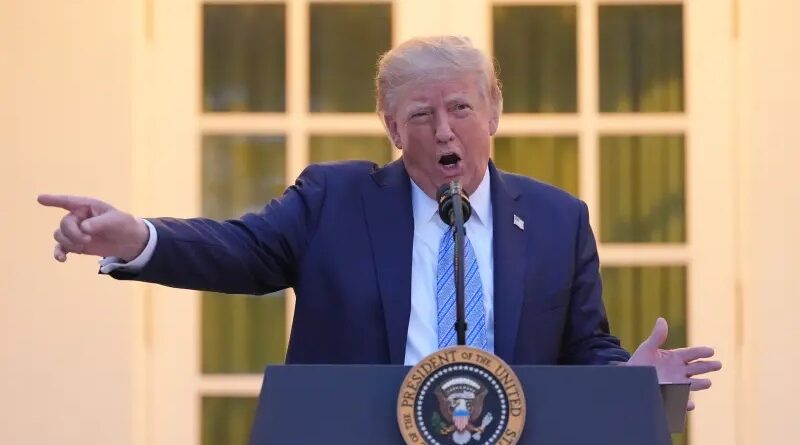
President Trump Signals More White House Shakeups After Replacing Susie Wiles, Warns Additional Changes Are Coming
President Trump is signaling that his administration’s leadership shakeup may be far from over following Republicans’ devastating losses in the 2026 midterm elections. In a newly released preview of his upcoming “60 Minutes” interview, the president acknowledged that additional personnel changes are likely, suggesting that several senior officials could soon find themselves leaving the administration as the White House prepares for a difficult political environment.
The president made the remarks during an interview with CBS News correspondent Ross Douthat, recorded Friday morning before Trump announced that longtime chief of staff Susie Wiles would be replaced by senior adviser Stephen Miller. Asked whether he expected to fire members of his administration following the Republican Party’s electoral defeat, Trump confirmed that he was considering changes but declined to identify potential targets.
“I love my Cabinet. I think they’re good, but I’ll be doing maybe a few changes,” Trump said. The president added that he did not want to reveal which officials might be affected, leaving considerable uncertainty about the future of several prominent administration figures.
Just hours after Trump told 60 Minutes he expected to fire members of his administration, he delivered his first: chief of staff Susie Wiles. Who will be next?
Watch President Trump’s interview on 60 Minutes this Sunday at 7 p.m. ET/PT on CBS. https://t.co/hiWzOOmmx2
— 60 Minutes (@60Minutes) November 7, 2026
Just hours after the interview, Trump announced his first major post-election leadership change, naming Miller as the next White House chief of staff. The president confirmed that Miller would officially assume the position Monday, November 9, while Wiles would transition to a role within Trump’s political operation. The announcement represented the most significant West Wing personnel change since the midterm elections.
Wiles, who managed Trump’s successful 2024 presidential campaign, had served as White House chief of staff since the beginning of his second term. She became the first woman to hold the position and was widely credited with bringing greater organizational discipline to the administration. Trump praised her performance despite deciding that new leadership was necessary.
Speaking to reporters after the announcement, Trump explained that he wanted to make a change and emphasized the importance of adapting to new circumstances. He described Miller as an experienced political adviser and capable manager who had worked alongside him for years. The president expressed confidence that Miller would successfully lead White House operations during the remaining two years of his presidency.
The shakeup follows Tuesday’s midterm elections, which delivered sweeping victories to Democrats and cost Republicans control of both the House and Senate. The results have prompted intense debate within Republican circles about the administration’s political strategy, economic messaging, and handling of the prolonged military conflict with Iran.
Several prominent conservatives have called for major changes within the White House, arguing that the election results demonstrated the need for greater accountability among senior advisers. The Republican defeat has also raised questions about whether President Trump intends to adjust his policy priorities or strengthen his existing approach as Democrats prepare to take control of Congress.
One official facing particularly intense scrutiny is War Secretary Pete Hegseth, whose leadership has become a central point of controversy surrounding the Iran conflict. Lawmakers from both political parties have questioned his judgment and management of military operations, while Kentucky Republican Rep. Thomas Massie has threatened to force a vote on articles of impeachment.
During the “60 Minutes” interview, Trump was directly asked whether he retained confidence in Hegseth. The president answered affirmatively, defending the administration’s military record and highlighting American operations in Venezuela. Trump pointed to what he described as major victories achieved by the armed forces during his presidency.
When asked whether Hegseth deserved credit for the administration’s successful military operation in Venezuela, Trump clarified that the defense secretary had participated in the effort without personally receiving all the credit. His remarks indicated continued confidence in Hegseth, although they did not eliminate speculation about possible future changes at the Pentagon.
Hegseth has also publicly rejected demands that he resign. In a video statement released Thursday, the secretary emphasized that he and President Trump would not retreat in response to political pressure. His message came as congressional opponents prepared potential impeachment proceedings and increased scrutiny of the administration’s military policies.
The president’s latest comments suggest that the White House could undertake additional personnel changes as it prepares for divided government. With Democrats set to control both chambers of Congress beginning in January, the administration faces the prospect of aggressive oversight investigations, legislative obstacles, and continued disputes over immigration enforcement, federal spending, and foreign policy.
Miller’s appointment provides an indication of how Trump intends to approach those challenges. A longtime architect of the administration’s immigration policies, Miller has consistently advocated strict border enforcement, expanded deportation operations, and an assertive use of executive authority. His elevation suggests that the president remains committed to advancing his America First agenda rather than abandoning major policy priorities following the election.
The leadership transition also comes amid broader changes across the administration. Several senior officials have departed during Trump’s second term, including former Attorney General Pam Bondi, former Homeland Security Secretary Kristi Noem, and former Labor Secretary Lori Chavez-DeRemer. The latest developments raise the possibility of another significant restructuring of the president’s senior leadership team.
Despite the uncertainty, Trump has emphasized that he remains generally satisfied with his Cabinet. His remarks indicate that any upcoming changes would be selective rather than necessarily involving a wholesale replacement of administration officials. No additional departures were formally announced during the interview preview.
The complete “60 Minutes” interview is scheduled to air Sunday, November 8, and could provide further insight into Trump’s plans for the remainder of his presidency. For now, the president has made clear that replacing Susie Wiles may be only the beginning of a broader effort to reorganize his administration as Republicans confront the consequences of their midterm defeat.
With Stephen Miller preparing to take control of White House operations and additional personnel decisions potentially approaching, President Trump is entering a new phase of his second term. The coming weeks could determine which officials remain central to his administration and how the White House intends to defend its priorities against an increasingly powerful Democratic opposition.