

RFK Jr. Flips the Food Pyramid, Unveils Major Overhaul of U.S. Dietary Guidelines
In a bold move aligned with the Trump administration’s “Make America Healthy Again” initiative, Health and Human Services Secretary Robert F. Kennedy Jr. and Agriculture Secretary Brooke Rollins announced sweeping changes to the Dietary Guidelines for Americans on Wednesday — the most significant overhaul in over four decades.
The new guidelines flip the traditional food pyramid upside down, signaling a sharp turn away from the high-carb, low-fat dogma that’s dominated federal health messaging since the 1980s. The new emphasis? Whole foods, healthy fats, and quality protein — with ultra-processed junk largely pushed off the plate.
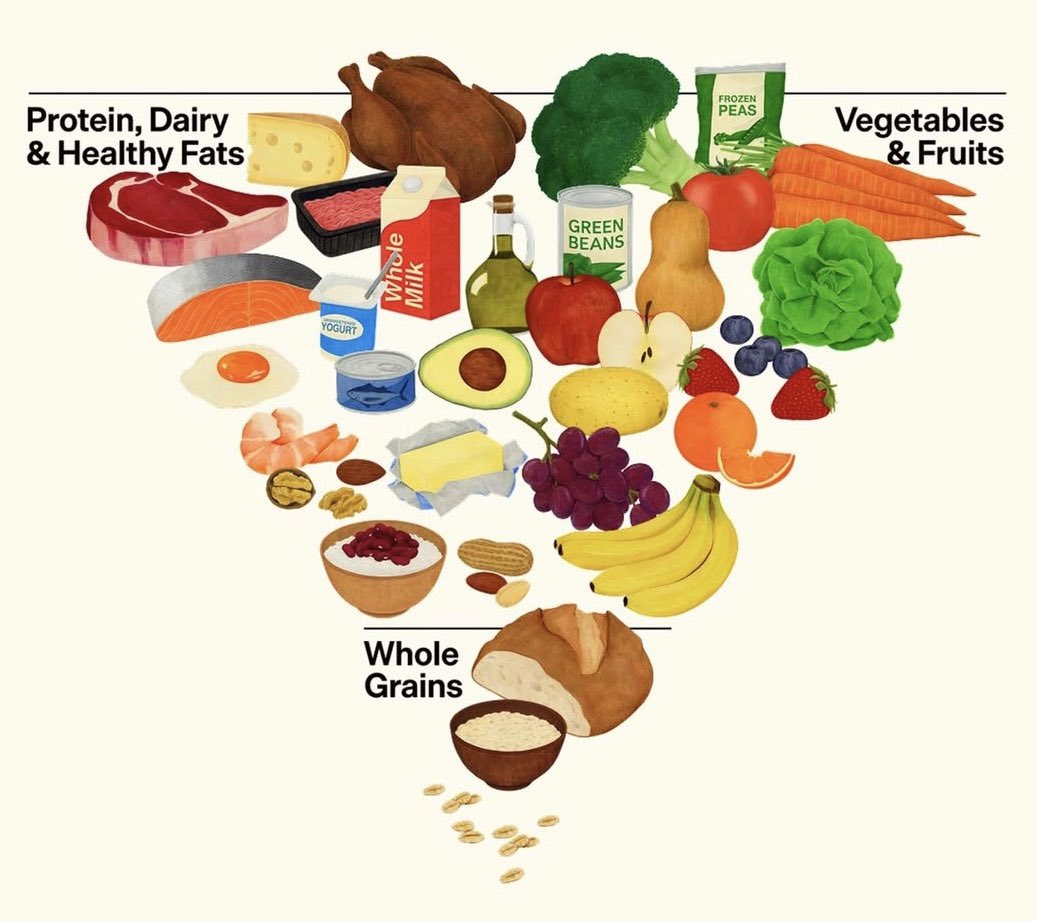
“The war on healthy fats is over,” Kennedy declared. “It’s time to put science and common sense over corporate influence.”
Under the revised guidelines, Americans are encouraged to build every meal around nutrient-dense proteins, particularly from animal sources — including eggs, poultry, seafood, and even red meat. Plant-based proteins such as legumes, lentils, nuts, and seeds are also recommended, but the guidelines clearly elevate high-quality animal foods as foundational.
The guidance urges Americans to “avoid highly processed, packaged, prepared, ready-to-eat, or other foods that are salty or sweet,” and to cut out sugar-sweetened beverages entirely. That includes soda, fruit drinks, and energy drinks — all of which are now flagged as contributors to obesity, diabetes, and heart disease.
Fiber-rich whole grains remain a part of the new food strategy, but refined carbs are on the chopping block. Gone are the days of low-fat everything and carb-heavy grains making up the base of the pyramid.
This marks the first time since the creation of the DGA in 1980 that such a dramatic change has been made to the national dietary framework. And the implications go far beyond public messaging. The DGA directly influences school lunches, daycare food, hospital menus, military rations, and federal programs like SNAP.
For years, critics accused the DGA of being driven more by lobbying than by real science — particularly on issues like processed foods and low-fat marketing. Kennedy has been one of the most vocal opponents of that status quo, frequently calling additives and ultra-processed products “poison,” and blaming them for the explosion in childhood obesity.
While some public health figures have clashed with Kennedy in the past, even longtime critics are praising parts of the updated guidelines. The American Medical Association applauded the administration’s spotlight on processed foods and sugar consumption, calling the move “a step in the right direction.”
Still, some disagreement remains. The New York Times and other establishment outlets raised concerns about the DGA’s favorable stance on red meat, citing experts who claim it may increase health risks. Kennedy, however, has made it clear that unprocessed, responsibly raised meat is part of a healthy American diet — and not something to be vilified based on flawed or outdated studies.
Ultimately, this new approach reflects a broader cultural shift taking hold under the Trump administration — one that values transparency, nutritional freedom, and breaking the grip of corporate food giants over federal policy.
For Kennedy and Rollins, this isn’t just about updating charts. It’s about rewriting the rules of health for a new generation. And in doing so, they’ve just flipped a cornerstone of American policy on its head.