
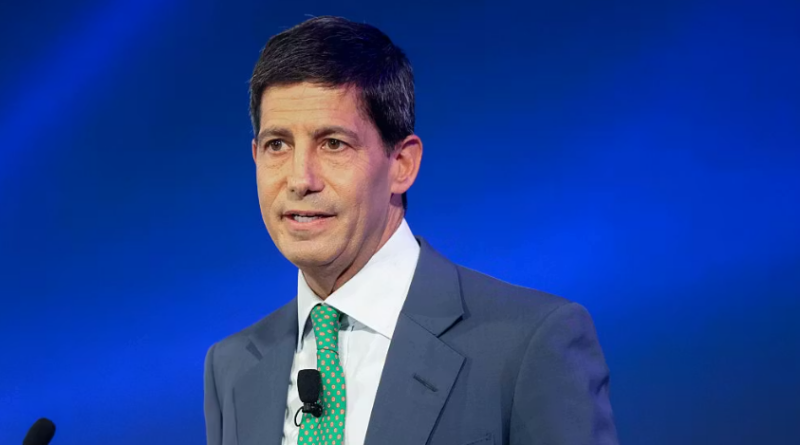
Senate Confirms Kevin Warsh As Federal Reserve Chairman In Major Victory For President Trump
The Senate voted Wednesday to confirm Kevin Warsh as the next chairman of the Federal Reserve, delivering a major economic and political victory for President Trump as his administration continues reshaping key American institutions.
Warsh was confirmed in a 54-45 vote and is set to officially assume the role Friday following the conclusion of Jerome Powell’s term as Fed chair. Democratic Sen. John Fetterman was the lone Democrat to back President Trump’s nominee, crossing party lines to support the confirmation.
Although Powell is stepping down as chairman, he will remain on the Federal Reserve Board as a governor through 2028. The transition marks the end of months of public friction between Powell and President Trump, who repeatedly pushed the Fed to lower interest rates as Americans continue dealing with high borrowing costs.
Warsh’s path to confirmation faced delays after Sen. Thom Tillis blocked Federal Reserve nominations for months while the Department of Justice investigated Powell over the Federal Reserve’s controversial $2.5 billion headquarters renovation project. After federal prosecutors dropped the investigation, Tillis lifted his hold, allowing the nomination to move forward.
Warsh brings significant Federal Reserve experience to the role. Appointed by President George W. Bush in 2006, he became the youngest Fed governor in history at just 35 years old and built a reputation as a strong inflation hawk during the financial crisis era.
In previous remarks about America’s financial standing, Warsh emphasized that the nation’s economic dominance could not be taken for granted, arguing that economic strength and the dollar’s reserve currency status must continually be earned through disciplined policy and strong institutions.
After leaving the Federal Reserve in 2011, Warsh joined the board of UPS while also serving in academic and policy roles at Stanford University and the Hoover Institution. He now returns to lead the central bank at a pivotal moment for the American economy.
Warsh inherits a Federal Reserve navigating competing pressures. President Trump has continued calling for interest rate cuts to boost economic growth, while persistent inflation and rising geopolitical tensions in the Middle East have complicated the central bank’s decision-making. Recent inflation reports have reduced expectations for aggressive rate cuts in the near future.
Despite recently signaling support for lower rates, many economists still view Warsh as fundamentally committed to fighting inflation. He has also pledged to reduce the Federal Reserve’s massive balance sheet, which currently exceeds $6 trillion in government bonds and mortgage-backed securities, arguing that trimming those holdings would create greater flexibility for future monetary policy decisions.
Warsh told lawmakers he intends to refocus the Federal Reserve on its traditional mission of maintaining price stability and maximizing employment. He has argued the institution drifted too far into broader economic activism in recent years and believes certain decisions involving asset purchases should fall under the authority of the Treasury Department rather than the central bank.