
Senate Investigators Obtain Fauci’s COVID-Era Phone as Scrutiny Intensifies
Senate investigators have obtained a copy of Dr. Anthony Fauci’s cellphone from the COVID-19 pandemic, potentially giving lawmakers access to new information about the former government health official’s communications and actions during the outbreak.
Sen. Ron Johnson of Wisconsin, chairman of the Senate Homeland Security Permanent Subcommittee on Investigations, revealed that his panel obtained the device from the Department of Health and Human Services. The phone was used by Fauci while he served as director of the National Institute of Allergy and Infectious Diseases.
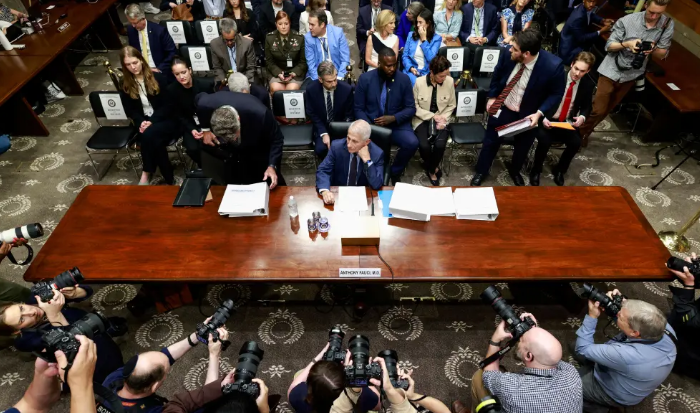
Johnson said investigators hope the device will help answer questions Fauci refused to address when he recently appeared before the Senate. Fauci invoked his Fifth Amendment right against self-incrimination 111 times while being questioned about the pandemic, COVID’s origins and U.S.-funded virus research.
The development comes as Republicans intensify their investigation of Fauci’s role during the pandemic. Senate Homeland Security Committee Chairman Rand Paul has spent years questioning whether federal funding supported risky research at the Wuhan Institute of Virology and whether Fauci was truthful with Congress about that research.
Investigators are also examining Fauci’s pandemic-era personal diary. Paul has released portions that he says show Fauci was privately presented with concerns in early 2020 that characteristics of the virus could indicate laboratory manipulation, even as the possibility of a laboratory origin later became intensely disputed publicly.
Fauci has defended his decision to invoke the Fifth Amendment, with his legal team arguing that he faces the possibility of politically motivated prosecution. Republicans have questioned that justification because President Joe Biden issued Fauci a preemptive pardon in January 2025 covering potential federal offenses related to his government service.
The phone’s contents could now become another significant piece of evidence for Senate investigators as they examine Fauci’s communications with government officials, scientists and other figures involved in the federal response to COVID-19. It remains unclear what information investigators will ultimately recover from the device or whether it will provide evidence supporting Republicans’ allegations.
The phone was turned over as the Senate Homeland Security and Governmental Affairs Committee prepared to consider holding Fauci in contempt of Congress over his refusal to answer questions. The committee subsequently voted 8-5 to hold him in contempt, opening the door for the matter to be referred for possible prosecution.
For Republicans leading the investigation, obtaining Fauci’s phone represents another opportunity to reconstruct what happened behind closed doors during the earliest stages of the pandemic. With Fauci declining to answer many of their questions directly, lawmakers are increasingly turning to his records, diary entries and electronic communications as they continue examining the federal government’s handling of COVID-19.