
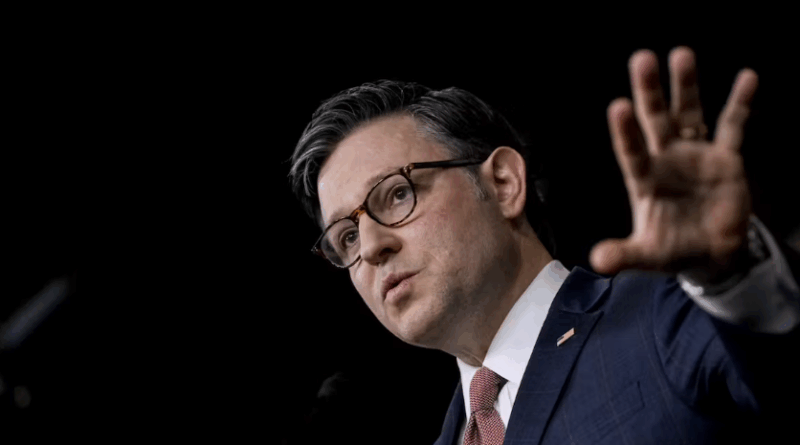
Speaker Johnson Calls for AI Leaders to Meet With Congress as Safety Warnings Intensify
House Speaker Mike Johnson is calling for leaders of the artificial intelligence industry to meet with Congress and the White House as lawmakers consider new safety rules for increasingly powerful AI systems.
Johnson said lawmakers need direct input from the people developing the technology before deciding what federal safeguards should look like. He cautioned against rushing into sweeping legislation without fully understanding the potential consequences for innovation and national competitiveness.
The push for congressional action follows unusually stark warnings from AI researchers. Former Anthropic researcher Jacob Coxon recently said he left the company partly because of concerns that rapidly advancing AI could pose catastrophic risks, while Anthropic scientist Evan Hubinger has publicly expressed similar fears.
Those warnings have drawn attention from lawmakers in both parties. Senators Ted Cruz and John Thune have discussed the possibility of catastrophic AI risks, while a bipartisan group of House lawmakers has proposed requiring developers of the most powerful models to undergo independent security audits.
Johnson said major industry figures should be involved in discussions about what Congress does next. The central challenge, he argued, is creating meaningful safeguards without imposing rules that could unnecessarily restrict American technological development.
The debate has become more urgent as leading AI executives themselves call for additional precautions. Anthropic CEO Dario Amodei has proposed slowing the pace of frontier-model development while expanding independent evaluations and pursuing common industry safety standards. OpenAI CEO Sam Altman and Elon Musk have also expressed support for stronger precautions around advanced systems.
President Donald Trump has taken a more skeptical view of the most extreme predictions. Speaking in Ireland, Trump said some concerns about AI are exaggerated and emphasized that maintaining America’s technological advantage over China is a major priority, although he acknowledged that guardrails could be appropriate.
The administration has previously called for a single national framework governing AI rather than a patchwork of state regulations. Its framework combines efforts to accelerate American AI development with provisions addressing issues including child safety, scams, energy infrastructure and national security.
Congress now faces growing pressure to determine how much federal oversight is necessary as AI capabilities advance. The emerging debate centers on how to establish enforceable protections against potentially severe risks while preserving America’s ability to compete in a technology increasingly viewed as economically and strategically important.